









Interviews
10 Career Development Tools to Grow Faster in 2026
Compare 10 career development tools for 2026: interview prep, courses, assessments, skills mapping, resumes, and live AI interview support.
Interview Pilot Editorial Team
Updated October 23, 2026
16 min read

A better role is the goal, but the work is split across a job board, a half-finished course, another resume pass, and interview notes you haven't said out loud. Each task is useful. Stacked without a sequence, they burn evenings and duplicate subscriptions.
Career development tools pay off when you assign one job to each moment: explore direction, build skills, package experience, practice interviews, and perform live. This list is that toolkit. You get a best-use case and an honest limit for every pick, including free portals that feel cluttered, courses that don't prove skill, and live AI help an employer may ban.
Digital guidance is already mainstream, which is why the clutter is so easy to collect. An OECD review of digital career guidance found that 79% of 29 countries and jurisdictions provide study or career-guidance information on digital platforms, while 40% of respondents said video counselling had become common during the pandemic. Reach isn't the same as fit. You don't need ten logins. You need a few tools you'll finish using.
If you're also building a study habit next to a search, the same staging idea shows up in reviews of the best learning apps for HK learners. Start with the moment you're stuck in, then ignore the rest of the catalog until that job is done.
1. CareerOneStop
Explore direction starts with public data, not a personality brand. CareerOneStop, sponsored by the U.S. Department of Labor, bundles exploration, training and scholarship search, salary context, job-search links, and local assistance. Students, career changers, and job seekers who want U.S. next steps can use it with no subscription.
The matchers are the part worth your first hour.
- Interest Assessment: Points from activities you like toward occupation families.
- Skills Matcher and Work Values Matcher: Separate what you can do from what you want the work to feel like.
- Occupation coverage: Profiles and comparisons for more than 900 occupations, plus searches for training, scholarships, certifications, and jobs.
- Specific audiences: Extra paths for veterans, young adults, and people changing fields.
Free access is the advantage that matters. You can explore and then act, instead of paying to view a list of titles. The same breadth is the drawback. The site is a campus of resources, so it feels less smooth than a single-purpose app.
Practical rule: Leave with three occupations and one training search. If you're still browsing menus, the tool has stopped helping.
U.S. wages and local assistance are a weak fit if you're hiring into another country. Matcher output suggests options. It doesn't replace counseling that knows your visa, caregiving load, or money constraints.
2. O*NET OnLine and My Next Move
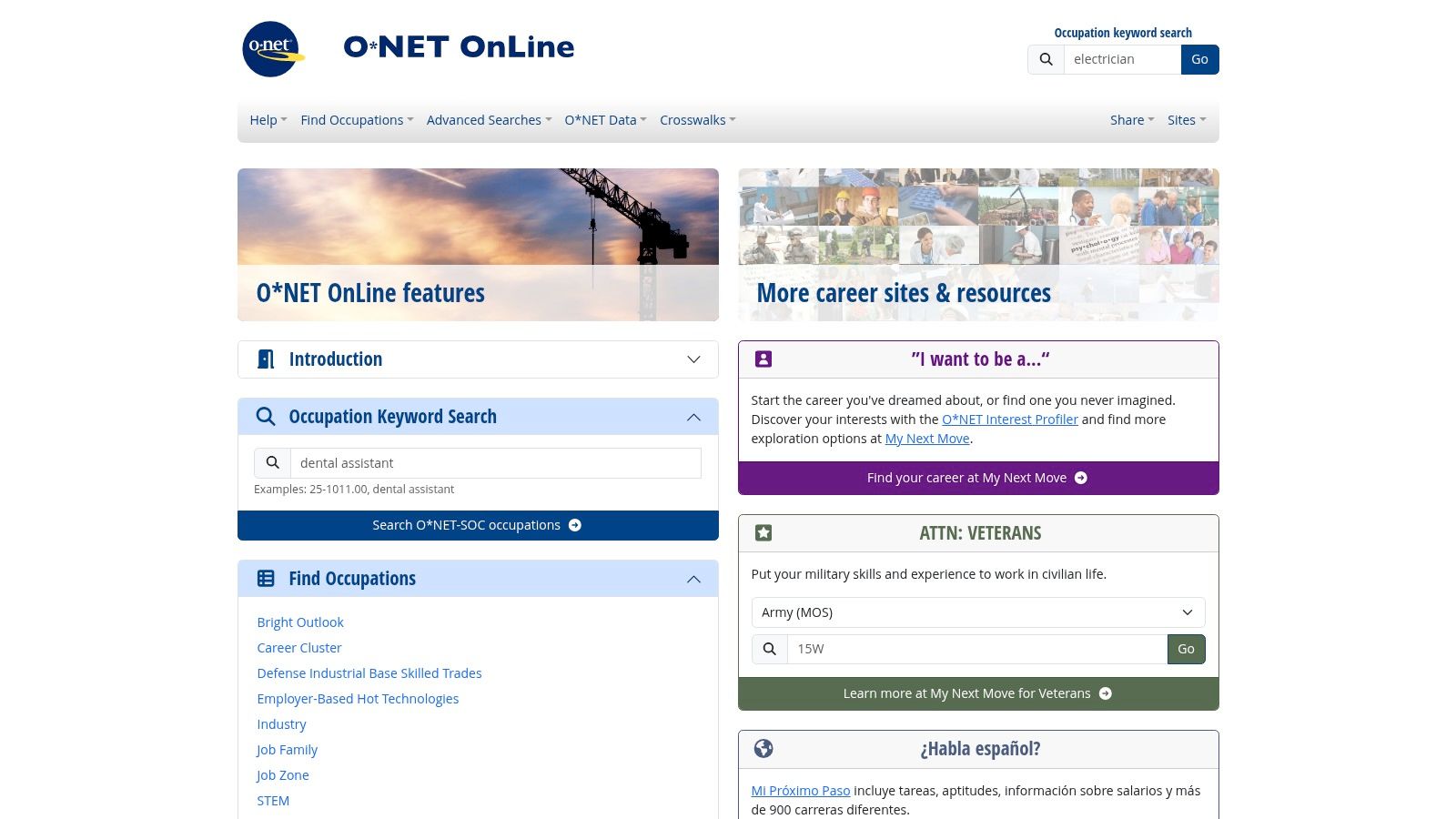
Before you pay for a certificate, read the job. O*NET OnLine and its simpler sibling, My Next Move, are exploration tools built for the U.S. Department of Labor. My Next Move guides students and job seekers. O*NET OnLine is the denser research layer behind it.
What the pair is for
Use My Next Move's Interest Profiler when titles blur together. Then open O*NET for tasks, skills, knowledge, and work activities. Veterans get a dedicated lane on My Next Move. You're comparing the work, not collecting badges.
That sequence matches what early preparation involves, even if you're well past school age. OECD longitudinal research across ten countries links activities such as workplace visits, career conversations, and short work experience with stronger job outcomes around age 25. PISA 2022 shows the access gap: 64% of students across OECD countries had completed a career questionnaire by 15, and 55% had spoken with a career adviser. The OECD treats those links as associations, not proof that one site causes later employment.
O*NET won't apply to jobs for you, and it can't see one employer's quirks. The full site can feel heavy. My Next Move is easier and thinner. Use the light tool to choose, the heavy tool to pressure-test, then stop.
3. CareerExplorer
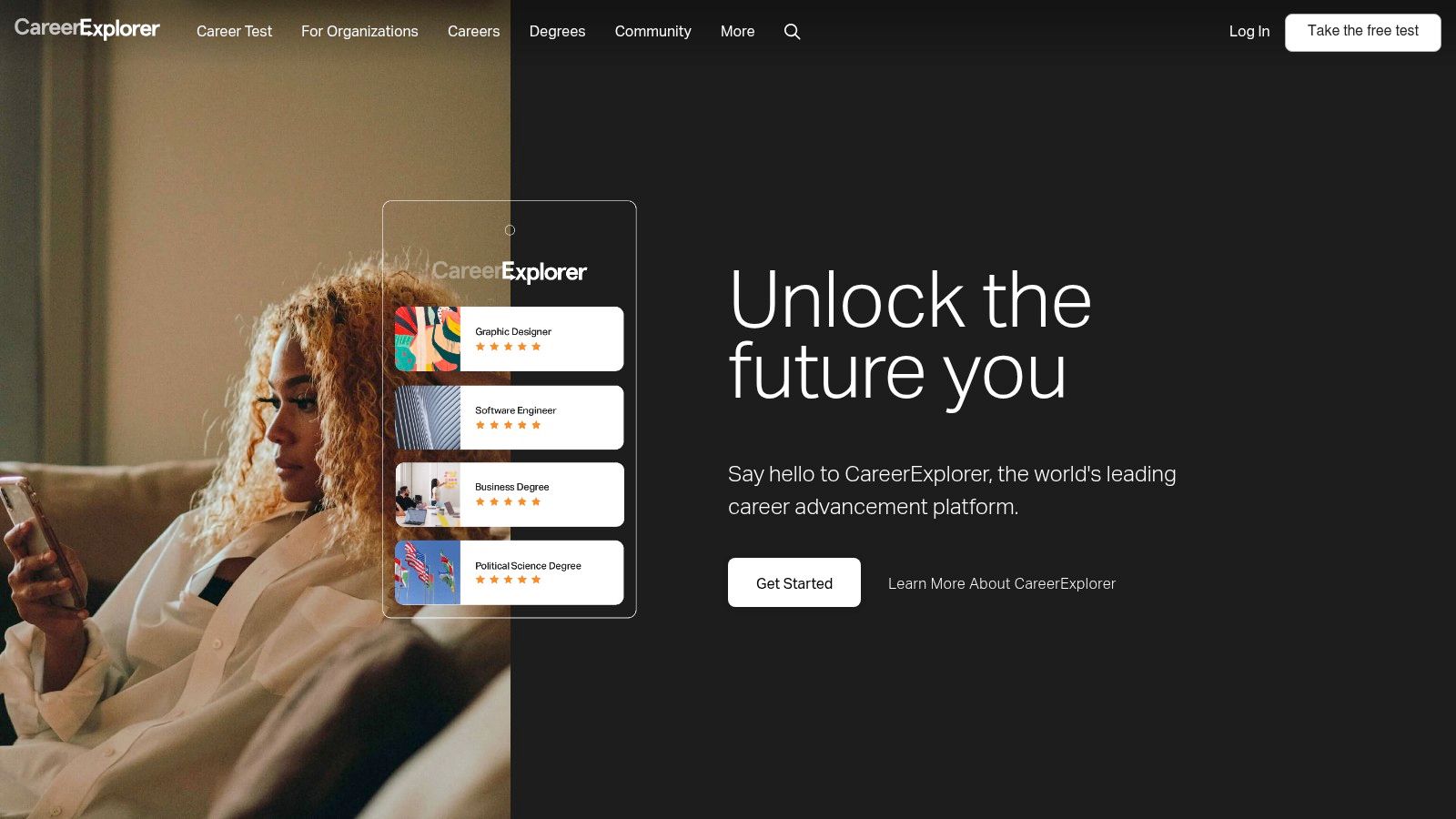
Some people don't need another database. They need a structured guess. CareerExplorer is a fit and self-assessment service for working professionals, students, graduates, and career changers. The assessment connects interests and personal characteristics with possible paths. Membership opens more tools and guidance.
It's the tool I'd open when every posting looks interchangeable and you can't tell whether the problem is the market or your direction. Scrolling titles won't answer that. A guided assessment at least forces a hypothesis you can test against real ads.
The company says it doesn't sell users' personal data. That's a fair trust point if you're putting career history into a quiz. It isn't a reason to treat the output as a diagnosis.
- Stage coverage: Built for more than first-job seekers, including people already in a profession.
- Guided results: Clearer than browsing titles with no criteria.
- Membership gate: Material past the core assessment sits behind a paid plan. Confirm the current price and inclusions on the site.
Results are a starting map, not a verdict on whether you'll like the work or get hired.
4. Indeed Skills Map and Career Guide
Transferable skills are where a pivot usually hides. Indeed's Skills Map lets you browse skills tied to roles and see where those sets overlap. The Career Guide adds articles on professional skills, planning, and job search. Both are free to read. You don't enroll in a course just to look.
Overlap is the useful move. If your current role and a target role share a cluster of skills, you have a transition story without pretending you already hold the title. The map can feed a learning plan, but only for gaps that show up in live postings, not every skill the graphic lists.
It won't coach you, and a highlighted skill doesn't mean you're qualified. Check the map against current ads and a task-level source like O*NET before you rewrite your identity around an adjacent title. Indeed's ecosystem makes the next click a job search, which helps only after the skill story is honest.
5. LinkedIn Learning
Skill building comes after the role is specific. LinkedIn Learning offers expert-led courses and paths across business, technology, and creative work, plus career topics. Completions can sit on the LinkedIn profile many job seekers already use for networking.
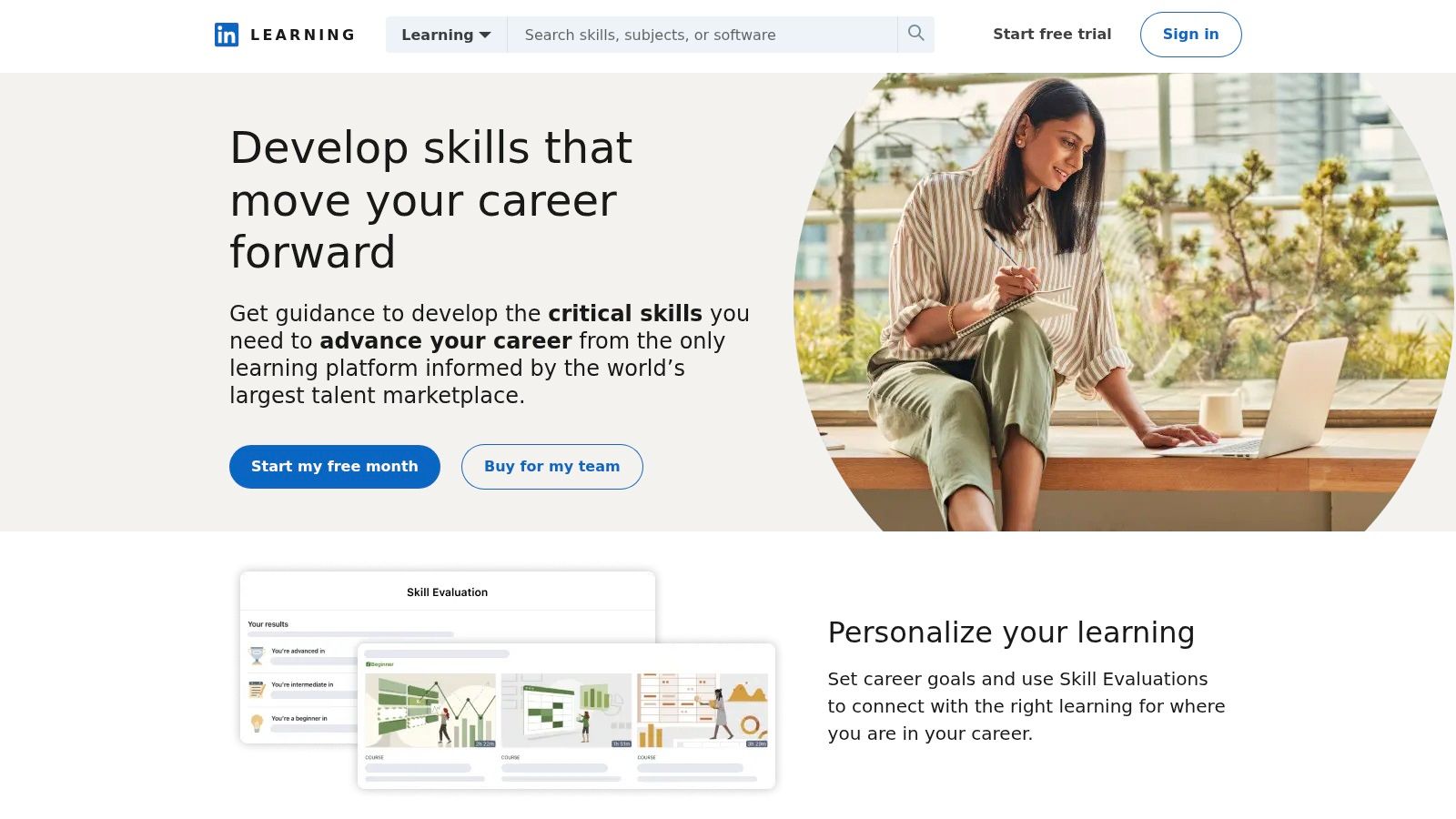
Paths beat random browsing. Pick a role, follow the path, and stop when you can do the task the posting describes. The catalog is large enough to become a hobby. A completion on your profile signals effort. It doesn't prove you can perform the work on Monday.
The paywall to expect
Individual access runs through LinkedIn Premium, not a separate Learning-only subscription you can price on its own. If you already pay for Premium for outreach or applicant insights, Learning is partly funded. If you don't want the rest of Premium, a certificate platform is the cleaner buy. Confirm what your plan includes before you assume the full library is open.
6. Coursera
Coursera is where you test a field with a short course, then decide whether a Specialization or Professional Certificate is worth the months. Partners include universities and employers. Business, technology, and data are the usual career tracks, though the catalog is wider.
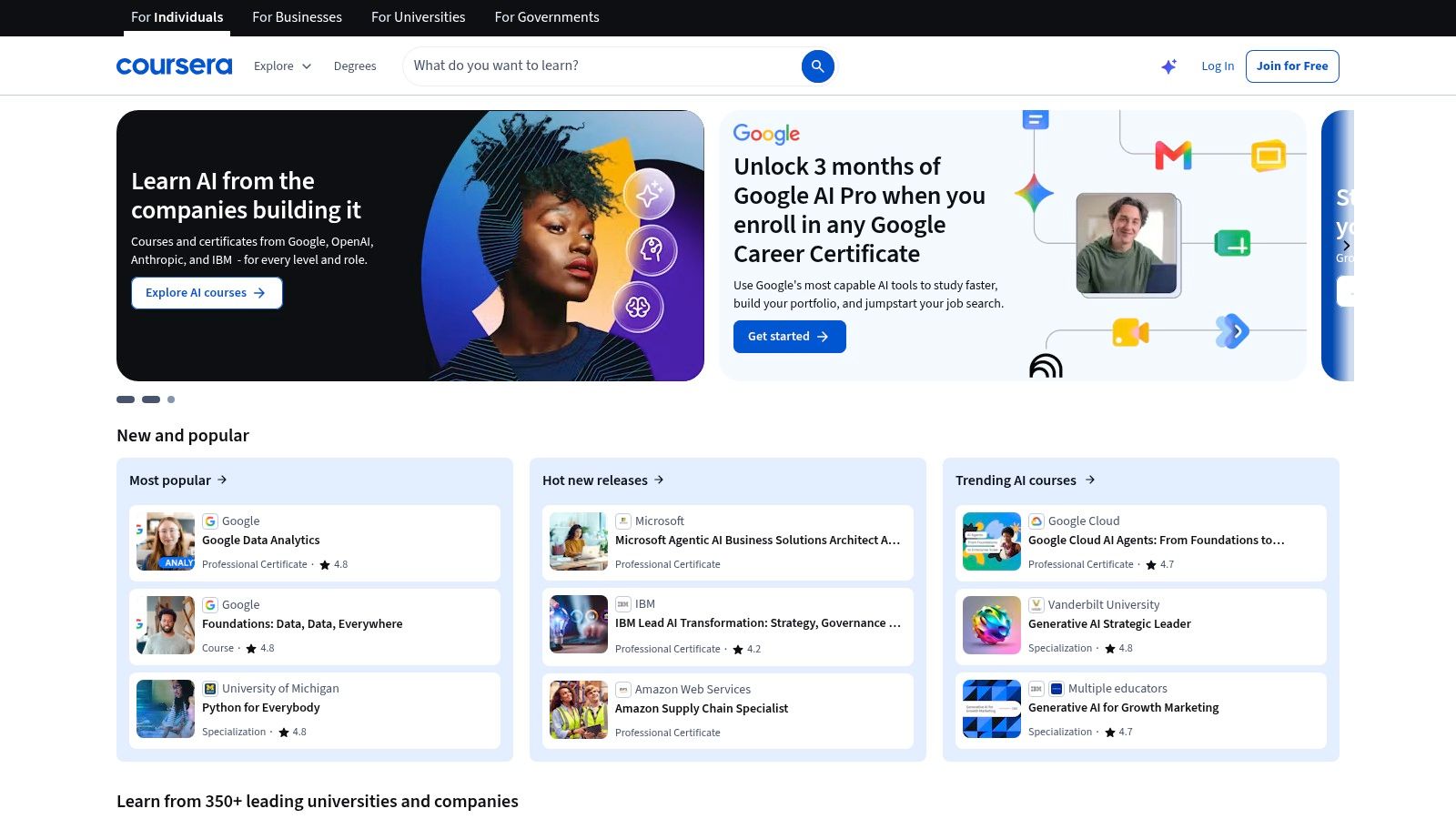
You can explore some courses without a broad subscription. Coursera Plus covers a large set of eligible learning, not every credential. Prices and promotions move by region, so last year's quote isn't yours.
Self-reported outcomes are more useful than a badge, and they still aren't a promise. Coursera's 2025 learner outcomes report, covering more than 52,000 learners in 179 countries, found that 46% reported a salary increase after an online course or program. Learners in emerging economies reported positive career outcomes at 94% versus 84% in advanced economies, and a move to a higher job level at 33% versus 19%. 99% enrolled with multiple career goals. Track your own skill, interviews, and pay at 3, 6, and 12 months. Finishing a program doesn't guarantee a job.
7. Google Career Certificates
When the field is already chosen, a general library wastes attention. Google Career Certificates are job-focused programs in areas such as IT support, data analytics, project management, cybersecurity, digital marketing, and UX design. Study is self-paced, with hands-on practice plus resume, interview, and job-search support inside the program.
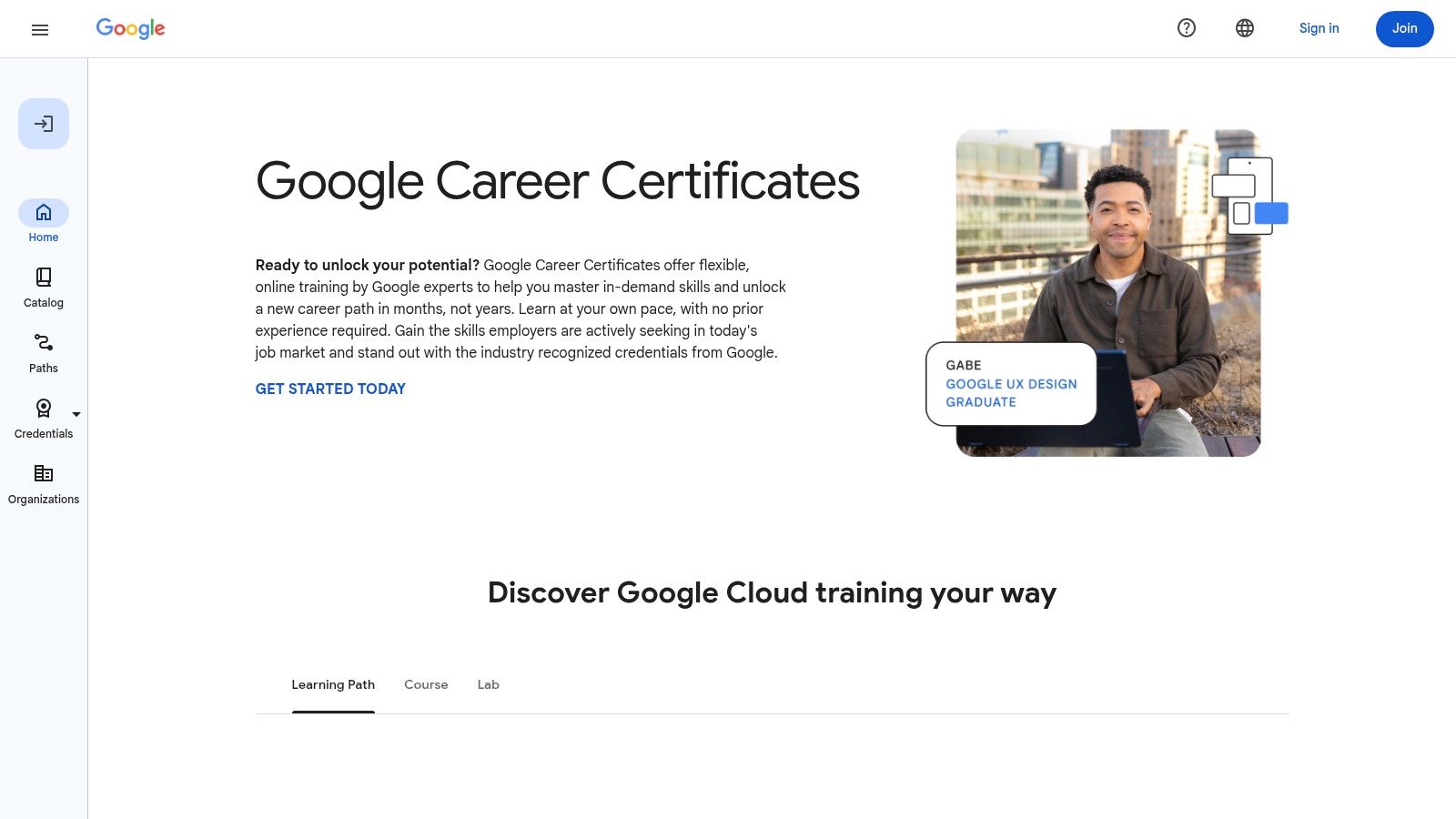
That bundle is why it sits in the build-skills moment rather than pure exploration. You're rehearsing tasks tied to a named job family, not collecting interest tags. Foundational and more advanced programs both appear, so check the syllabus against postings before you assume "advanced" matches your market.
Monthly billing means the true cost is your pace. Finish faster and you pay less. Drift, and the certificate gets expensive without getting better. A certificate still doesn't replace role experience, and the catalog ignores most occupations.
People comparing a narrow license with a broader certificate can explore drone pilot career pathways as a different model, credential plus logged practice. The lesson transfers. Match the credential to the gate the employer uses.
8. Resume Worded
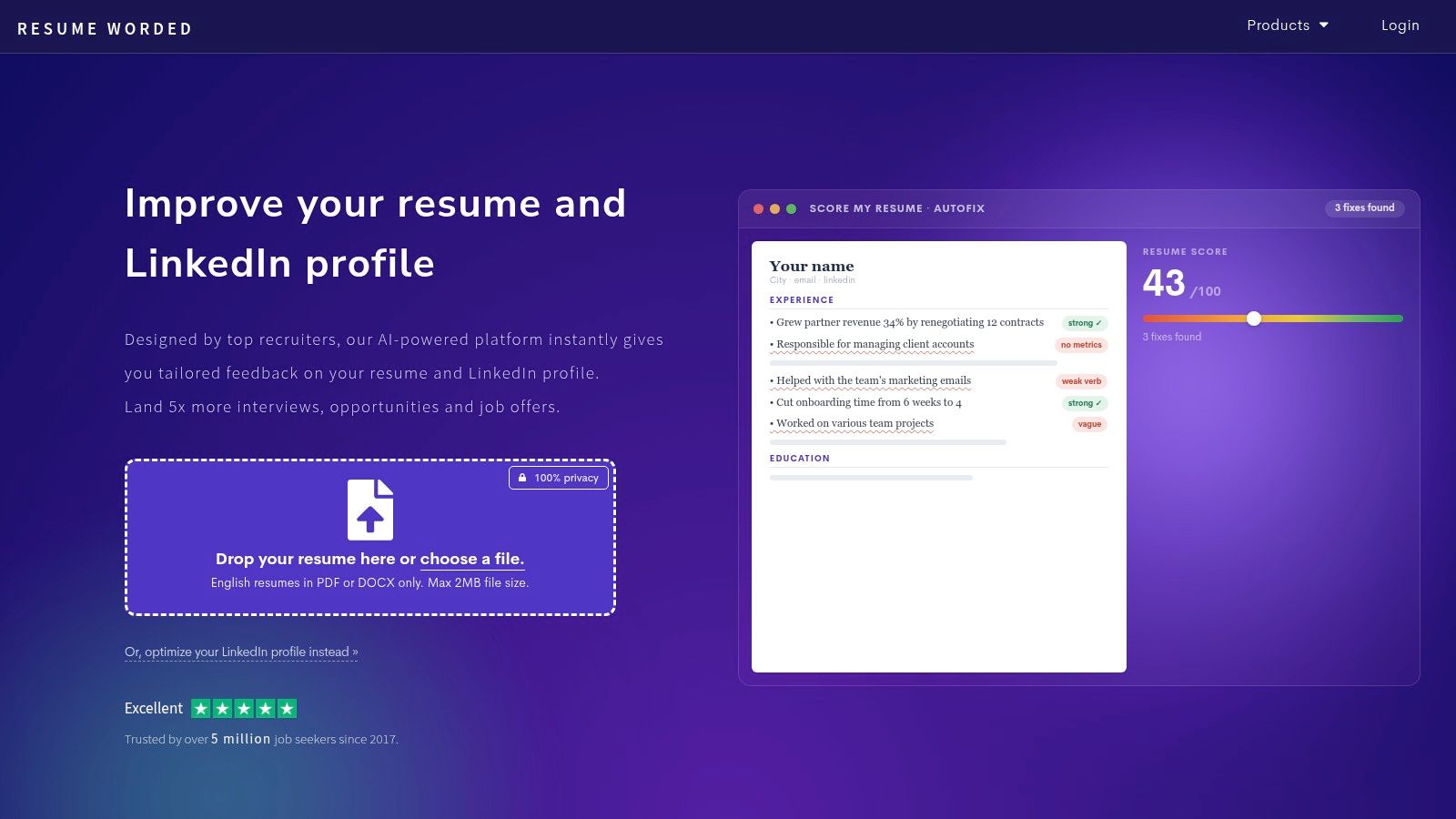
Package experience is a different job from learning. Resume Worded scores resumes, gives line-by-line notes, and checks a draft against a job description. It also reviews LinkedIn profiles. The first optimization report is free. Expanded reviews, AI rewrites, and templates sit on paid plans.
Targeting is what earns a subscription during an active search. You see keywords you have and keywords the posting wants. Then you decide which gaps are real experience and which are fluff you shouldn't invent.
- Free test: One report is enough to judge whether the feedback sounds like your work.
- Role variants: Useful when one master resume is being bent toward several postings.
- Human edit still required: Automated scores miss context, and keyword stuffing reads badly to a hiring manager.
Pair the score with stronger verbs and proof, not more adjectives. A practical pass on resume action verbs keeps the lines specific. This isn't a career quiz and it isn't a course. If the target role is still fuzzy, go back to exploration before you pay for rewrites.
9. Big Interview
Practice has to be spoken. Big Interview combines video lessons, industry-specific questions, recorded answers, and AI notes on delivery. A mobile app covers lessons and drills. Schools, libraries, and workforce programs sometimes provide access, so check that before you buy an individual plan.
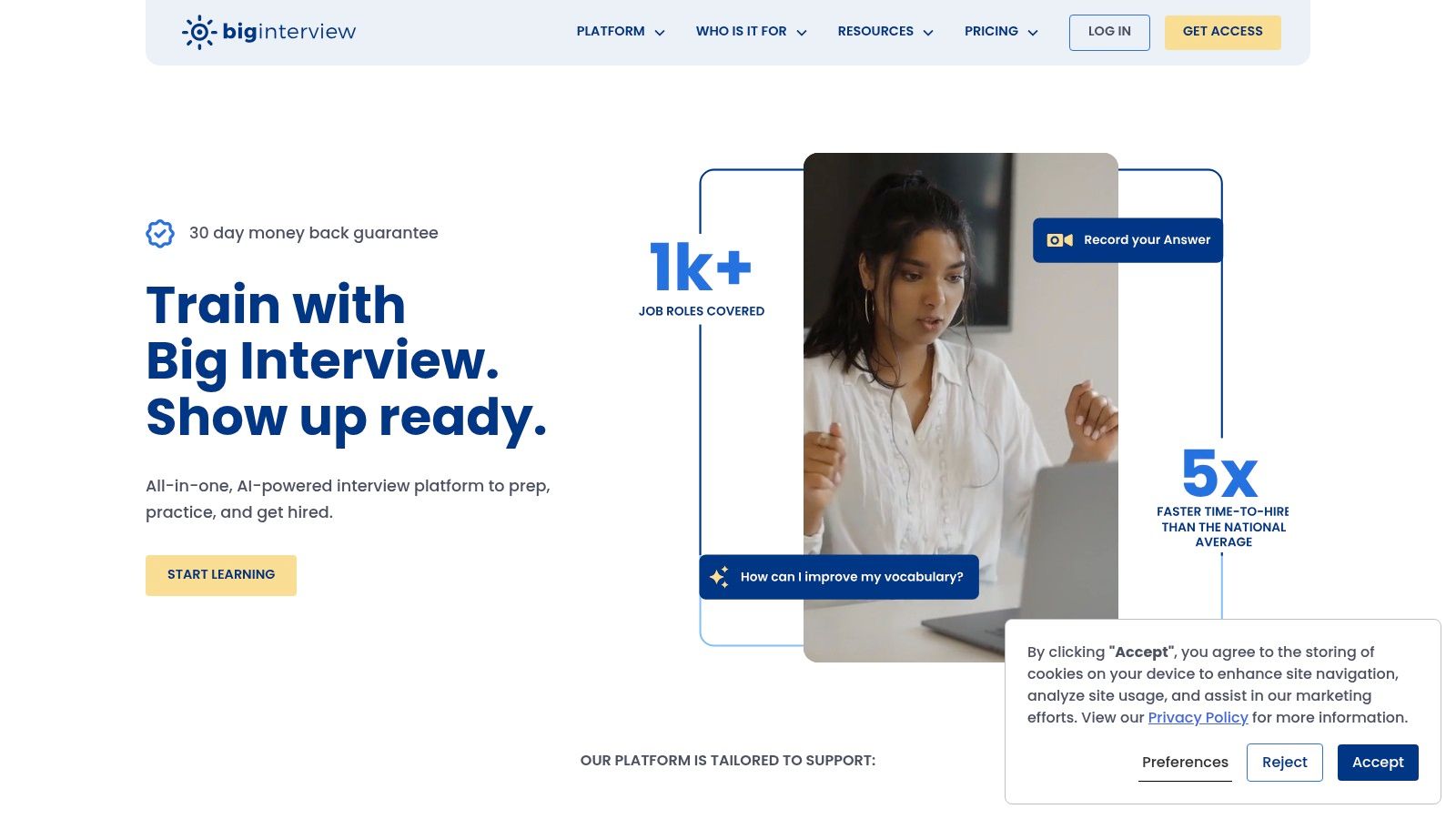
Rehearsing aloud is the difference from reading sample answers. You hear filler, watch pacing, and redo a weak story. Instruction plus practice fits the interview moment. It doesn't fit choosing a career or learning a technical stack from scratch.
AI comments are a practice aid. They aren't the interviewer you'll meet. Stack Overflow's 2025 Developer Survey is a useful caution even outside software: 84% of respondents were using or planning to use AI tools, 51% of professional developers used them daily, and only 60% felt positive about them. 66% named almost-right output as the top frustration, and 45% said debugging AI-generated code can take longer. Verify the note, then keep the line that still sounds like you. For setup, see how to run a mock interview online. Individual plans are paid, and current prices belong on the site, not in a stale screenshot.
10. Interview Pilot
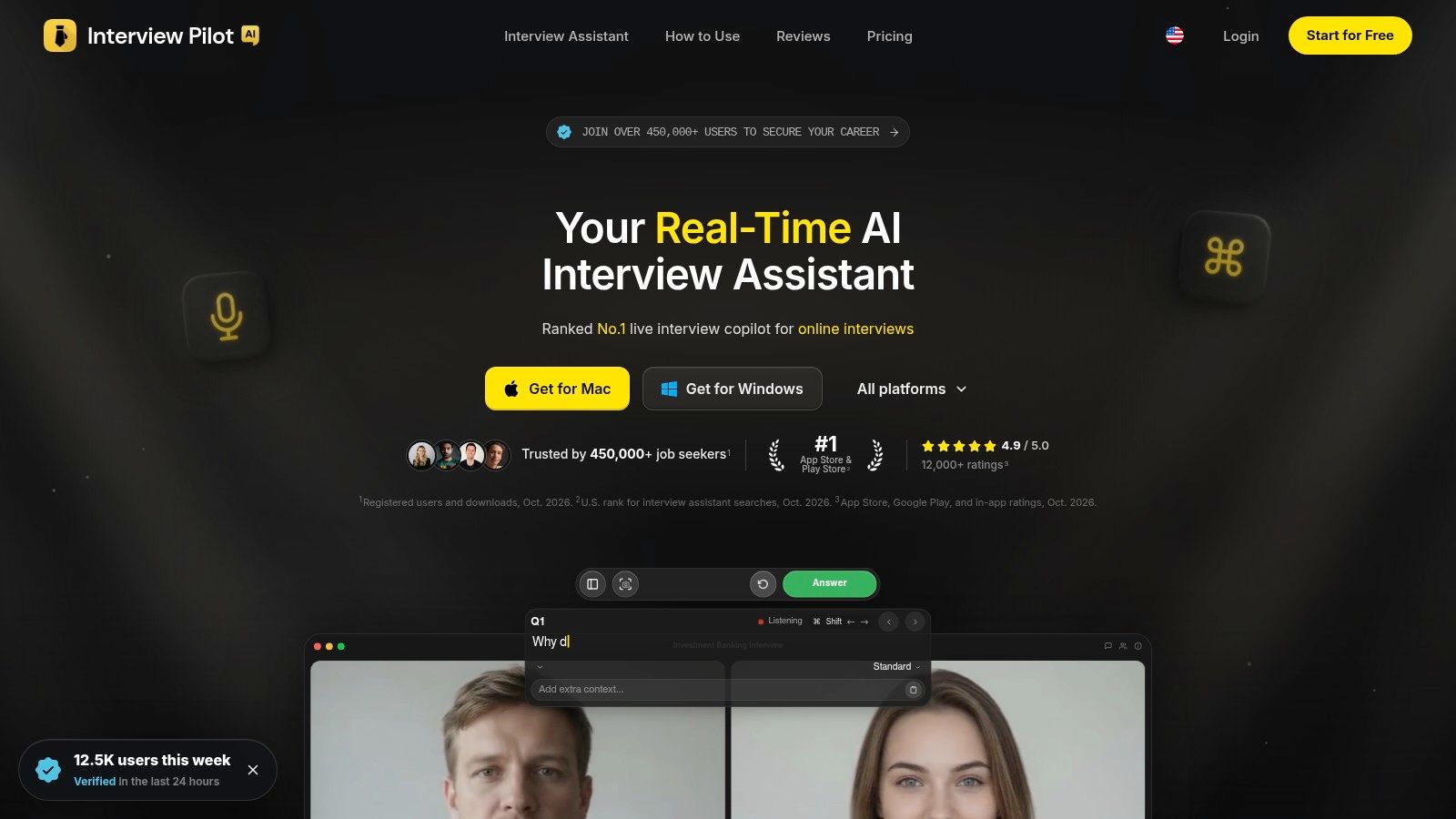
The live interview is the last career moment, and it's where most toolkits go quiet. Interview Pilot is a cross-platform AI interview assistant built for both prep and the call itself, with native apps for macOS, Windows, iOS, and Android.
Live help and structured practice
Interview Copilot, its live-assist feature, generates answer suggestions as the conversation moves, tuned to your profile and uploaded documents. You set tone, depth, and focus. It runs alongside Zoom, Google Meet, Microsoft Teams, and Webex, and it advertises wide language and accent coverage, which matters when a hiring loop crosses borders.
Prep is part of the same product. Guided AI mock interviews sit next to a role-specific question bank spanning software engineering, data, investment banking, product management, consulting, and project management. Full bank access is a paid-plan detail, so confirm it before you rely on it. The company reports a large user base and strong user ratings, and it publishes encryption and uptime figures; treat all of that as vendor statements, not independent verification.
Where judgment still belongs to you
A crowded user base doesn't make a suggestion safe to repeat. Research on AI literacy in a working context describes a wide gap: only about half of respondents felt confident using AI tools, fewer than 20% understood principles such as machine learning, bias, and transparency, and more than 40% had no formal or informal AI training. The same report notes that more than two-thirds of employers planned to hire for AI-specific roles, while 40% expected workforce adjustments from AI adoption. Confidence with the tool can hide the moments when you should override it.
Check the employer's rules before you turn on live assistance. A banned tool can cost you the round.
Free, weekly, monthly, and yearly plans are listed, with priority support on paid tiers. Exact prices weren't visible in the site content used for this review, so compare value at checkout rather than from a secondhand summary. For a wider prep map, see this rundown of AI tools for job seekers. Take the suggestion that keeps you fluent, then verify any technical or financial claim before it leaves your mouth.
Career Development Tools: Top 10 Comparison
| Tool | Core Focus & Features | Experience / Coverage | Best For | Standout Value | Pricing |
|---|---|---|---|---|---|
| CareerOneStop | Career assessments, 900+ occupation profiles, training and job searches | ★ Broad U.S.-focused career resources | 👥 Students, career changers, job seekers | 💰 Free, with tools for exploring and taking next steps | 💰 Free |
| O*NET Online / My Next Move | Interest profiling and detailed occupation information | ★ 900+ occupations; approachable and in-depth options | 👥 People comparing career paths | ✨ Combines guided exploration with detailed job data | 💰 Free |
| CareerExplorer | Career-fit assessment and guided exploration | ★ Personalized starting point; extra resources through membership | 👥 Students, professionals, career changers | ✨ Helps structure career exploration | Free assessment; membership pricing varies |
| Indeed Skills Map and Career Guide | Skills mapping, role comparisons, career articles | ★ Useful for exploring transferable skills | 👥 Job seekers considering adjacent roles | ✨ Connects skill exploration with Indeed's job-search ecosystem | 💰 Free to browse |
| LinkedIn Learning | Professional courses, guided learning paths, career topics | ★ Broad business, creative, and technical catalog | 👥 Professionals building skills | ✨ Course completions can appear on a LinkedIn profile | Included with LinkedIn Premium; pricing varies |
| Coursera | Courses, Specializations, and Professional Certificates | ★ Structured learning from universities and industry partners | 👥 Learners seeking new skills or credentials | ✨ Options range from short courses to longer programs | Free options; paid courses and plans vary |
| Google Career Certificates | Self-paced, job-focused training and practical exercises | ★ Selected fields including IT, data, and project management | 👥 Learners pursuing targeted career skills | ✨ Includes job-search resources and interview support | Monthly billing; total cost depends on completion time |
| Resume Worded | Resume scoring, job-description matching, LinkedIn feedback | ★ Targeted feedback for active applications | 👥 Job seekers refining application materials | ✨ Free first report; paid tools offer expanded reviews | Free first report; paid plans available |
| Big Interview | Interview lessons, recorded practice, AI feedback | ★ Practice-focused with mobile access | 👥 Candidates rehearsing interview answers | ✨ Combines video instruction with answer recording and review | Paid plans; institutional access may be available |
| 🏆 Interview Pilot | Live AI answer suggestions, mock interviews, searchable bank of ~10,000 questions | ★ 99+ languages, desktop and mobile apps; site-reported 4.9/5 from 12,000+ ratings | 👥 Job seekers preparing for technical and behavioral interviews | ✨ Real-time, profile-tailored support plus practice tools; 450,000+ users reported | 💰 Free, weekly, monthly, and yearly plans; prices not shown |
Choose One Tool for Each Career Moment
Start with the decision in front of you. The logo comes later. If you are still choosing a direction, use CareerOneStop or O*NET for U.S. labor detail, CareerExplorer for a guided hypothesis, and Indeed Skills Map when the underlying question is how much of your current work already overlaps a target role. Pick one. A clear next role beats a folder of saved possibilities.
For skill building, match the tool to the credential you will finish. LinkedIn Learning is reasonable when Premium is already part of your workflow. Coursera fits when you want to sample a university or industry course before committing. Google Career Certificates fit when the field is on its list and you can finish inside a schedule. Paying for overlapping libraries usually produces a stack of half-finished syllabi.
Once the target role is stable, package evidence. Resume Worded earns its slot by scoring bullets against the job description and checking LinkedIn; it will not turn a thin history into senior experience. For rehearsal, Big Interview covers recorded answers and feedback. For the live call, Interview Pilot fits only where real-time support is allowed, so confirm employer and assessment rules before anything runs during the interview.
Judge the toolkit by mobility, not logins. The OECD Skills Outlook 2025 stresses that literacy, numeracy, adaptive problem-solving, and social-emotional skills are unevenly distributed, and it treats better adult-learning access and effective career guidance as priorities. A 2025 Global Skills Report points the same way across a broad learner base: readiness is local. Tailoring bullets is different from closing a prerequisite gap for your labor market, language, or bandwidth.
People in regulated training already log practice against a standard, the way a DuBois Aviation flight training tracking guide treats hours. Do the same with career work. Write a baseline before you subscribe, name the outcome for each activity, and review skill growth, interview progression, and whether you kept the job. Confidence without a work sample does not count. If two tools do the same job, cancel one.
Topics
career development tools
career growth
interview prep
online courses
skills assessment
Continue reading

Interviews
Mock Interview Coaching That Actually Works in 2026
Practical mock interview coaching guide for 2026 covering AI-driven rehearsal, realistic feedback loops, and how to build a study plan that improves real
October 17, 2026
14 min read

Interviews
Best Data Science Interview Book: What to Read in 2026
Find the best data science interview book for your role, with a comparison of top titles, reading plans, and how to pair books with live practice tools.
October 15, 2026
13 min read

Interviews
Interview Questions STAR Method Guide
Master interview questions STAR method with role-specific examples, timing breakdowns, and AI practice tips for technical and behavioral rounds.
September 30, 2026
14 min read