
















Interviews
10 Mock Interview Videos Worth Watching in 2026
Compare 10 mock interview videos for tech, business, and general roles, with notes on what each shows and how to practice alongside them.
Interview Pilot Editorial Team
Updated November 20, 2026
17 min read
You've watched mock interviews all evening, and the answers finally sound familiar. Then your interviewer asks why you chose that approach instead of another, and the response you rehearsed disappears. You know what a polished answer sounds like. Producing one while someone challenges your reasoning is a different task.
Mock interview videos are useful demonstrations, not substitutes for speaking practice. Watch for decisions rather than impressive wording: how the candidate opens an answer, which details they leave out, when they ask for clarification, and how they recover after a follow-up. Those are the habits worth borrowing.
If preparation has turned into anxious scrolling, Uptown Psychology's guidance on career anxiety offers a useful companion perspective. Keep the preparation task manageable: choose a relevant example, study a specific behavior, then try it yourself.
Watching rule: Pause before the candidate answers. Give your own response aloud before listening to theirs.
The resources below cover general behavioral interviews, technical and business tracks, student preparation, and interactive rehearsal. Some only demonstrate an interview; others let you answer, record, and review. Choose according to the interview you're facing, not the size of the video library.
1. Interview Pilot Creator Program
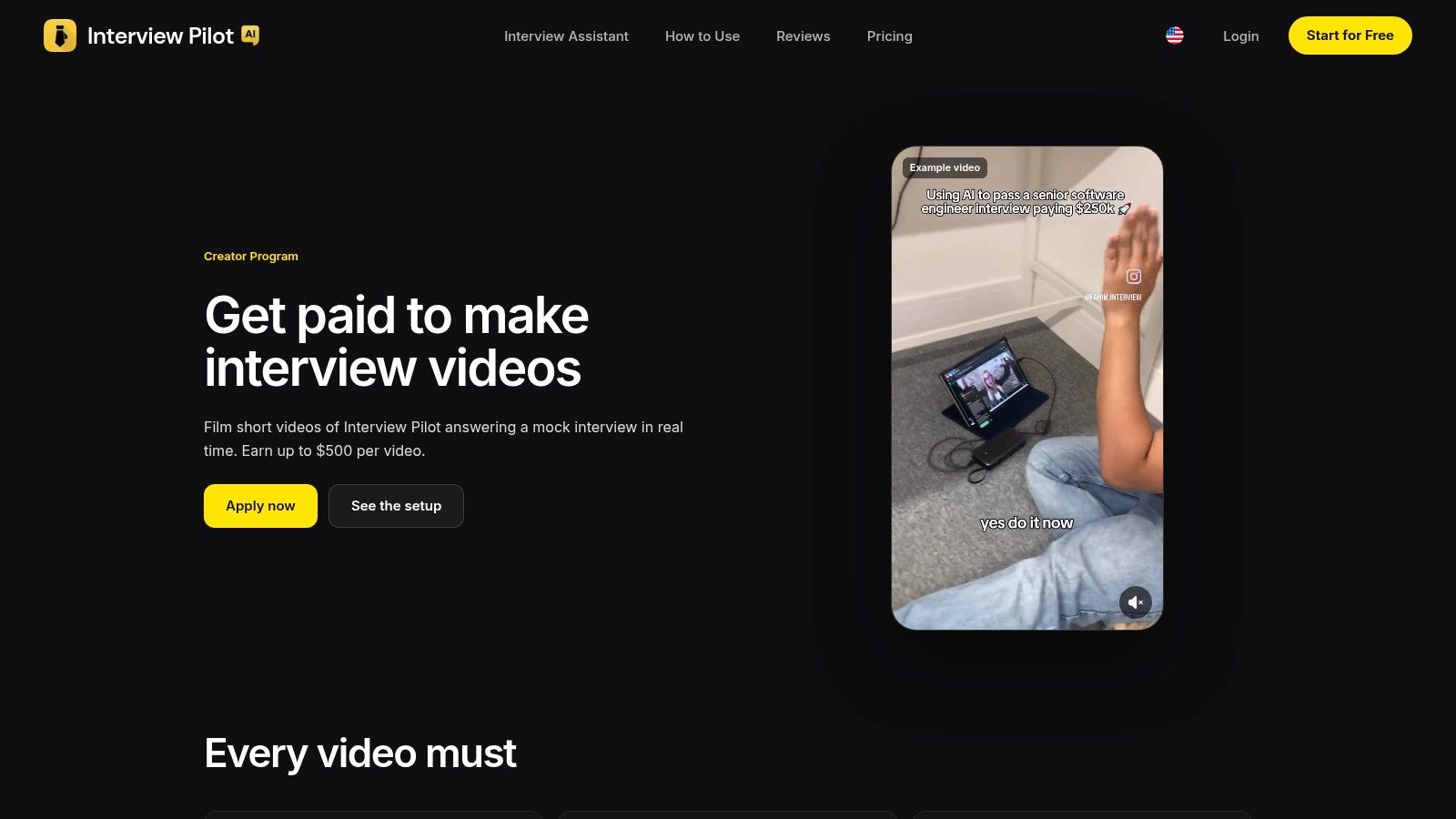
Best for career-content creators who want to demonstrate interview practice. The Interview Pilot Creator Program is a different proposition from a conventional video library. Its page includes an example video and explains the process of filming, recording, and publishing a demonstration.
For creators covering job searching or interview skills, that gives the content a concrete format. Rather than delivering another list of ideal answers, you can show a prompt, a candidate's response, and what they should work on next. Our AI mock interviews include an evaluation of your answers, making feedback a useful focus for that demonstration.
Study the practice process, not just the polished answer
Watch how the example introduces the task and makes the interaction understandable to someone who hasn't used the service. When producing your own version, distinguish between a prepared explanation for viewers and a spontaneous answer to an interview prompt. Otherwise, viewers may mistake polished presentation for realistic performance under pressure.
A useful creator-led demonstration should make these distinctions visible:
- The starting point: Explain the interview type and the behavior being practiced.
- The response: Let viewers hear enough of the answer to assess its structure and relevance.
- The revision: Show what the candidate would change, rather than presenting feedback as an unexplained verdict.
The trade-off is audience fit. This is primarily a creator opportunity, not a standalone collection for job seekers who only want examples to watch. The available page details also don't specify eligibility, compensation, or other program terms, so don't assume those arrangements.
For candidates, the transferable lesson is straightforward: a useful mock-interview video should reveal how someone practices, not merely how convincing they sound after editing.
2. Indeed Career Advice
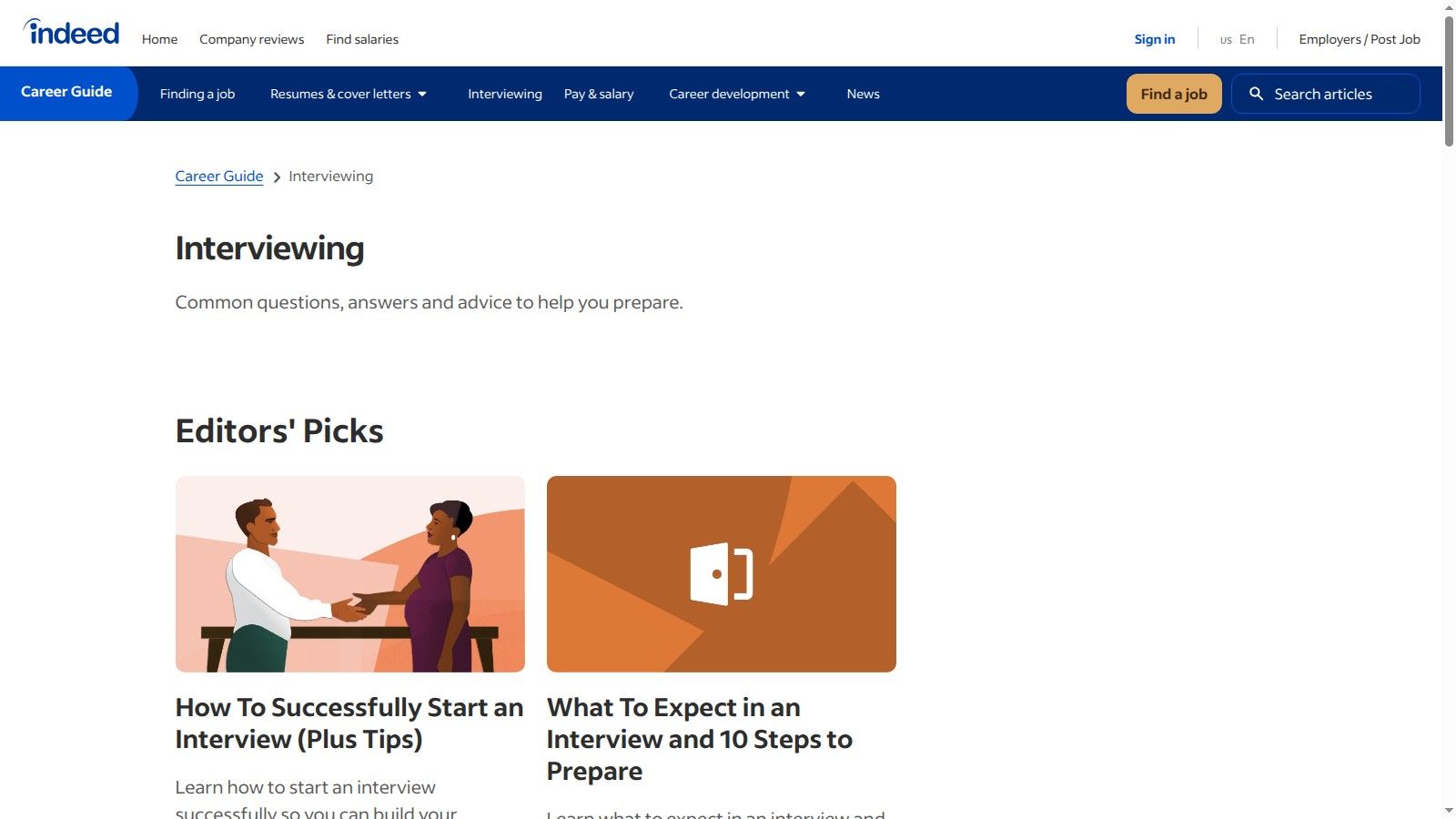
Start with Indeed Career Advice if your immediate concern is getting through a general virtual interview without overlooking the basics. Its free interview library combines written guidance with videos, including a step-by-step virtual-interview example.
This is a demonstration resource, not a personal feedback tool. It's particularly useful for seeing how setup, small talk, listening, and answers fit together. That matters when your preparation has focused entirely on question lists and you haven't considered the transitions between them.
Watch the opening closely. Notice how the candidate moves from greeting the interviewer to discussing their background, and distinguish friendly conversation from an unnecessarily long introduction. During answers, study whether gestures support the explanation or compete with it.
- Study the setup: Check framing, lighting, audio clarity, and what's visible behind the candidate.
- Study the handoffs: Notice when the candidate stops speaking and gives the interviewer room to respond.
- Practice afterward: Record your own introduction with your actual interview equipment.
The limitation is specificity. A general example won't show the reasoning expected in a system-design discussion, an investment-banking technical question, or a consulting case.
Use Indeed to establish a reliable baseline, then switch to role-specific material. Don't keep watching introductory examples once your real difficulty is explaining technical decisions or defending a recommendation.
3. Aced (formerly Exponent)
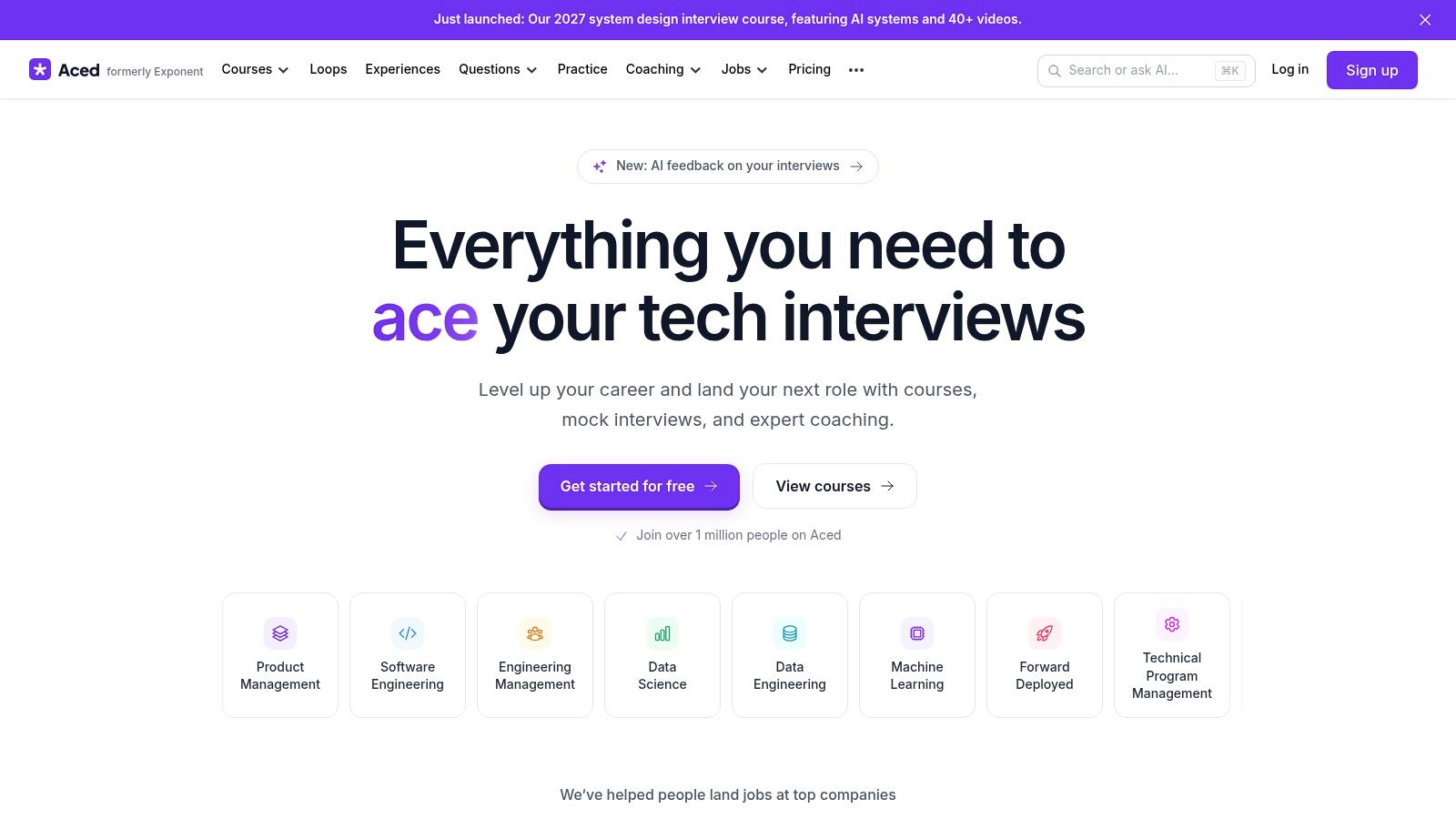
A software-engineering candidate and an investment-banking candidate shouldn't study the same model answer. Aced is useful when you need role-specific explanations alongside mock-interview videos, with coverage spanning software engineering, product management, data, and investment banking.
Its mix of courses, searchable questions, video answers, and full examples lets you move between a narrow knowledge gap and a longer interview interaction. Some lessons have free previews, while broader course access is paid. Treat the previews as a way to judge relevance before committing to the library.
Watch the reasoning between the milestones
For technical questions, pause when the candidate chooses an approach. Can you explain the assumptions and alternatives before hearing their justification? For product or business questions, watch how they define the problem before proposing solutions.
The strongest use of a demonstration is comparison, not imitation. Write your own outline, watch the example, then identify where your reasoning diverges. A different answer isn't automatically weaker if you can defend it.
Don't copy an expert's confidence without checking whether you understand the decision underneath it.
The main limitation is fit across seniority and interview format. An example can be relevant to your role but still too introductory, too specialized, or unlike the discussion you'll face. Select material by the skill being tested, and don't assume that watching a course lesson includes personalized recording or feedback.
4. Big Interview
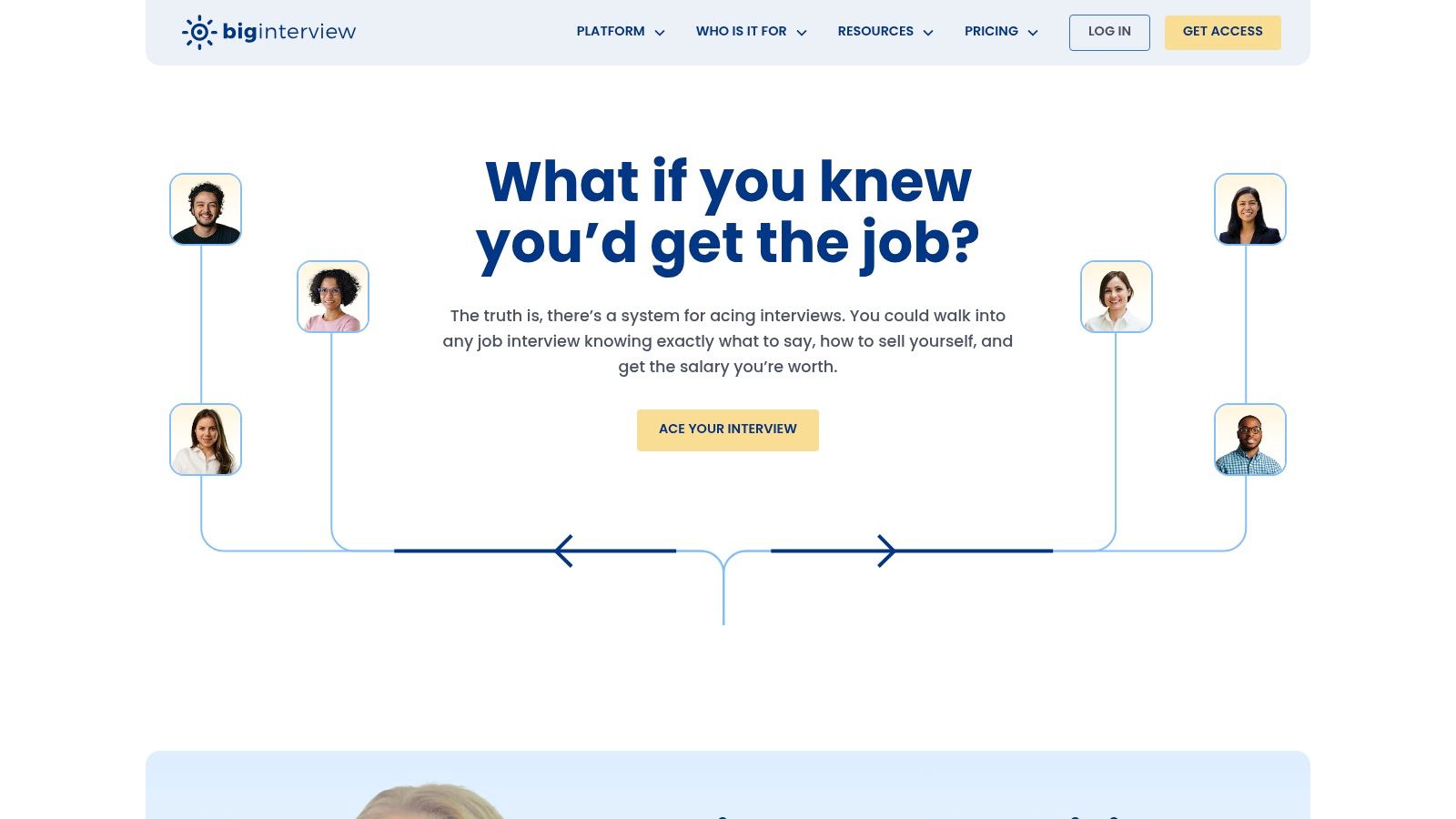
Big Interview makes sense when you know the advice but haven't practiced delivering it. Big Interview combines video instruction with recording and review tools, so you can learn an answer framework and then attempt it yourself.
That distinction matters. In a controlled study of 15 students, employers rated the video-modeling intervention group's overall interview performance as significantly improved, including clearer, more logical, and more concise presentation, according to the Journal of Vocational Rehabilitation study. That small study doesn't validate every commercial platform, but it gives a more grounded reason to use examples than to hope passive watching will help.
Use the training lesson to choose an answer structure, then review your own recording for a specific mismatch. Perhaps your opening answers the question, but the middle becomes a detailed project history.
- Useful feedback: Pace, filler words, and eye-contact analysis can flag delivery habits to inspect.
- Important limitation: Delivery analytics can't establish whether your example demonstrates sound judgment.
- Access trade-off: Individual preparation may require a paid plan, while some users access it through a school or organization.
For a broader explanation of how to organize rehearsal, the guide to online mock interviews is a useful companion. Keep your review anchored to observable changes, such as stating your contribution clearly before describing the team's result.
5. Yoodli
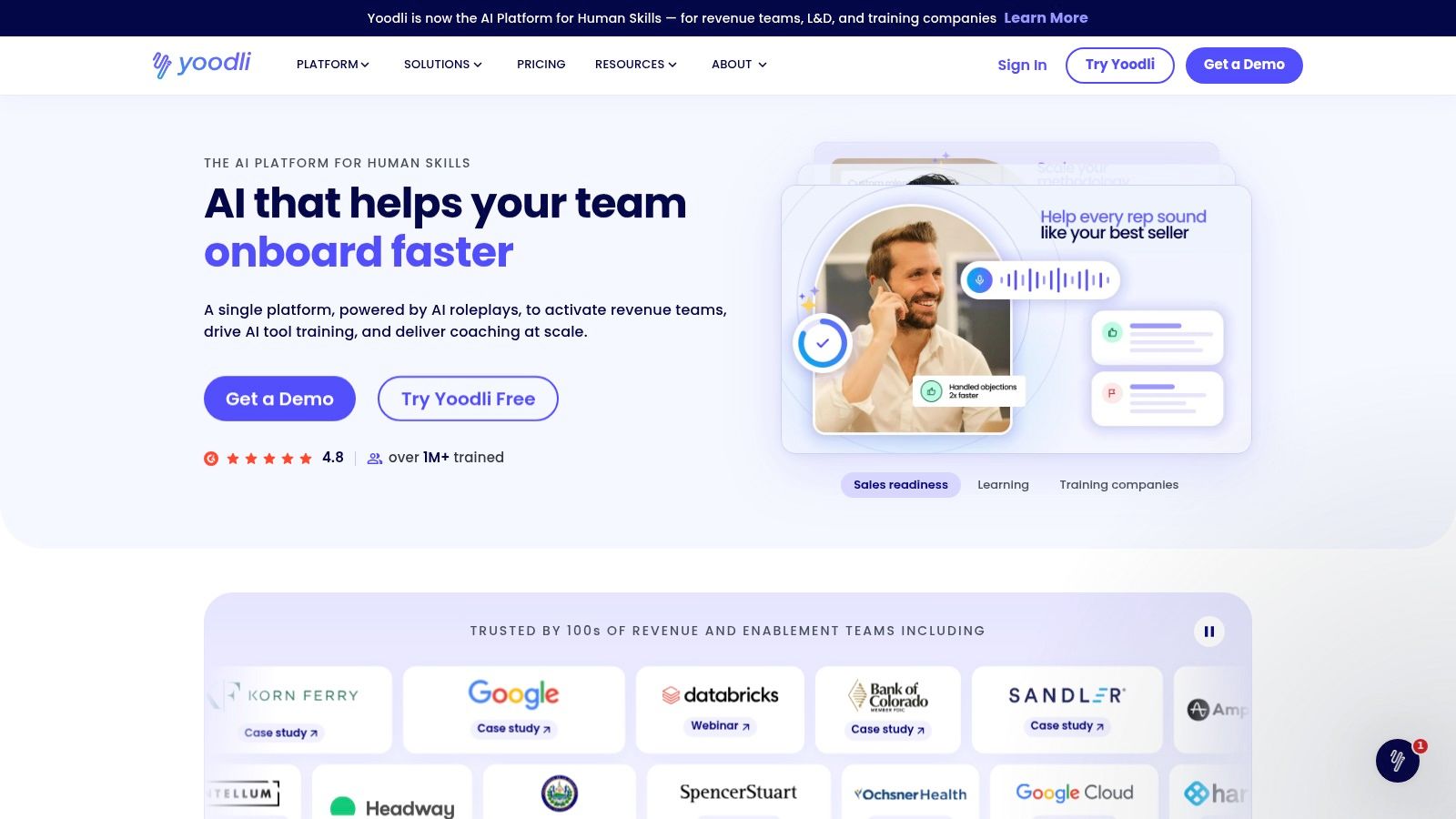
The follow-up question is where a memorized answer stops being enough. Yoodli is worth considering if you need interactive speaking practice rather than another video to watch.
Its interview roleplays can use preset questions and dynamic follow-ups, with microphone and camera practice and saved-session analysis. You can customize scenarios around a role or company, then review how you responded. That makes it useful for testing whether your story survives a request for clarification.
Review your reaction to the follow-up
Don't assess only the original answer. Listen for whether you address the new question directly, repeat your previous explanation, or introduce details that contradict it. If the follow-up exposes a missing fact, add that fact to your preparation notes rather than memorizing a longer script.
A study of 106 participants completing a mock asynchronous video interview found that perceived usefulness and ease of use predicted attitudes toward the technology, as described in the published video-interview acceptance study. For your own shortlist, that means recording and reviewing should feel straightforward enough that you'll repeat the exercise.
AI interaction still isn't human interviewing. Use it for answer retrieval, clarification, and speaking aloud, then include human practice for conversational nuance. A free tier is available, but access is limited; compare practice formats in this guide to free online mock-interview practice before building your routine around any single option.
6. CareerVidz
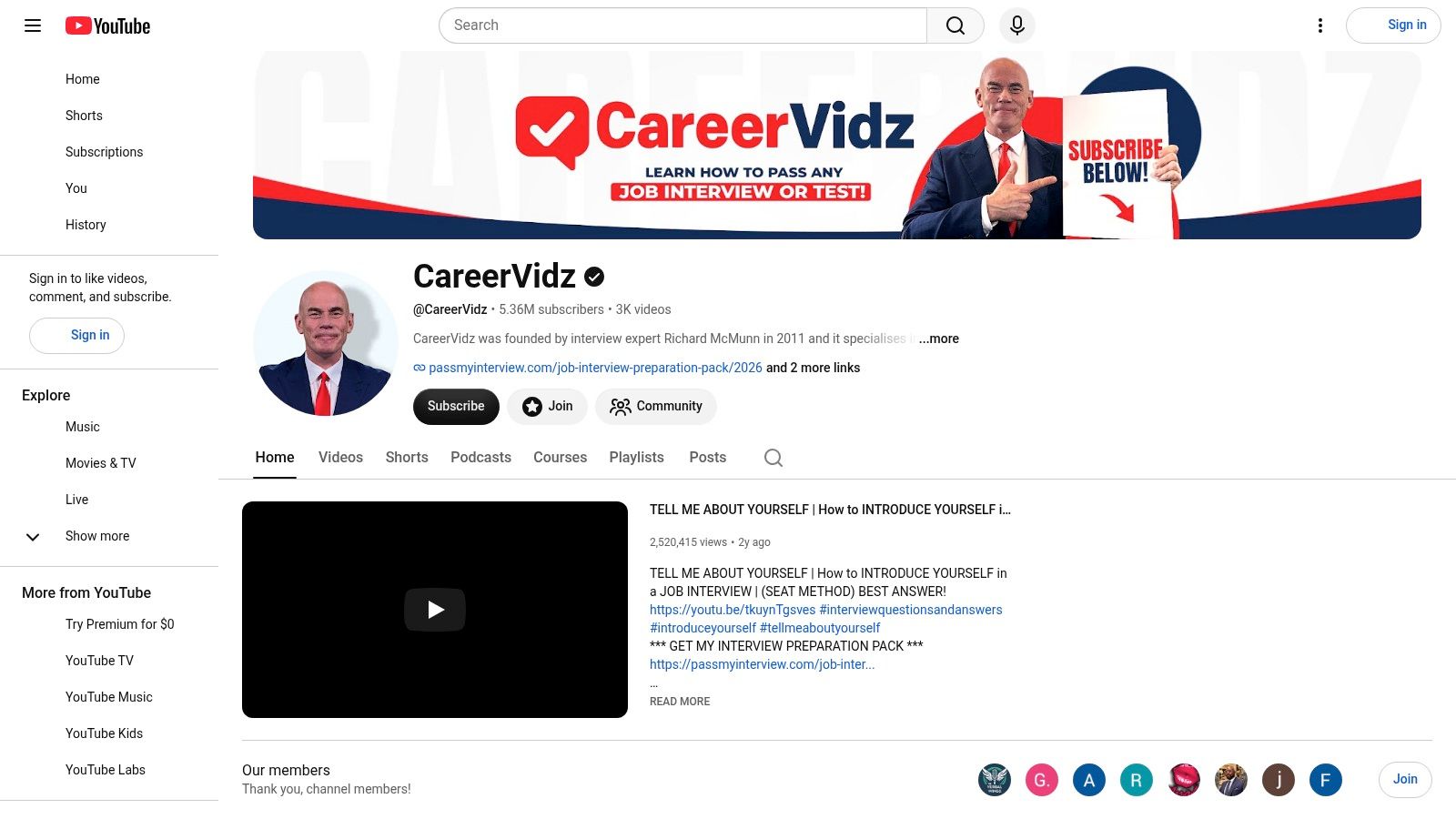
CareerVidz is a practical starting point when you need exposure to common questions about strengths, mistakes, workplace conflict, stress, and salary expectations. Its free public archive includes long-form mock interviews and question-and-answer explanations.
The advantage is breadth. A first-time candidate can work through familiar interview themes without assembling a separate playlist for every topic. The risk is borrowing language that sounds polished but doesn't describe your experience.
Study the function of each sentence rather than its wording. Does the candidate state a strength, support it with an example, and connect it to the role? In a mistake answer, do they explain the correction, or spend most of the response making the mistake sound harmless?
- Keep the structure: Borrow the sequence of claim, evidence, and relevance.
- Replace the content: Use an experience you can explain under follow-up questioning.
- Test the credibility: Ask yourself what an interviewer would challenge or want clarified.
Some examples can feel scripted, and general answers won't cover the depth expected in specialized technical or senior interviews. Don't treat an assured delivery as proof that the answer fits your target role.
Use CareerVidz for question coverage and initial answer outlines. Then close the video and answer in your own language, without trying to reproduce the presenter's rhythm or phrasing.
7. Exponent Mock Interview Video Archive
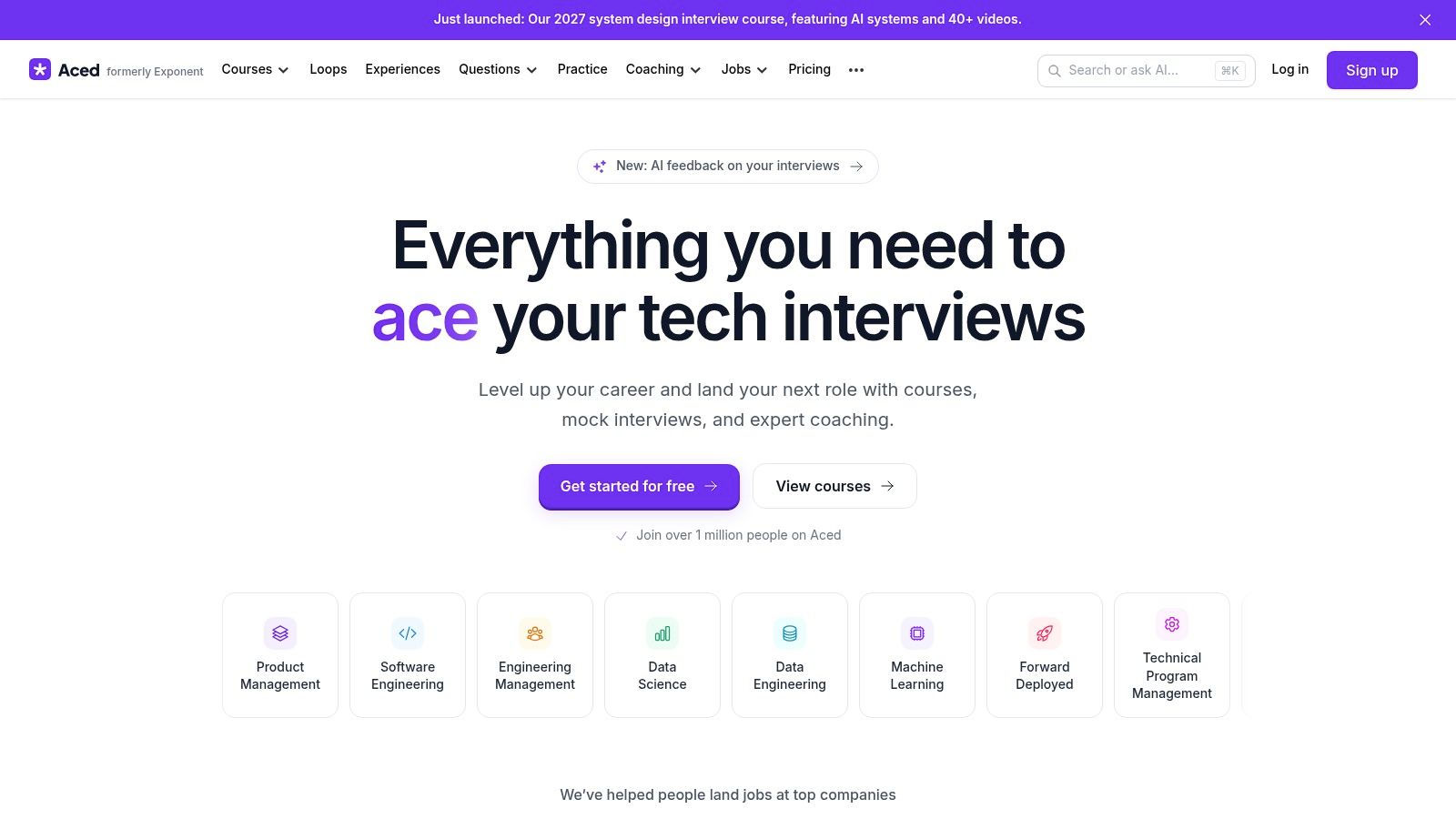
For technical and product preparation, the Exponent video archive is most useful as a place to study the interview process as it unfolds. Its mock interviews cover areas such as software engineering, system design, product management, and data.
There's overlap with Aced, formerly Exponent, so don't treat these entries as entirely independent libraries. Use Aced when you want a course-led route through concepts; use the archive route when you want to inspect a full conversation. Some video content is free, while courses and some practice services require payment.
Watch changes of direction
In a system-design discussion, study what happens after the interviewer changes a requirement. Does the candidate revisit assumptions, explain the consequences, and adjust the design? In a product interview, notice whether a challenge prompts clearer prioritization or merely a longer list of ideas.
The recordings are demonstrations, not personalized practice. Pause at a decision point and explain your next step before continuing; otherwise, understanding someone else's solution can feel deceptively similar to producing your own.
Technical-practice priority: Explain why an approach fits before defending how you'd implement it.
The catalog's technology and product emphasis is a limitation for candidates seeking general finance or consulting coverage. Also study how candidates share conversational space, using this guide to video interview etiquette to check your own online delivery alongside the technical reasoning.
8. University of Toronto Scarborough Interview Ready
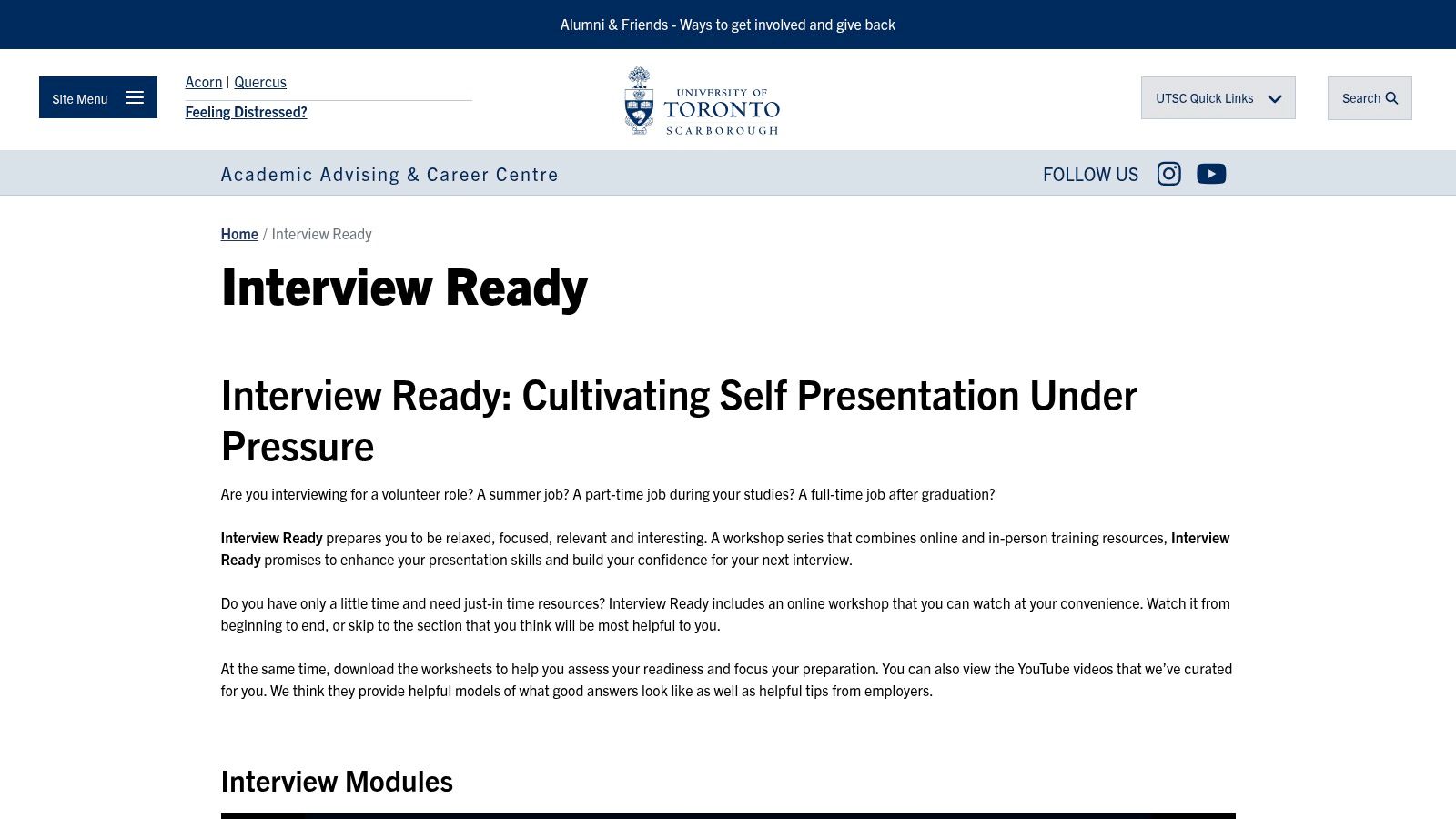
Students often need help recognizing usable evidence, not more impressive-sounding answers. University of Toronto Scarborough's Interview Ready offers a free, structured introduction through videos on preparation, interview stages, behavioral answers, and body language.
Its STAR-method guidance is useful for turning a course project, campus responsibility, or part-time job into an understandable example. Watch how an answer separates the situation and task from the candidate's actions and results. The interviewer needs to understand what you did, not just what happened around you.
Try applying the framework to an ordinary but defensible experience. Say your project group missed an internal deadline: explain what you noticed, how you reorganized the remaining work, and what you learned. Don't inflate the stakes to make the story sound more professional.
- Observe ownership: Separate personal decisions from the group's collective activity.
- Observe proportion: Keep background short enough to leave room for actions and reflection.
- Observe relevance: Connect the example to the competency the question asks about.
This is a guided collection, not an interactive mock-interview platform. It won't record your answers or provide individualized feedback, and its examples aren't always industry-specific.
Use it to establish a clear behavioral-answer framework, then record your own attempt elsewhere. Treat body-language material as guidance to inspect, not a requirement to mimic someone else's gestures or communication style.
9. UConn Career on Demand
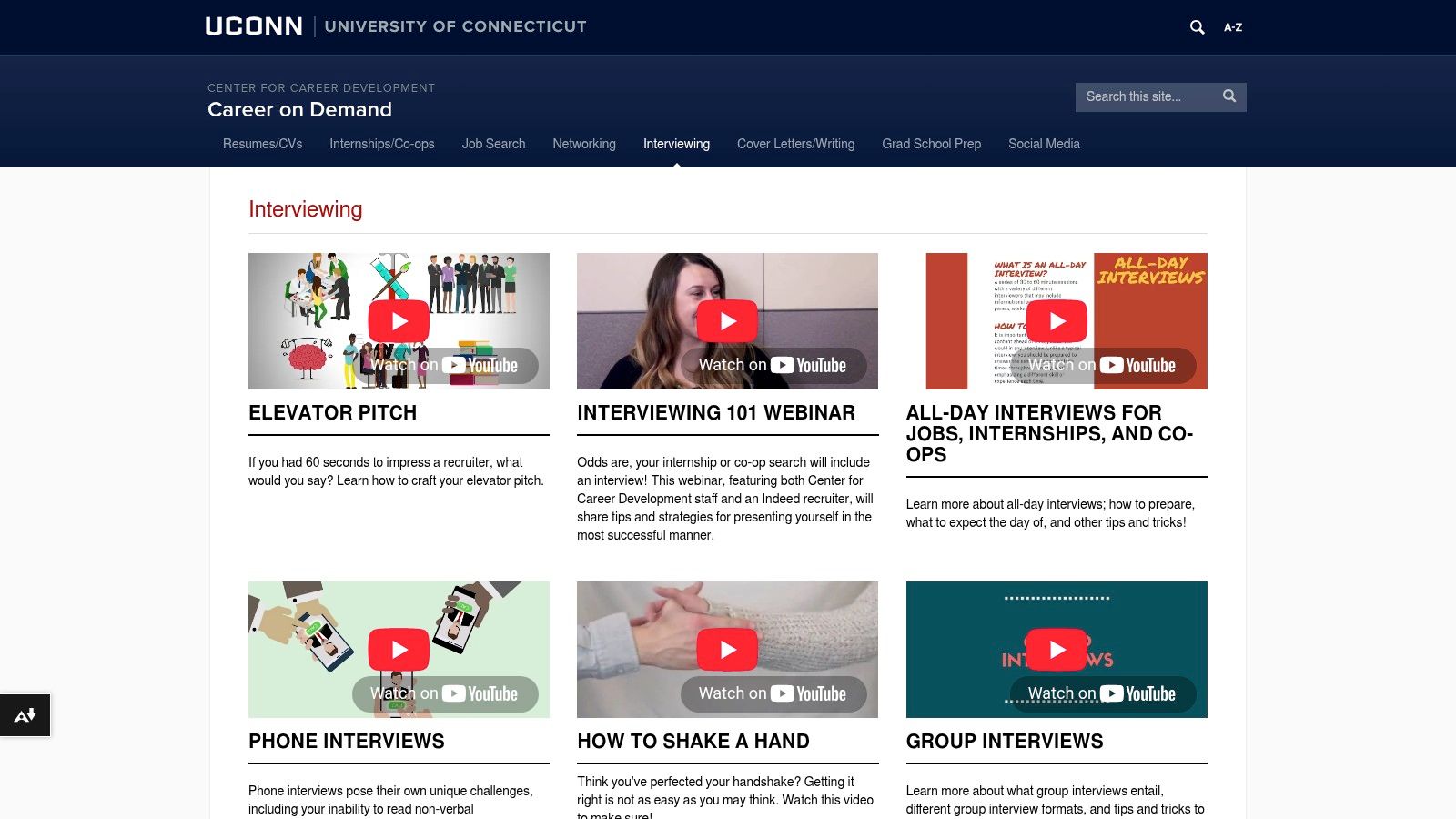
The end of an interview deserves rehearsal too. UConn Career on Demand is a free supplementary library for reviewing particular interview topics, including questions to ask the interviewer.
Choose it for targeted preparation, not a complete simulation. The topic-based format suits candidates who already have a workable introduction and behavioral examples but need to improve a particular stage. Its university career-development focus also makes it accessible to students and recent graduates.
Make closing questions responsive
When studying advice about closing questions, look beyond the wording of a suggested prompt. Consider what you need to learn about the role: expectations, collaboration, decision-making, or the problems the successful candidate will inherit.
Then practice adapting the question to information already discussed. If the interviewer has explained the onboarding process, don't ask them to repeat it because that question was next on your list. Ask about an unresolved detail instead.
A useful closing question should meet these tests:
- It fills a gap: You haven't already received the answer.
- It supports a decision: The response helps you assess the opportunity.
- It permits discussion: You can ask a relevant follow-up rather than immediately switching topics.
The limitation is fragmentation. Separate videos won't reproduce the fatigue or pacing of a complete interview, so rehearse your closing after answering substantive questions aloud. You need to practice remaining curious and attentive when you're no longer delivering prepared stories.
10. Texas A&M Career Center
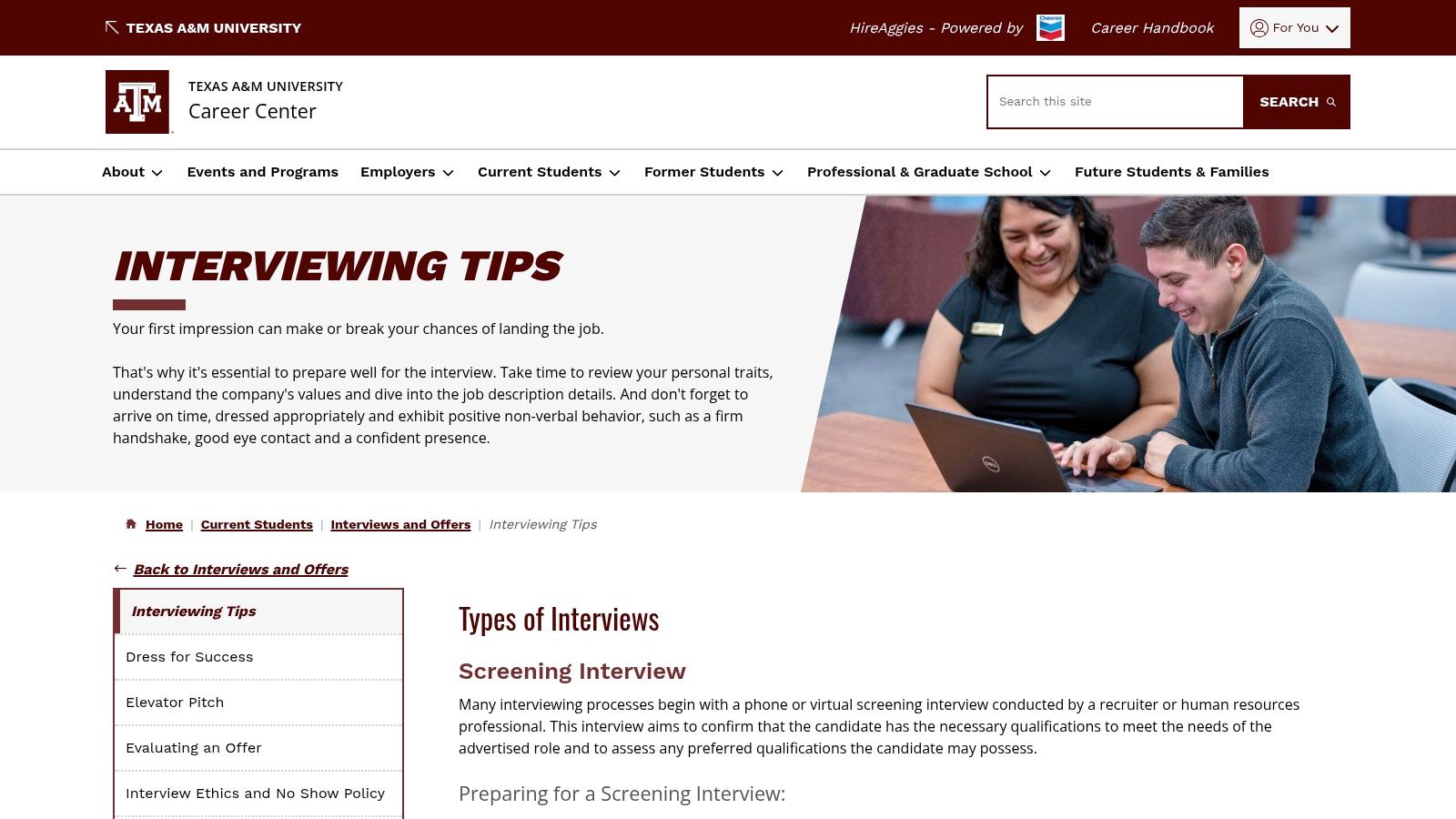
Choose Texas A&M Career Center's interviewing resources when you want guidance connected to selectable practice questions. Its resources include premade interview options and virtual mock interviews built from question banks.
That makes this a different option from a public video-example library. Instead of searching only for a candidate whose interview resembles yours, you can assemble prompts around your preparation needs. Public advice is available, while some interactive tools may require student or institutional eligibility.
Build practice around a competency rather than a favorite story. For teamwork, include prompts about disagreement, responsibility, and a disappointing outcome. That tests whether you can select appropriate evidence instead of forcing the same success story into every answer.
- Use premade interviews when you need an unfamiliar question sequence.
- Customize questions when you're addressing a defined weakness.
- Delay review when you want to practice completing a conversation without restarting after every awkward answer.
The access limitation matters, particularly for readers outside the university. Don't assume every interactive option is publicly available because the advice page is accessible.
If you can use the tools, resist building an interview containing only comfortable questions. Include prompts you haven't recently rehearsed and finish the session before reviewing it. The value comes from discovering where your preparation is incomplete, not from manufacturing a flawless practice recording.
How the 10 mock interview video resources compare by audience, access, and format
| Item | Best for | Free access | Format |
|---|---|---|---|
| Interview Pilot Creator Program | Creators making interview-preparation content | Program terms not specified | Creator video demonstrations |
| Indeed Career Advice | General interview guidance and virtual interview examples | Free | Advice library with videos and guides |
| Aced (formerly Exponent) | Role-specific technical and business interview prep | Free previews; full access paid | Courses, question explanations, and mock-interview videos |
| Big Interview | Structured lessons and recorded practice | Paid or institutional access may be required | Video lessons and record-and-review tool |
| Yoodli | Practicing answers aloud with AI | Free tier with limited roleplays | Interactive AI roleplay and session analysis |
| CareerVidz | General interview questions and answer examples | Free | Public video archive |
| Exponent Mock Interview Video Archive | Technical and product interview demonstrations | Some videos are free | Mock-interview video archive |
| University of Toronto Scarborough, Interview Ready | Beginner-friendly interview preparation | Free | Curated video modules |
| UConn Career on Demand | Reviewing specific interview topics | Free | Topic-based video library |
| Texas A&M Career Center | Customizable interview rehearsal | Public materials; some tools may require institutional access | Interview guidance and virtual practice tools |
Turn Each Video Into a Practice Session of Your Own
Choose a small shortlist that matches your interview type: a general demonstration for conversational basics, a role-specific example for substance, and a recording or interactive tool for rehearsal. You don't need to work through every library. You need material that exposes the next skill to practice.
Watch with a narrow purpose. Note how the answer opens, where the candidate pauses, and what changes after a follow-up. Then close the example and answer the same question aloud, using your own experience and reasoning.
Review what you can actually change
Separate answer quality from delivery. A fluent response can still miss the question; a hesitant response can contain sound reasoning that needs clearer organization. Review both before deciding what to repeat.
- Relevance: Did your opening address the question directly?
- Evidence: Did you explain your actions, assumptions, or trade-offs?
- Pacing: Did you leave room for clarification and follow-ups?
- Recovery: Could you acknowledge uncertainty without abandoning the answer?
For non-native speakers, include recovery practice rather than focusing only on pronunciation. In a study involving 80 non-native English-speaking interviewees, real-time translation alone improved perceived self-efficacy, clarity, and responsiveness, while combined translation and transcription produced worse ratings than either tool separately, according to the ACM study. Don't assume that more simultaneous assistance will make an interview easier.
Practice asking for repetition, checking your interpretation, and recovering after an audio delay. Use captions or translation during rehearsal to assess whether they help you follow the conversation or distract you from it.
Progress beyond familiar prompts
Move from imitation to an unscripted attempt, then to follow-ups and a live-style session with feedback afterward. The Bodyswaps discussion of soft-skills simulations and employability highlights the transfer problem: practice that doesn't resemble the target environment may not produce the behavior you need outside training. Feeling more confident isn't the same as demonstrating improved hiring outcomes.
Finish preparation by answering unfamiliar questions without pausing to search for model wording. Review the recording, choose a concrete adjustment, and repeat the task with a different prompt. The useful result isn't a memorized answer. It's a repeatable way to listen, organize your thoughts, and respond when the conversation changes.
Interview Pilot offers AI mock interviews with evaluations of your answers, so you can put the techniques you notice in mock interview videos into practice. Visit Interview Pilot, rehearse a question relevant to your target role, and use the evaluation to choose what to improve in your next attempt.


Topics
mock interview videos
interview practice
practice interviews
video interview tips
job interview prep
Continue reading
Interviews
Interview Simulator Tools: 10 Options to Practice Smarter
Compare 10 interview simulator tools for 2026 — formats, feedback quality, and pricing — plus practical tips for choosing the right practice setup.
November 17, 2026
14 min read
Interviews
9 Mock Interview Questions for 2026: Sample Answers
Practice 9 mock interview questions with sample answers, STAR-based guidance, and rehearsal prompts for behavioral interviews in 2026.
November 20, 2026
17 min read
Interviews
One Way Video Interview: What Candidates Should Expect
One way video interview explained: how it works, why employers use it, and how to prepare and check privacy before you record in 2026.
November 14, 2026
16 min read