












AI Tools
AI Answer Generator Guide for Job Seekers
Learn what an AI answer generator is, how it works, and how to use one responsibly for interview prep without compromising accuracy or authenticity.
Interview Pilot Editorial Team
Updated October 6, 2026
16 min read

You're two minutes into a virtual interview when the question takes an unexpected turn. Your earbuds are in, a second screen is open, and an AI tool has produced a polished response. You can read it, but you can't quite make it sound like you. Then the interviewer asks a follow-up, and the answer starts to fall apart.
That moment captures the core issue with an AI answer generator. The technology can give you structure, speed, and useful practice. It can also tempt you into delivering words you don't own. The right question isn't whether these tools are magic or cheating. It's whether you're using them to build interview ability or to disguise the absence of it.
What an AI Answer Generator Actually Is
An AI answer generator is software that accepts a natural-language prompt, usually a question, and creates a written or spoken response with a large language model. It generates an answer from the context you provide rather than selecting a fixed response from a prewritten library.
That distinction matters. A search engine returns links. An FAQ bot usually retrieves an approved answer. A template library gives you a structure to complete. A generative tool creates new wording each time, adapting its response to the question, your instructions, and any profile information you've supplied.
The category includes several different products:
- Preparation assistants draft responses to common interview questions so you can critique and rehearse them.
- Real-time copilots listen to a live question, transcribe it, and suggest a response while the conversation continues.
- Embedded helpers sit inside coding, writing, or productivity platforms and produce explanations, examples, or revisions in the working context.
The product shape changes the risk. A preparation assistant gives you time to check the answer against your actual experience. A live copilot compresses that checking process into the few seconds available during an interview. An embedded coding helper may be useful for practice, but it doesn't prove that you can solve a problem independently under assessment conditions.
Large language models made this category possible by moving beyond narrowly trained systems. OpenAI's GPT-3 research paper and implementation materials describe a model with 175 billion parameters that demonstrated how scale and few-shot prompting could support many language tasks without task-specific fine-tuning. That approach underpins tools that generate explanations, summaries, role-specific responses, and practice answers from contextual instructions.
What the tool cannot tell you
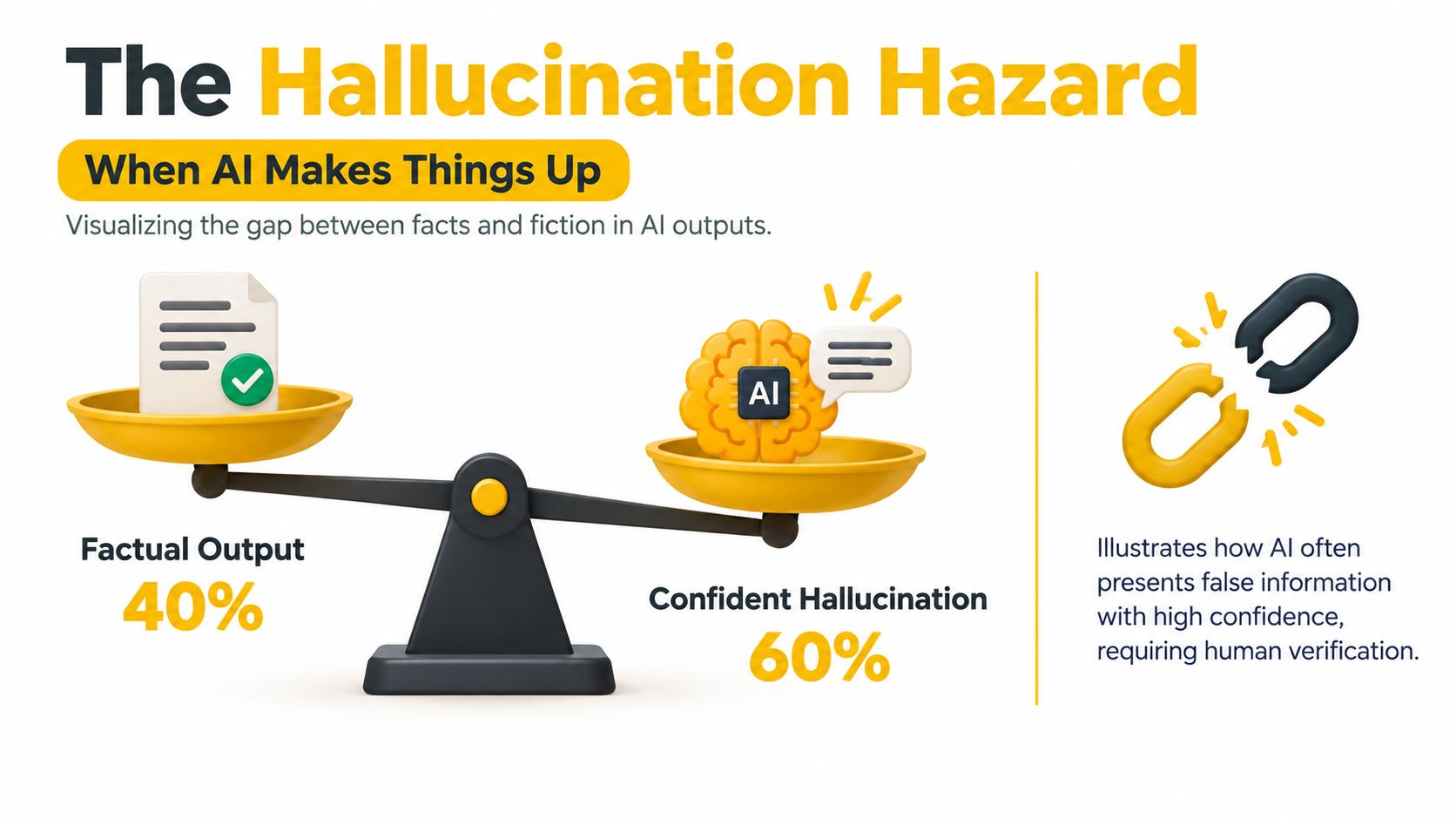
An answer generator isn't a recruiter, a credential evaluator, or a reliable judge of whether your story sounds believable. It doesn't know whether you led the project it describes unless you give it accurate information, and it may present a weak answer with impressive confidence.
You also need to understand understanding AI content detection if you're concerned about how generated language may appear to an employer or evaluator. Detection isn't a substitute for integrity, but recognizing the signals of generic or machine-shaped writing can help you edit drafts into language that reflects your real speaking style.
The trade-off is simple. AI gives you speed and structure, but you remain responsible for accuracy, relevance, and authenticity.
How AI Answer Generators Produce a Response
Think of the process like a kitchen. You provide ingredients, the system prepares them according to a recipe, and the interface serves the result one piece at a time. The meal may look complete, but the kitchen doesn't know whether the ingredients were true, suitable, or even yours.
The input stage
First, the tool breaks your question into smaller units called tokens. It combines those units with system instructions, your profile, previous conversation turns, and any documents you've supplied. “Tell me about a difficult project” produces a very different result from “Answer in a concise STAR structure using only my experience migrating a payment system.”
The prompt is the most important control you have. If your résumé contains vague claims, the system may turn that vagueness into polished but unusable language. If your instructions ask for confidence without requiring factual limits, it may fill gaps instead of admitting uncertainty.
The model and decoding stages
The language model predicts what token should come next, then repeats that process until it reaches a stopping point. It draws on patterns learned during training and on the instructions in the current prompt. Fine-tuning and reinforcement methods can shape how it follows directions, but they don't turn it into a witness to your career.
Decoding settings influence the result. Lower variation settings tend to produce more repeatable and controlled answers. Higher variation can create fresher phrasing, but it may also introduce unnecessary claims or awkward turns. For interview preparation, controlled wording is usually more valuable than novelty.
Streaming and post-processing
Many interfaces stream tokens as they are generated, so words appear before the complete answer is finished. The system may then apply safety checks, formatting rules, profanity filters, or a response wrapper before showing the final output.
Every stage is probabilistic. That means a fluent answer can still contain a wrong assumption, an invented detail, or a poor interpretation of the question. Use an AI productivity tools guide to compare workflows, but don't confuse a smooth interface with verified reasoning.
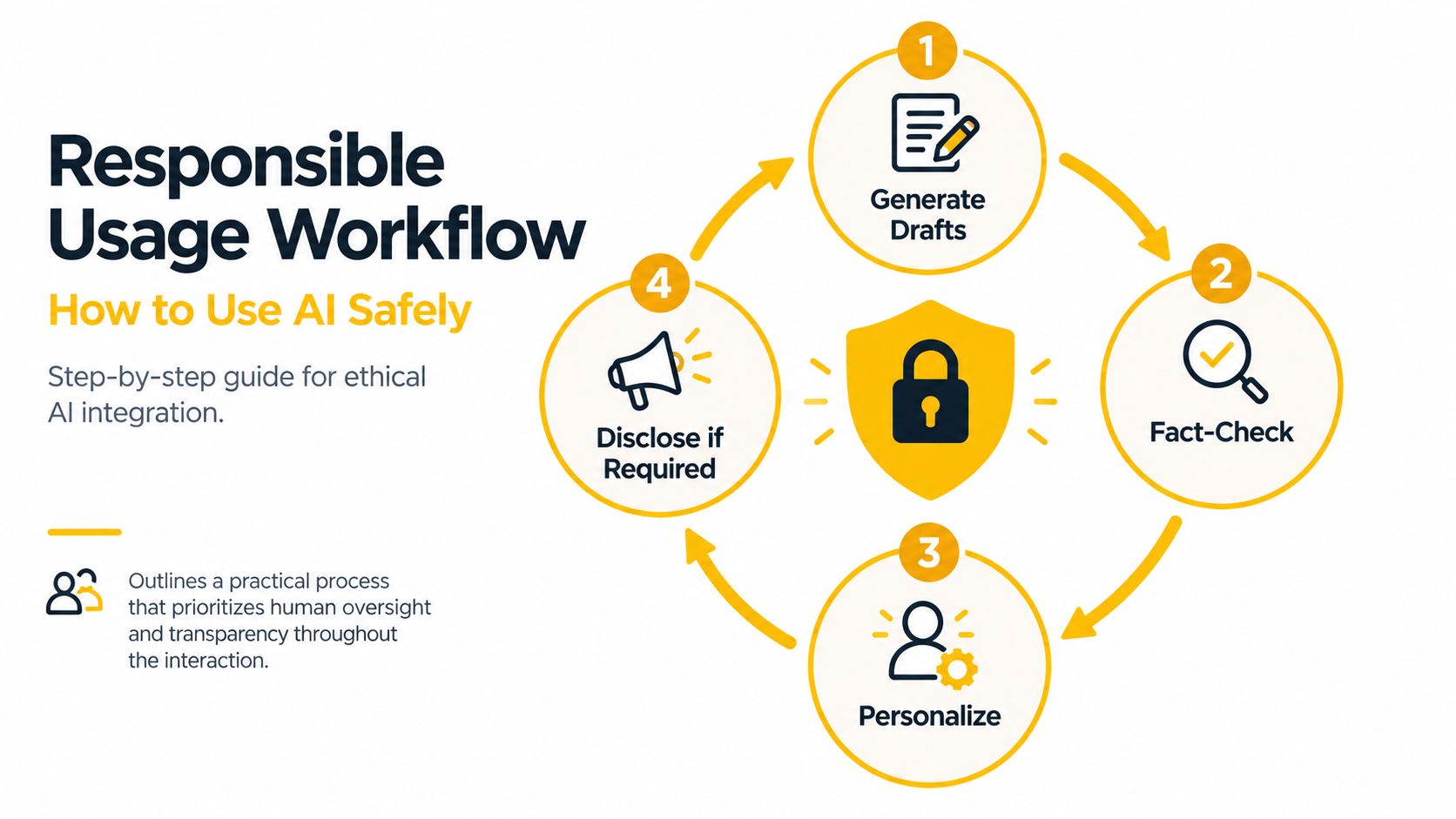
The safest approach is to treat output as a draft to inspect, not a verdict to repeat. If the tool helps you rebuild real speaking confidence, the value comes from turning the draft into language you understand and can defend.
Speed, Streaming, and What Real-Time Really Means
A live answer generator succeeds or fails on responsiveness. A useful tool feels like a prompt arriving early enough to support your thinking. A slow tool becomes a second problem, especially when the interviewer has already moved to the next question.
Three signals matter:
- Time to first token, or TTFT, measures how long the system takes before showing the first part of an answer. It includes transmission and prompt processing.
- Inter-token latency describes the pace between streamed tokens. It determines whether the response appears smoothly or in frustrating bursts.
- End-to-end completion time measures how long the full response takes, including retrieval, generation, transcription, and network overhead.
A recent inference benchmark reports median generation throughput of roughly 40 to 97 tokens per second across 16 tested models, while noting that average human reading speed is approximately 4 to 5 tokens per second. Those figures come from the LLM inference tokens-per-second comparison. They don't guarantee a particular interview product will feel fast, because retrieval, audio transcription, connection quality, and interface design also affect the experience.
| Signal | Typical Range | Interview Impact |
|---|---|---|
| Time to first token | Product and network dependent | Determines whether you see useful guidance before the conversation moves on |
| Inter-token latency | Product and model dependent | Controls whether streamed wording is readable and usable |
| Generation throughput | Approximately 40 to 97 tokens per second in the cited benchmark | Influences how quickly a complete answer can appear |
| End-to-end response time | Depends on transcription, retrieval, model processing, and network path | Determines whether the answer supports the current question or arrives too late |
Design for the first sentence
A practical system should prioritize a concise opening before adding supporting detail. A candidate may need only a first sentence to regain direction, followed by evidence or a STAR structure as more tokens arrive. Streaming also makes cancellation useful when the interviewer changes direction.
Don't paste your entire résumé, question bank, and conversation history into every request. Large context can slow processing and bury the detail that matters. Use a compact candidate profile, retrieve only relevant experience, and keep the prompt focused.
Practical rule: Measure TTFT, streaming speed, end-to-end completion time, and interruption rate separately. A fast model can't compensate for a slow retrieval or transcription path.
Trust, Accuracy, and the Multilingual Gap
Language coverage is not the same as language quality. An AI answer generator may produce fluent text in many languages while reasoning unevenly across them. That difference matters when an answer includes technical terminology, financial calculations, behavioral detail, or culturally specific expectations.
The MMLU-ProX benchmark evaluated advanced reasoning across 13 languages, with approximately 11,829 questions per language. In its evaluation of 25 leading language models, the strongest systems exceeded 70% accuracy in English but fell to approximately 40% in lower-resource languages such as Swahili, according to the MMLU-ProX benchmark paper.
That is not an argument against multilingual preparation. It is an argument against treating a language badge as proof of equivalent performance. A generated answer can translate the surface wording while damaging the underlying meaning. It may change a technical constraint, use unfamiliar local terminology, adopt an inappropriate level of directness, or overstate your experience.
| Language Tier | Example Languages | Typical Accuracy Range | Interview Risk |
|---|---|---|---|
| Higher-resource benchmark language | English | Above 70% for the strongest systems in the cited evaluation | A fluent answer can still contain unsupported claims, but reasoning performance was stronger in this benchmark |
| Lower-resource benchmark language | Swahili | Approximately 40% in the cited evaluation | Greater risk of terminology drift, incomplete reasoning, or misunderstood instructions |
| Broad multilingual coverage | The benchmark covered 13 languages | Varies by language and model | Aggregate language support can hide weak performance in individual markets |
Check the meaning, not only the grammar
Before using a generated answer in another language, compare it with the idea you intended to express. Check whether it preserves the scope of your responsibility, the result you achieved, and the technical terms you would use. Then say it aloud. A sentence can be grammatically correct and still sound unnatural in your professional context.
Candidates interviewing across borders may also benefit from guidance on professional translation in 2026, especially when the answer involves legal, financial, technical, or culturally sensitive wording.
Don't let confidence substitute for verification. If you can't explain every sentence in your own words, the answer isn't ready. For lower-resource languages, maintain a personal review process with trusted terminology, role-specific examples, and human feedback whenever high-risk decisions are at play.
Where the Ethical Line Sits for Job Seekers
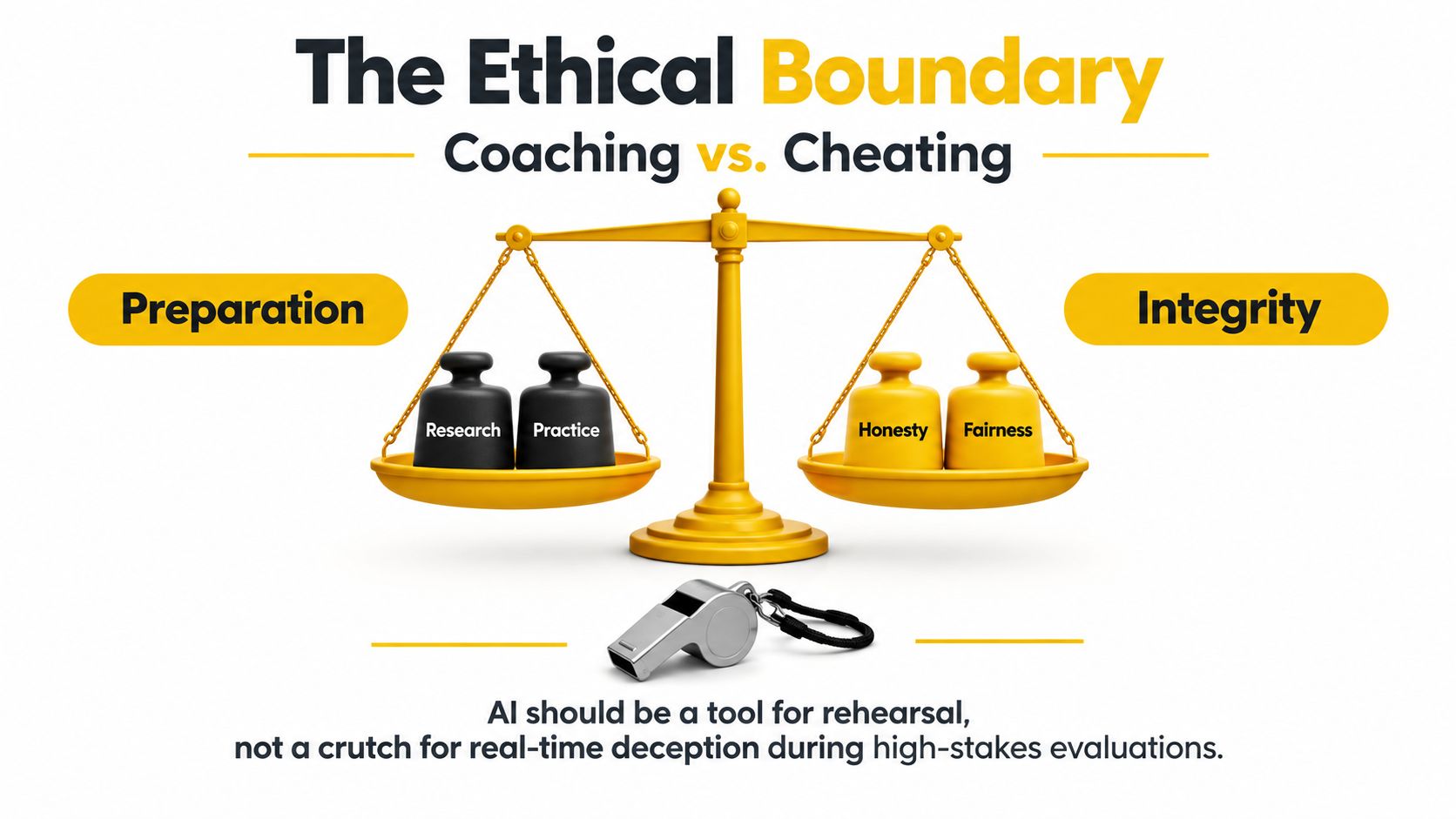
The ethical boundary is clear. Using AI before an interview to develop, test, and refine your own answers is preparation. Feeding a live question into an undisclosed tool and reading its response back is misrepresentation.
Preparation gives you a chance to challenge the output. You can remove invented details, replace generic examples with your own work, and rehearse follow-up questions. During a live interview, the tool is performing the communication task at the moment the employer is trying to evaluate your judgment, knowledge, and ability to respond.
This isn't just a moral distinction. It affects interview validity. A 2025 TestGorilla survey reported by Computerworld found that 21% of U.S. organizations and 20% of U.K. organizations used generative AI for at least some initial interviews. A separate peer-reviewed study of asynchronous video interviews found that candidates who read or paraphrased AI-generated responses received substantially higher interview ratings than candidates who didn't use AI, while delivery ratings were unaffected. That suggests generated wording can improve evaluated performance without improving the underlying communication skill.
Apply the three-question test
Before you deliver any AI-assisted draft, ask:
- Is this my experience? If the story, responsibility, result, or technical detail didn't happen, delete it.
- Can I defend every claim? Assume the interviewer will ask how you made the decision, what went wrong, or what you'd change.
- Would I be comfortable if the hiring manager knew the source? If the answer is no, you're probably relying on the tool as a disguise rather than a coach.
Employer policies decide the boundaries for a specific process. Some organizations prohibit external assistance in live interviews. Proctored assessments and technical evaluations often carry stricter rules. Read the invitation, assessment instructions, and candidate agreement before using any tool, and disclose assistance when the employer requires it.
A polished answer that collapses under one follow-up can cost more than an imperfect answer you fully own. Employers can forgive nerves. They have less reason to trust a candidate who appears to have concealed outside assistance during an evaluation.
Using an AI Answer Generator for Interview Preparation
Use the tool as a demanding rehearsal partner. Don't ask it to make you sound impressive. Ask it to expose weak reasoning, missing evidence, and follow-up questions that your first answer doesn't address.
Start with a role-specific mock session. Provide the job description, the skills you genuinely have, and a small set of real projects. Ask for one question at a time, then answer aloud without reading a generated response. Afterward, compare your answer with the tool's critique. Look for missing structure, unclear outcomes, and claims that need evidence.
Turn question banks into pressure tests
A broad question bank is useful when you use it to discover gaps rather than memorize paragraphs. Run common questions, behavioral prompts, technical scenarios, and uncomfortable follow-ups through the system. When it produces a model response, treat that response as an outline for what a strong answer might address, not as language to copy.
For each question, record:
- Your evidence: The project, decision, conflict, or failure you can discuss.
- The missing detail: A result, trade-off, constraint, or lesson you haven't explained.
- The follow-up: The question that would test whether you understand your own answer.
- Your natural phrasing: The words you would use when speaking to another professional.
International candidates can use the same process to test register and clarity. Ask for alternative wording, then choose the version that preserves your meaning and sounds like something you would say. Translation can support access and rehearsal, but it shouldn't create a performance you can't sustain in conversation.
Rewrite until it belongs to you
A generated draft becomes useful when you dismantle it. Remove the generic opening, insert the actual situation, state what you personally did, and explain the outcome without inflating it. Replace polished phrases with the vocabulary you use at work.
Read the answer aloud several times, without trying to memorize every sentence. If you can explain the idea using different words, you understand it. If you can only repeat the generated paragraph, you've memorized a script.
A structured AI mock interview workflow can support this kind of practice, provided you use it to rehearse and review rather than outsource the interview itself.
A Responsible Use Checklist Before Your Next Interview
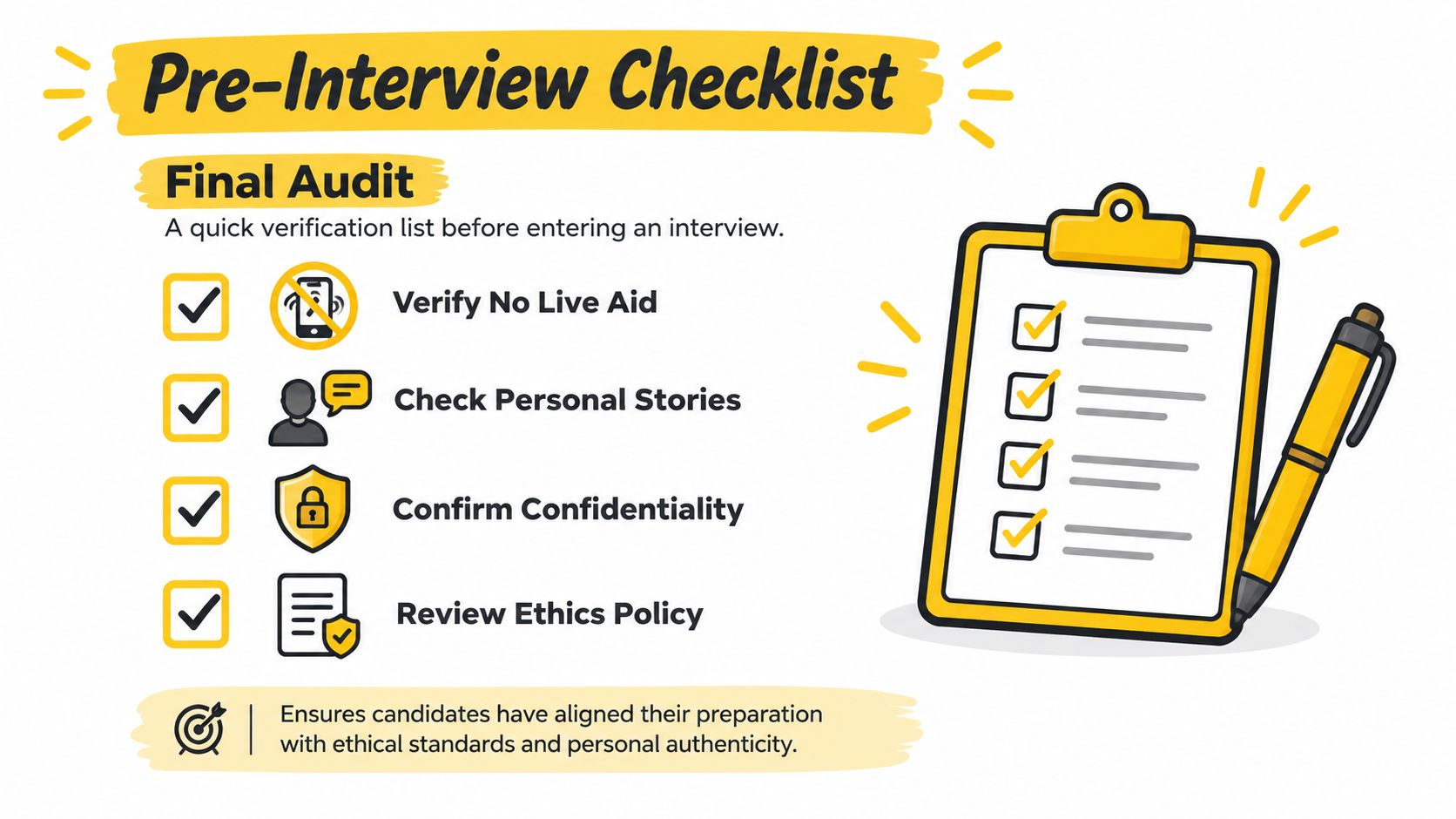
Run this audit in the final preparation window. It should make your answers more flexible, not turn them into a script.
Verify the substance
Take every generated answer and connect it to a specific experience from your past. If you can't name the project, your role, the decision you made, and what happened next, remove the answer or rebuild it from your own notes.
Check technical facts, company references, and role expectations against reliable materials. An answer generator can combine plausible details with an incorrect premise, especially when your prompt is vague. Never add a metric, certification, tool, or responsibility just because it makes the answer sound stronger.
Make the language yours
Read the answer aloud. Delete phrases you wouldn't use with a colleague, shorten sentences that sound rehearsed, and replace abstract claims with concrete actions. Strong answers don't need to sound grand. They need to sound specific and defensible.
Use the STAR method interview questions guide to check whether your story includes a clear situation, task, action, and result. Then practice saying the same story without following the exact same wording each time.
Remove what you can't defend
Ask yourself what happens if the interviewer interrupts after any sentence. Could you explain why you chose that approach? Could you describe an alternative? Could you admit what you didn't know?
Delete every response that depends on undisclosed live assistance when the employer prohibits it. Confirm whether the process permits external tools, check confidentiality requirements before uploading documents, and avoid sharing information that the employer has marked private.
The common failures are predictable: candidates memorize a polished paragraph that collapses under probing, repeat phrasing the interviewer has heard many times, or depend on real-time generation during a panel conversation where timing and eye contact matter. Practice aloud without notes so your preparation leaves room for spontaneous answers grounded in your work history.
The goal isn't flawless wording. It's fluency, accuracy, and ownership. Use AI to strengthen those qualities before the interview, then enter the conversation prepared to think for yourself.
Interview Pilot offers guided mock interview practice and an AI assistant that can generate personalized responses to technical and behavioral questions using your role and experience context. Use it to rehearse responsibly, refine authentic answers, and build confidence before your next interview by visiting Interview Pilot.
Topics
ai answer generator
interview prep
AI tools
job seekers
interview practice
Continue reading

Interviews
Mock Interview Meaning: A Practical Guide to Rehearsing
Learn the mock interview meaning, how simulated interviews build confidence, the main types, and how to practice effectively before your next real interview.
September 29, 2026
16 min read

Interviews
Interview Questions STAR Method Guide
Master interview questions STAR method with role-specific examples, timing breakdowns, and AI practice tips for technical and behavioral rounds.
September 30, 2026
14 min read

Interviews
What Is Behavioral Based Interviewing and How to Master It
Learn what is behavioral based interviewing, how the STAR method works, real answer examples for candidates, scoring tips for interviewers, and proven prep
September 20, 2026
20 min read