









AI Tools
Interview Practice Online: 10 Tools Compared for 2026
Compare 10 interview practice online options, from AI copilots and mock platforms to human coaches, with use cases, limits, and listed prices.
Interview Pilot Editorial Team
Updated October 24, 2026
17 min read
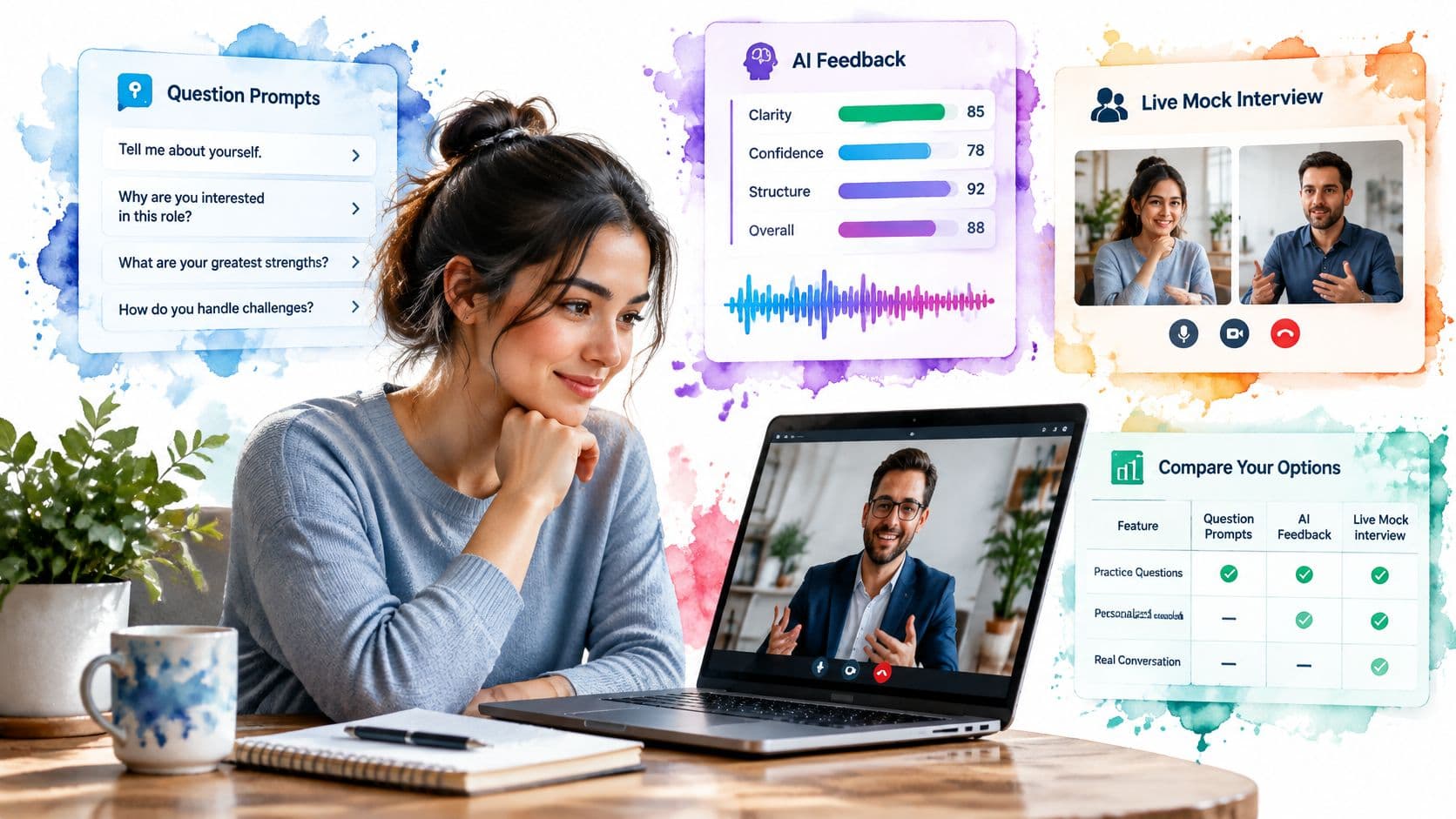
You've practiced answers aloud for weeks. You know your projects and your story. Then a video interview brings an unexpected follow-up, and you freeze. The gap is often the practice format: prepared answers do not automatically prepare you for a live exchange.
Reading question lists builds familiarity, but it does not rehearse speaking under time pressure. Solo practice helps you get answers out clearly. Recorded or AI-guided sessions add repeatable prompts, while a human interviewer can challenge your response and ask follow-ups.
This guide groups interview practice online tools by preparation stage rather than feature count: solo rehearsal, guided AI or recorded practice, human-led and peer mock interviews, and live-interview support. Compare each option by format, question coverage, feedback, free access, pricing transparency, and fit for your role. No single tool covers every stage equally well.
Structured interviews use consistent questions and evaluation criteria. The review of research on structured interview validity examines how interview structure relates to hiring outcomes. That research concerns how employers assess candidates, not whether a particular practice method improves performance. For your own preparation, a practical advantage of consistent prompts and clear criteria is that you can compare answers across sessions and spot what needs work. Combine practice formats to cover different needs, rather than expecting one tool to do everything.
1. Interview Pilot
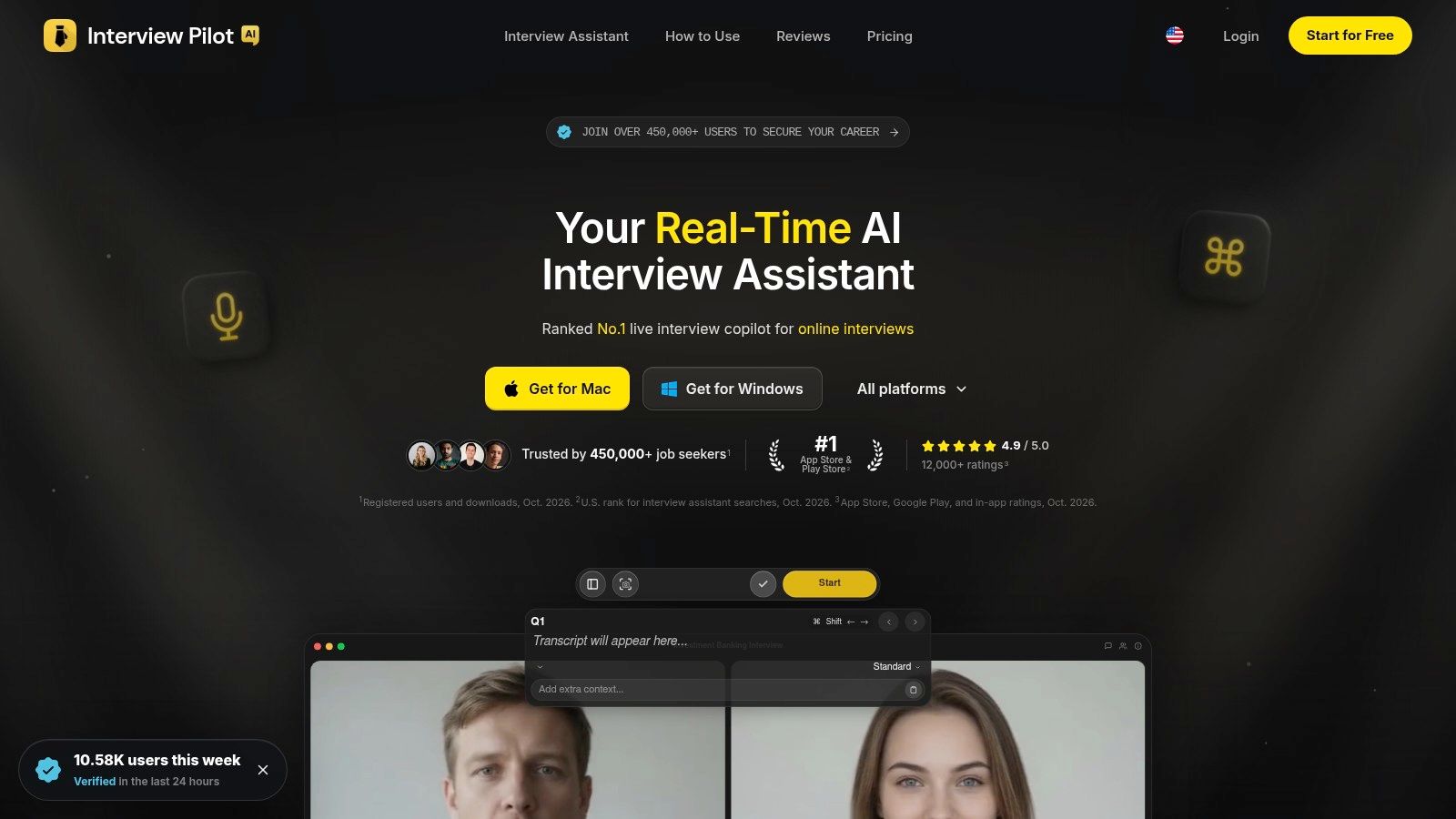
Interview Pilot serves two stages of preparation: guided rehearsal before an interview and optional support during a live call. That makes it a flexible layer in a practice stack, not a substitute for every kind of preparation. Check the employer's rules before using real-time assistance.
Its Interview Copilot generates suggestions for technical and behavioral questions using details from your profile or documents. You can adjust tone, depth, and focus. The platform also offers role-based question practice and guided AI mock interviews, giving you a place to rehearse answers aloud before facing an interviewer.
Where It Fits Best
Use the mock sessions to shape your own answers and identify where you lose clarity. The live support may help when you need prompts, but it can also distract you from listening and responding naturally. For realistic follow-up practice, add a human-led mock interview to your preparation stack.
- Rehearsal and live support: Practice in advance, then consider real-time suggestions only when permitted.
- Role-focused preparation: Use the question practice for technical, business, finance, or consulting interviews.
- A second layer, not a full workflow: Combine it with human feedback when you need someone to challenge your answers.
The trade-off is straightforward. Access to the full question bank is tied to paid plans, and real-time suggestions may not fit the pace of a conversation. Check Interview Pilot's pricing page for current plan prices and terms. Plan availability and features can change, so confirm what is included before subscribing.
Practical rule: Draft and rehearse answers in your own voice first. Treat AI suggestions as prompts, not lines to repeat.
Interview Pilot fits candidates who want structured solo rehearsal and may also need live-call support where employer rules allow it. Use it for repetition, then test your answers with a person who can ask follow-up questions.
2. Google Interview Warmup
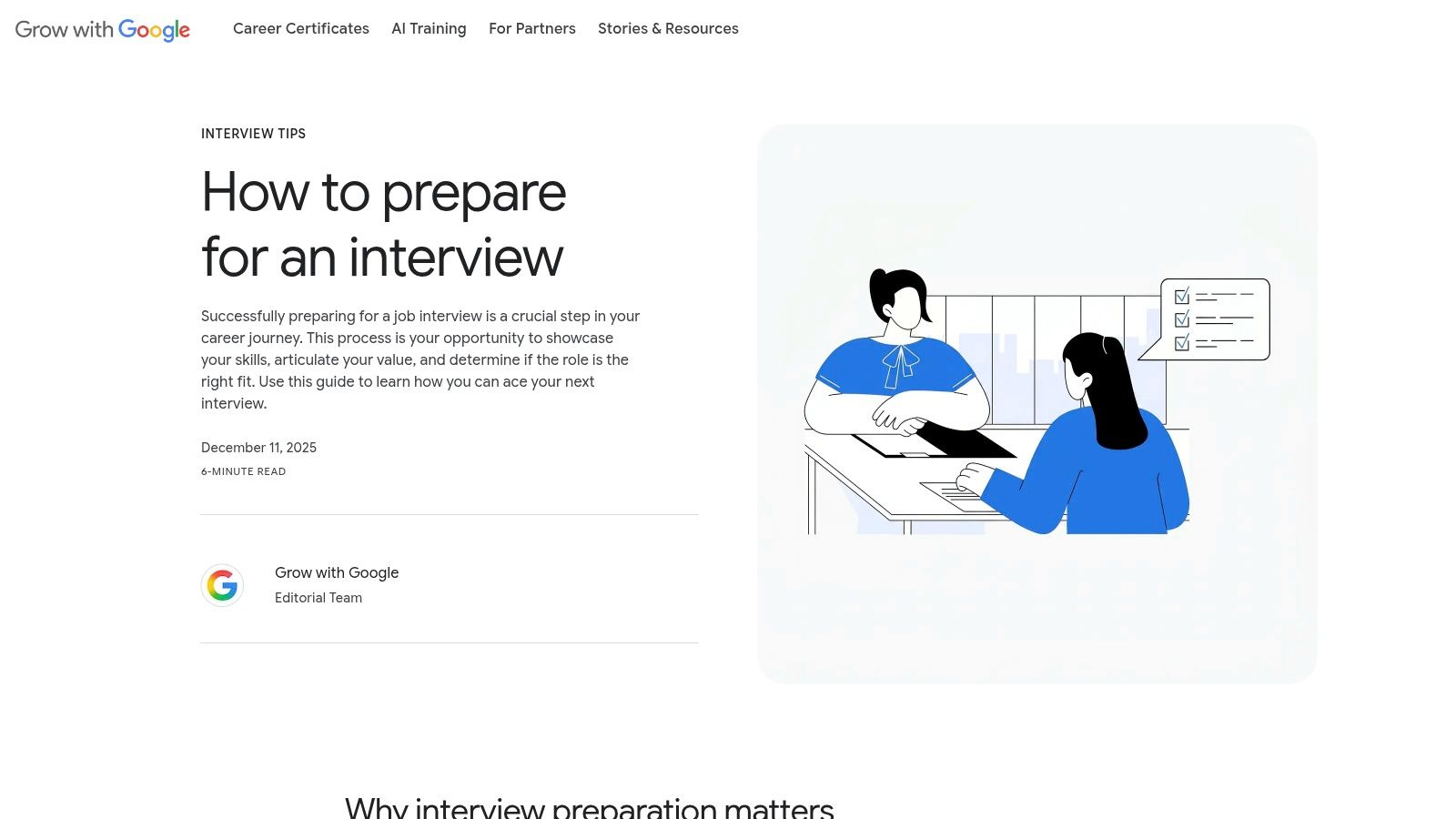
Start here if speaking aloud is the hard part. Google Interview Warmup is a free, browser-based tool. You answer common questions out loud, it transcribes what you say, and it highlights patterns in your response.
You won't get a critique. That's the point, and the limit. The tool shows repeated words, job-related terms, and talking points you covered. It tells you what you said, not whether it was good.
What You Actually Get
Questions are created by industry experts, and there's no download or paid plan. Google says it doesn't save your audio or transcripts, which lowers the barrier to trying it for the first time. For a nervous candidate, that's a sensible first rep.
- Spoken answers: Real-time transcription forces you to finish sentences.
- Pattern insights: You can spot filler repetition and missing keywords.
- Zero setup: Open the browser and start.
Don't expect job-specific follow-ups or technical problem solving. It doesn't simulate a conversation, and it won't challenge a weak answer. Use it to build basic speaking comfort in the first week of prep, then move to a tool that pushes back. As solo interview practice online, it's clean and low pressure. As your only preparation, it's not enough.
3. Yoodli
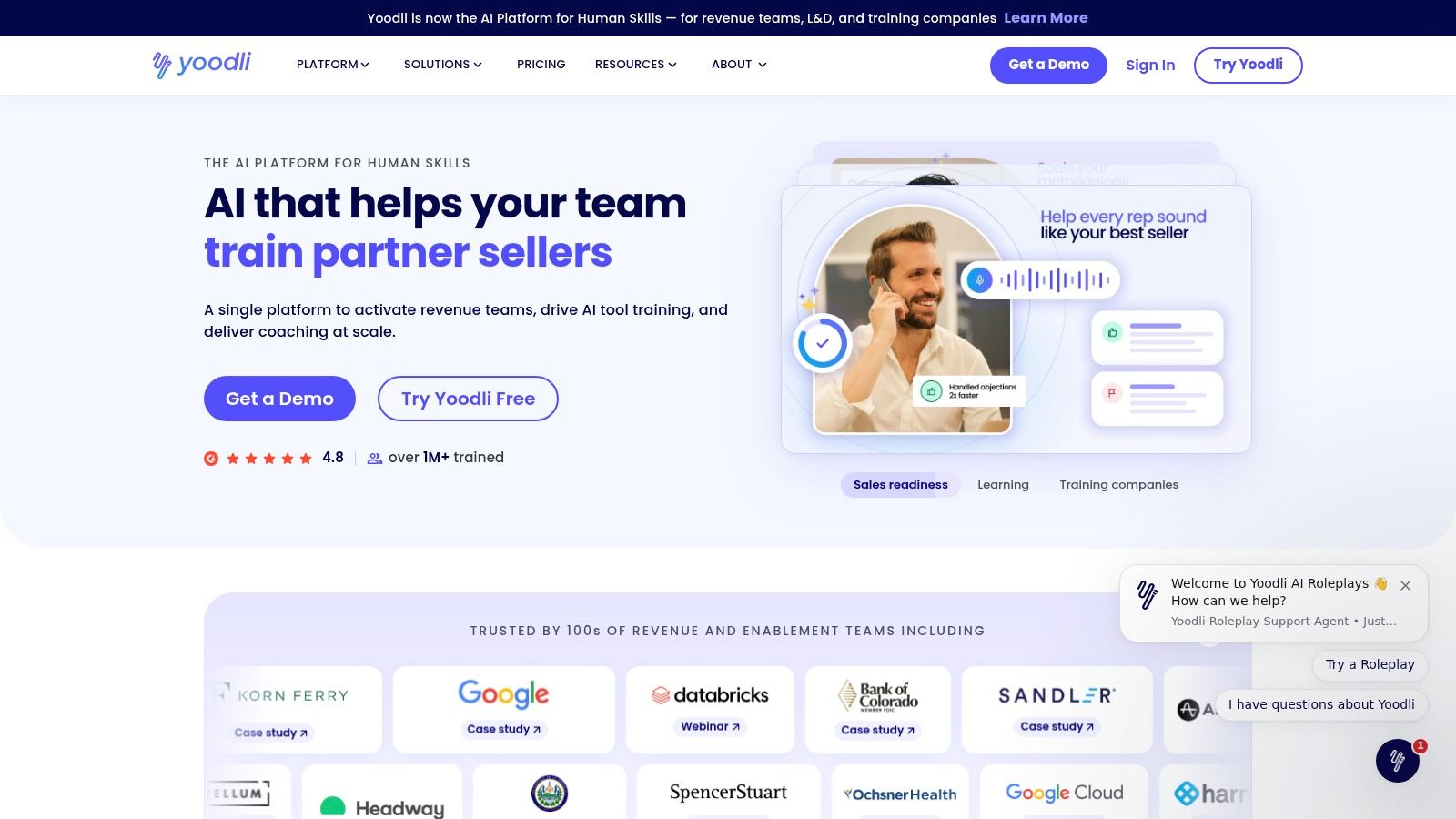
If your answers are strong on paper but ramble aloud, Yoodli can help you tighten delivery. It is a communication coach with interview roleplays, so it fits solo rehearsal better than domain-specific evaluation.
Set a target role and company, choose an interviewer demeanor, then practise with preset questions and follow-ups. Feedback focuses on pacing, clarity, and speaking habits. Repeat a scenario to see whether your answer becomes more concise and easier to follow.
The free tier lets you try the format without a practice partner, but the individual plan allows five lifetime practice sessions. That is enough to test the tool, not to support daily rehearsals over an extended preparation period.
Best Use Case
Use Yoodli between human-led mock interviews. Rehearse an answer, review its pacing, remove filler, then record it again. This gives you a focused delivery drill before you spend time on a full mock session.
The trade-off is clear: Yoodli can flag how you speak, but it cannot judge whether a niche answer is sound. Product sense questions and valuation walkthroughs need an interviewer with relevant expertise. Paid plans may also be a poor fit for a short preparation sprint. Choose Yoodli for communication practice, and pair it with expert feedback when your role demands technical depth.
4. Big Interview
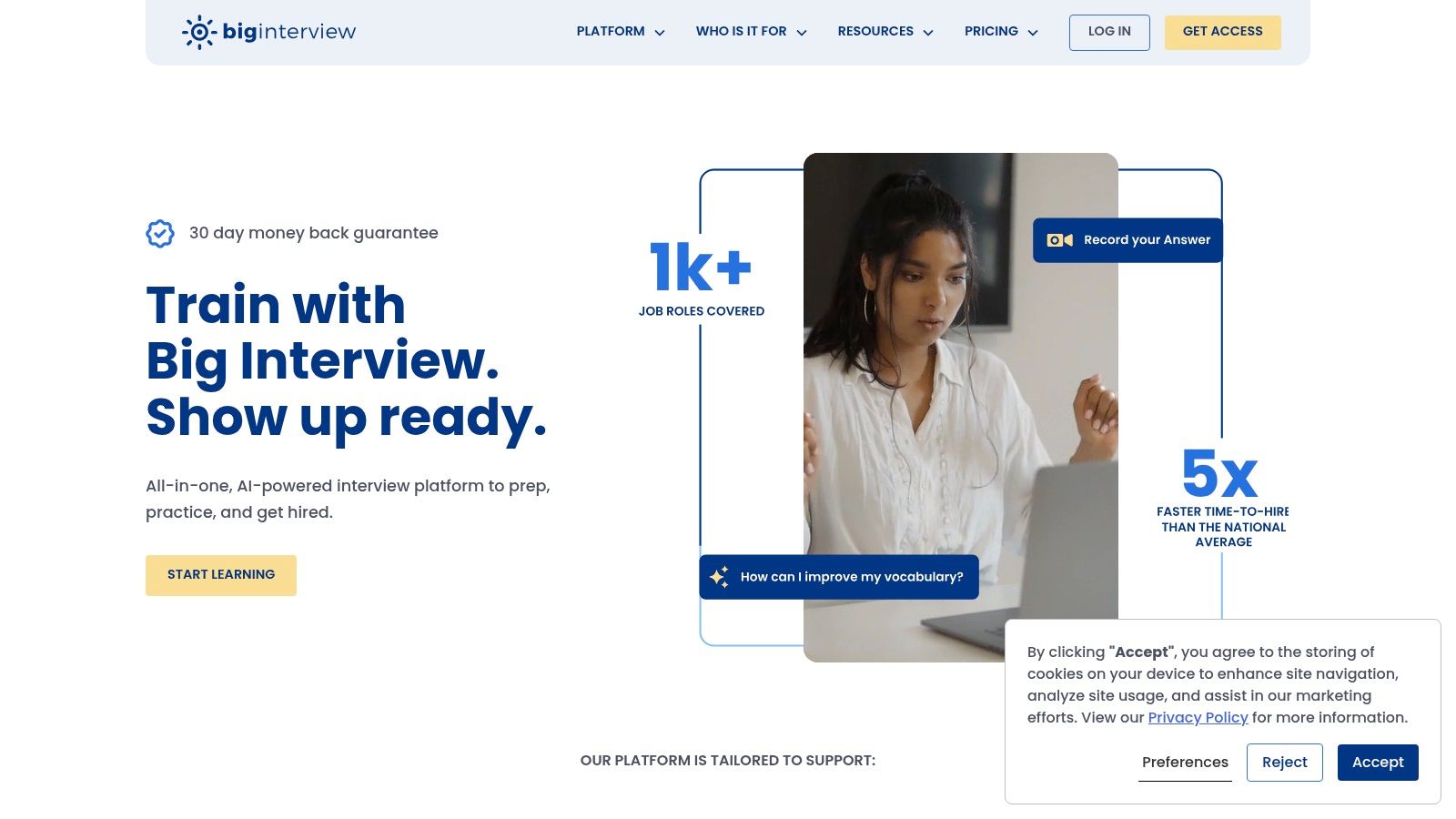
Big Interview suits candidates who need a guided learning path before they rehearse. It brings together lessons, a question library, answer-building tools, and recorded practice, so beginners and career switchers can learn a method, try it, then review their answers.
Its PracticeAI feedback covers role alignment, clarity, and confidence. You can compare a recording with sample optimized responses to see how a stronger answer is structured. That makes the platform useful for building a baseline. It is less suited to candidates who already know the interview format and want a human-led mock session.
Pricing and Limits
The personal pricing page lists one month for $39, three months for $99, and lifetime access for $299. Check the checkout price before buying, since prices vary across the platform's pages.
- Structured learning: Lessons offer a starting point if you are unsure how to prepare.
- Answer comparison: Sample responses give you a reference for shaping your own answers.
- Flexible terms: Short-term and one-time options are available.
The trade-off is breadth. If you only need mock sessions, you may pay for lessons and resume tools you will not use. Recorded practice also cannot replace a human interviewer who can question a weak claim or test your reasoning. Add Big Interview to a preparation stack when you need structured instruction first. Pair it with human-led practice when you need realistic follow-up questions.
5. Huru
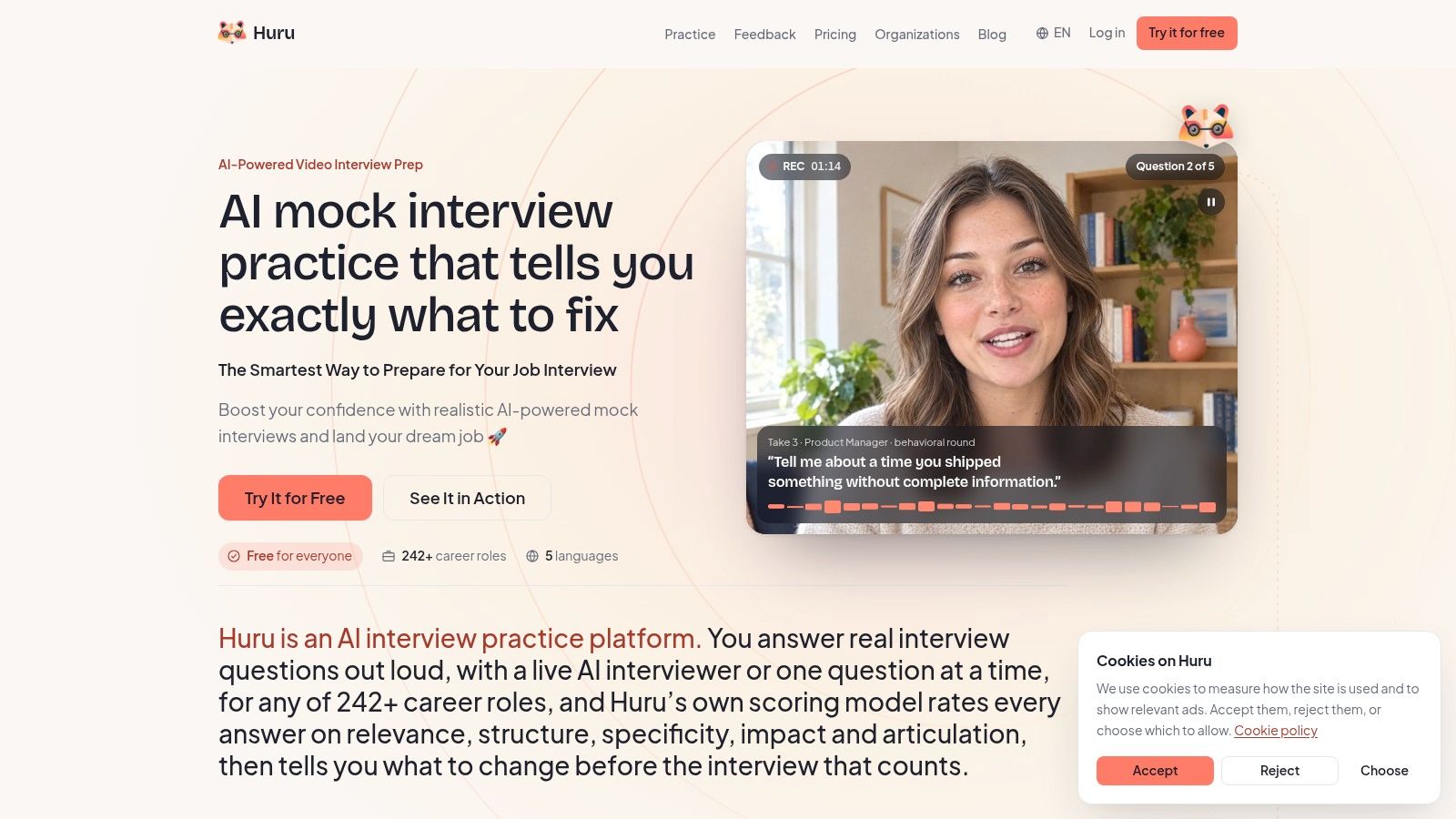
Huru builds rehearsal around a job posting. Paste one in to generate role-specific questions, then record answers or practise in conversational sessions with AI follow-up questions. That makes it useful for solo preparation when generic prompts no longer reflect the role you want.
Huru's site describes feedback on relevance, structure, specificity, impact, and articulation, both per answer and across a session. Its recorded video format also gives you a way to rehearse speaking on camera. Treat automated feedback as a prompt for revision, not a verdict on your candidacy. It can assess answer structure, but it cannot reliably judge whether your example demonstrates leadership or fits the team's needs.
Costs to Check
Huru lists $24.99 per month or $99 per year on its pricing information. App-store offers may differ by region or platform, so check the price where you plan to subscribe.
Use Huru for repeatable, job-specific interview practice online and to spot patterns across recorded attempts. Its broader career features may be unnecessary if you only need interview rehearsal. Pair the solo practice with a human mock interview before your actual call. A person can probe your claims and judge whether your examples answer the question, areas automated feedback cannot fully cover.
6. interviewing.io
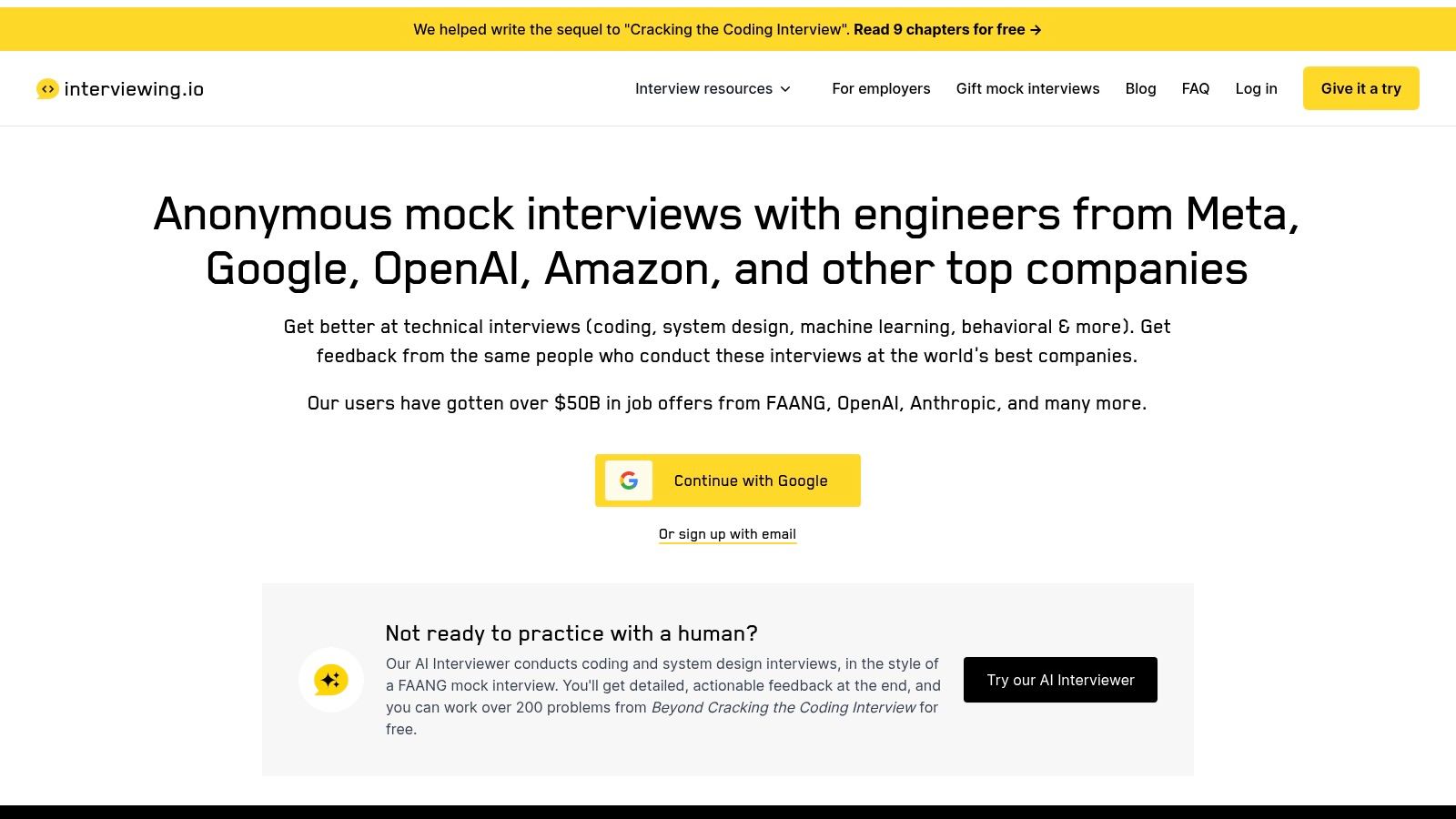
A software engineer preparing for a technical loop can use interviewing.io for focused rehearsal, then bring in an experienced interviewer to test how answers hold up under pressure. The platform covers coding, system design, machine learning, and behavioral practice. It is built for technical roles, not general interview preparation.
Start with its free AI interviewer to rehearse coding and system-design questions. For a live test, book an anonymous mock interview with an experienced engineer. The available specializations include algorithms, frontend, machine learning, and engineering management. A replay library also lets you study how other candidates approach problems.
The human session is the stronger choice when you need judgment, not just repetition. An engineer familiar with real interview loops can challenge vague system-design reasoning and give direct feedback. Anonymity makes it easier to try difficult problems and learn from mistakes.
What It Costs
Expert mock interviews start at $179, with the price depending on topic and interviewer, according to interviewing.io's booking information. That makes live sessions costly for repeated practice. Use the free AI option first to identify gaps, then reserve a paid mock for a late-stage rehearsal.
For a comparison of mock interview online options and practice formats, consider how anonymous technical mocks differ from general-purpose tools. Choose interviewing.io for technical loops; it is a poor fit for sales, operations, or broad behavioral preparation.
7. Aced (formerly Exponent)
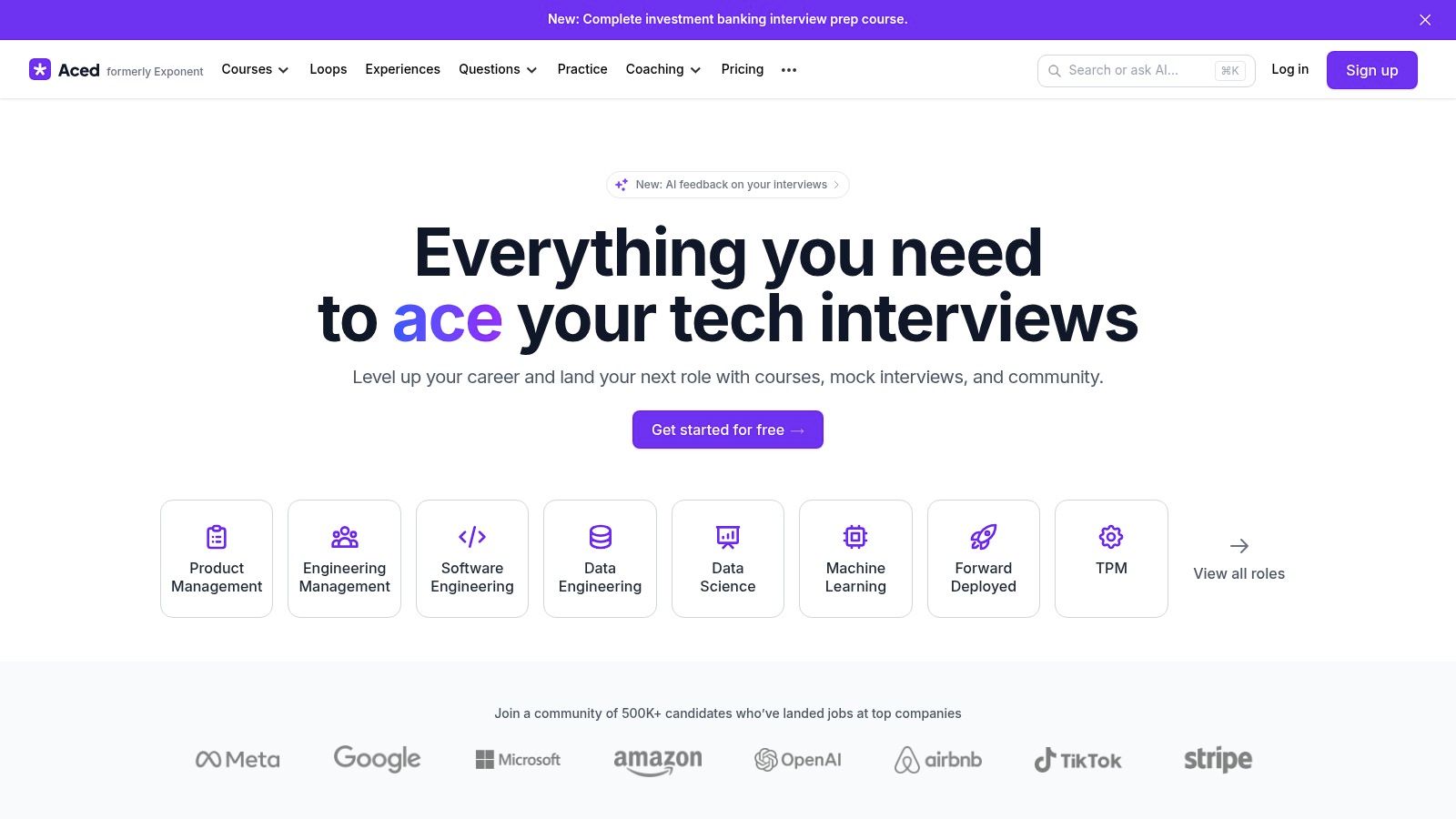
Aced combines solo study with peer-led rehearsal, making it useful when you need to build an answer framework and test it aloud. Its courses, company guides, and question banks cover technology roles, with a separate finance track. Use the guides to prepare for a specific employer, then practice delivering your answers with another candidate.
The peer format is the main draw. You take turns interviewing each other, so you see how an answer sounds from the interviewer's side. That perspective can reveal unclear reasoning that solo rehearsal may miss. AI mock interviews and feedback are also available on a higher tier when a peer isn't available.
Free Tier Value
- Basic plan: Free, with sample materials included.
- Peer access: The free plan includes five peer mocks per month, according to Aced's plan information.
- Company guides: Useful for preparing for a specific employer.
Partner quality varies. A prepared peer can offer useful feedback; an unprepared partner may make the session less productive. You also can't choose in advance how much interview experience they bring.
Product candidates who need more targeted guidance can pair Aced's practice with product manager interview coaching and preparation. Deeper resources and AI features require paid membership, and the broad mix of materials may feel less focused than a dedicated mock service. Choose Aced when you want study resources and peer practice in one place.
8. PrepLounge
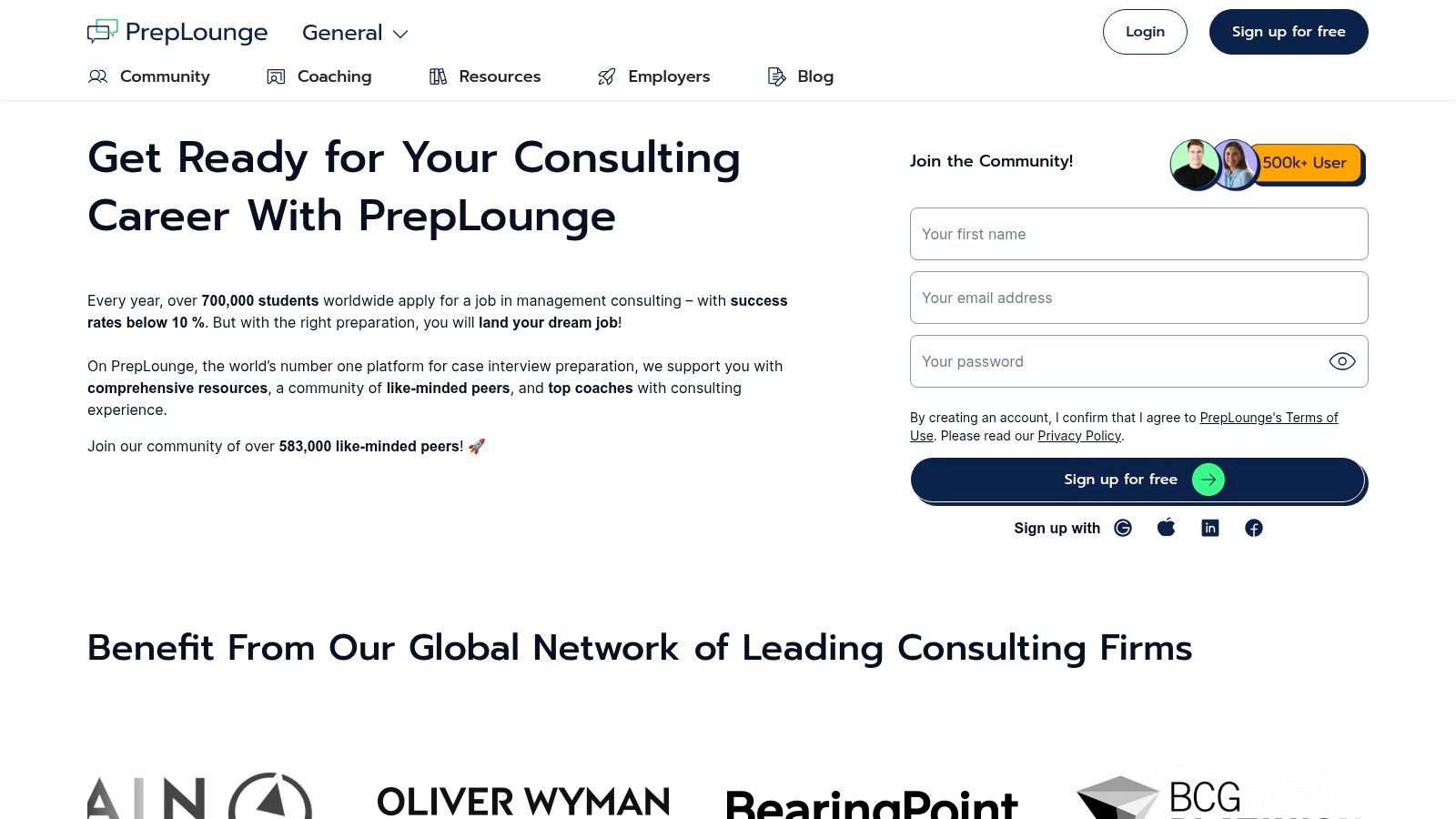
Consulting and finance candidates need a partner, not a recording tool. Case interviews are dialogues. PrepLounge runs a meeting board that matches you with someone for virtual case or interview practice.
Partners take turns as interviewer and candidate, then give peer feedback. Playing interviewer is underrated. You learn where a structure breaks because you feel it when you're the one listening. Real-time follow-ups force you to adapt mid-case, which is exactly what the actual format demands.
The Trade-Off
Everything depends on your partner. Experience, preparation, and feedback quality vary from session to session. Scheduling depends on another person's availability, so you can't practice instantly at midnight before an interview.
Book peer case practice early in your timeline, when you can absorb a weak session and still recover.
Before your first partner session, work through this guide on how to prepare for a case interview with structured practice so you arrive with frameworks ready. PrepLounge isn't built for private solo interview practice online, and generalist candidates will find it narrow. For case-based recruiting, live partner reps are hard to replace with any app.
9. Prepfully
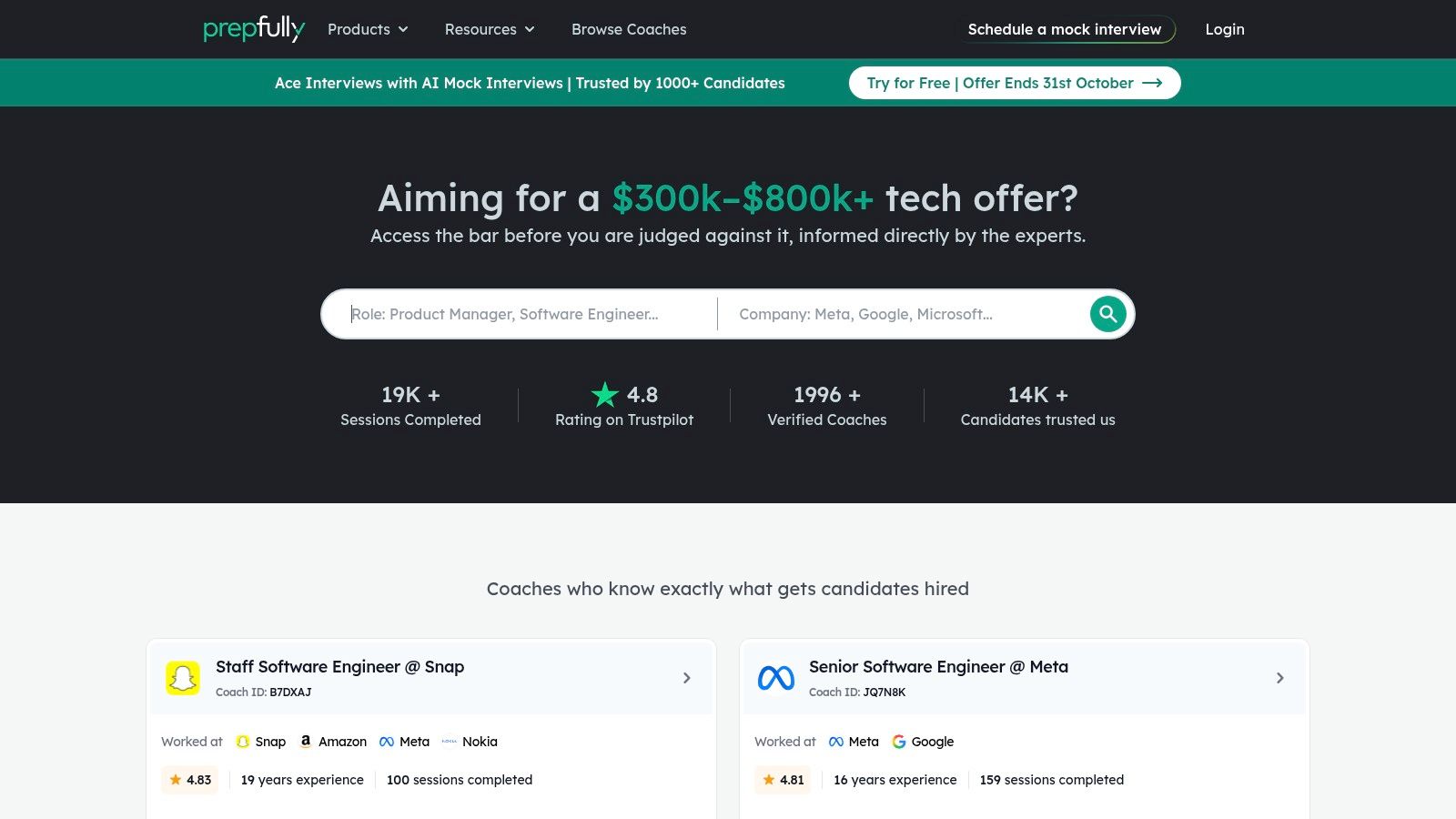
Prepfully adds a human-led session to an interview practice stack. Choose a coach based on your role or target company, then book a one-to-one mock interview. Available formats include coding and system design. Sessions finish with verbal feedback and coaching.
A coach can follow up on a vague answer, ask you to explain your reasoning, and adapt questions to a specific company's interview process. That makes a paid session useful for testing how you respond under pressure, while solo tools remain better suited to frequent, low-cost rehearsal.
Pricing Reality
Prepfully's FAQ describes typical session prices as $50 to $300, averaging around $150, though individual coach listings may differ. The FAQ is available through Prepfully. One session may cost more than months of AI practice, so choose it for feedback you cannot get from solo drills.
- Company targeting: Select a coach with relevant employer experience.
- Real-time probing: Get follow-ups based on your answers.
- Final polish: Book after independent practice to work on specific weaknesses.
Coach availability and expertise vary. Read listings carefully, and don't expect on-demand sessions. A practical workflow is to rehearse with cheaper tools first, fix obvious gaps, then book one or two coaching sessions near your interview. That way, paid time goes toward refining answers, not hearing them for the first time.
10. Callback AI
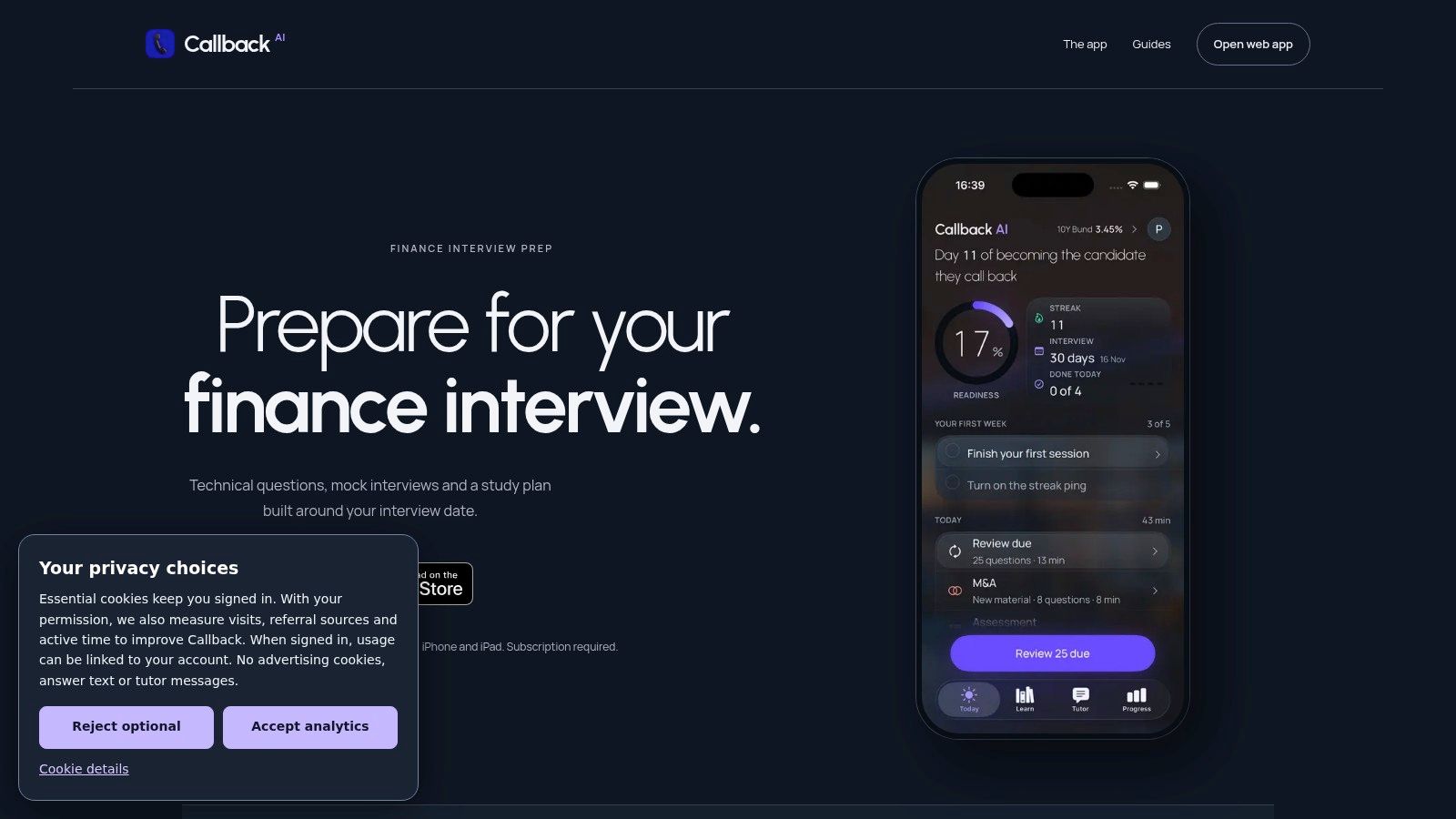
A finance candidate preparing for a superday needs practice with technical questions and rapid follow-ups. Callback AI focuses on investment banking, private equity, venture capital, restructuring, and capital markets, so its question sets fit those roles better than general interview tools.
Practice covers accounting, valuation, DCF, and LBO questions, plus fit and motivation. Multi-round mocks help candidates rehearse the pace and stamina of a finance superday. Study plans also organize preparation around an interview date, a useful structure when recruiting timelines are tight.
The app works on web and iOS, with progress synced across devices. Use a phone for short technical drills and a desk for longer mock interviews.
Who Should Skip It
Candidates outside finance should choose another tool. Callback AI's specialization does not suit marketing or engineering interviews. Full access requires a subscription, with available options shown in the app before purchase. Spoken practice and transcription can also depend on the device and platform.
For a finance superday, focused drills can be more useful than adapting generic prompts. Add a human mock interview to test composure under rapid follow-ups, which structured practice can only approximate. Within finance, it offers targeted interview practice online; beyond that, its narrow coverage is a limitation.
Interview Practice Online Options at a Glance
| Item | Practice Format | Free Option | Listed Price | Best For |
|---|---|---|---|---|
| Interview Pilot | AI mock interviews and real-time interview support | Free plan available | Not specified | Recommended for broad role coverage, multilingual practice, and live interview support |
| Google Interview Warmup | Spoken answer practice with transcription and insights | Free | Free | Building speaking confidence with common interview questions |
| Yoodli | AI roleplays with delivery feedback and follow-up questions | Free plan with five lifetime sessions | Paid pricing not specified | Improving pacing, clarity, and speaking confidence |
| Big Interview | Lessons, question library, answer tools, and recorded practice | Not specified | $39/month, $99/3 months, or $299 lifetime | Structured, comprehensive interview preparation |
| Huru | Recorded and conversational AI mock interviews | Not specified | $24.99/month or $99/year | Practicing against job-specific questions with answer feedback |
| interviewing.io | Free AI technical practice and paid human mock interviews | Free AI coding and system-design practice | Expert mocks from $179 | Technical candidates seeking coding or system-design practice |
| Aced (formerly Exponent) | Courses, AI practice, and peer mock interviews | Basic plan includes sample materials and five peer mocks per month | Paid pricing not specified | Candidates combining role-specific study with peer practice |
| PrepLounge | Partner-matched case and interview practice | Not specified | Not specified | Consulting and finance candidates practicing case interviews |
| Prepfully | One-to-one mock interviews and coaching with professionals | Not specified | Typically $50–$300; around $150 on average | Candidates seeking targeted human coaching |
| Callback AI | Finance technical practice, mock interviews, and study plans | Not specified | Subscription pricing shown in app | Candidates preparing for finance interviews and superdays |
Build a Practice Stack Around Your Interview Timeline
With an interview date approaching, divide practice by what you need to improve. Solo rehearsal builds speaking fluency, AI practice adds structure and repetition, and human mock interviews test how you respond under pressure. Start with the easiest layer to repeat, then add realistic feedback closer to interview day.
Begin with a free solo tool such as Google Interview Warmup. Use it during the first few days to practise full answers aloud and get comfortable speaking on camera. A 2022 Gartner survey on video interview adoption summarized in job interview statistics reported that 86% of organizations used video interviews at some stage of hiring. The practical takeaway is simple: rehearse in the format you may face.
Once you can finish an answer without reading, add one guided practice tool. Choose based on the problem you need to solve. Huru ties practice to a job posting. Big Interview offers lessons before you start recording answers. Yoodli focuses on speaking delivery. Interview Pilot combines guided mocks with a role-specific question bank. Stay with one tool until you can give structured answers without notes.
Use human practice for the final pressure test. One or two sessions close to the interview date can help expose weak answers and reveal how you handle follow-up questions. Choose Prepfully for company-specific coaching, interviewing.io for technical interviews, or PrepLounge and Aced peers for case and product practice. Bring workable answers so the session can focus on judgment, follow-ups, and gaps, rather than first drafts.
Live-interview support is a separate layer, with a clear limitation: follow the employer's rules. Interview Pilot offers a copilot that can suggest answers during an online interview, alongside its mock sessions and question bank. Employers differ in what they allow, and undisclosed real-time assistance may be treated as misconduct. Check the instructions before using any live support. Use practice tools freely, but use live assistance only when the rules clearly permit it.
Before paying, check current prices and confirm what each free tier includes. Plans, trials, and regional offers can change, and session limits may restrict repeated practice. Test your camera, microphone, captions, and connection in the setup you will use on the day. Survale's 2025 Candidate Experience Benchmark Research found that 44% of candidates interviewed live virtually and 44% interviewed in person. Prepare for your actual format.
Build the stack around your needs: fluency first, structure next, then human pressure. That sequence turns interview practice online into preparation you can use when an interviewer asks a follow-up.
Topics
interview practice online
AI interview copilot
mock interview practice
interview prep tools
practice interview questions
Continue reading

AI Tools
AI Interview Assistant for Google Meet: Setup Guide
Set up an AI interview assistant for Google Meet in Chrome: tab, window or screen sharing, Mac permission, audio pitfalls, what Meet announces and a test plan.
October 23, 2026
8 min read

AI Tools
AI Interview Assistant for Microsoft Teams: Setup Guide
Set up an AI interview assistant for Microsoft Teams: guest or app join, Mac permission, audio routing, organizer controls, and a test checklist to run first.
October 23, 2026
9 min read

AI Tools
AI Interview Assistant for Zoom: Setup and Test Guide
Set up an AI interview assistant for Zoom: share modes, the Mac capture setting, audio routing, what the interviewer sees, and a test checklist to run first.
October 23, 2026
10 min read