














Interviews
7 Women's Interview Attire Ideas for Every Industry
Discover 7 women's interview attire options for corporate, creative, tech and finance roles, with dos, don'ts and seasonal tips for dressing with confidence.
Interview Pilot Editorial Team
Updated November 7, 2026
14 min read
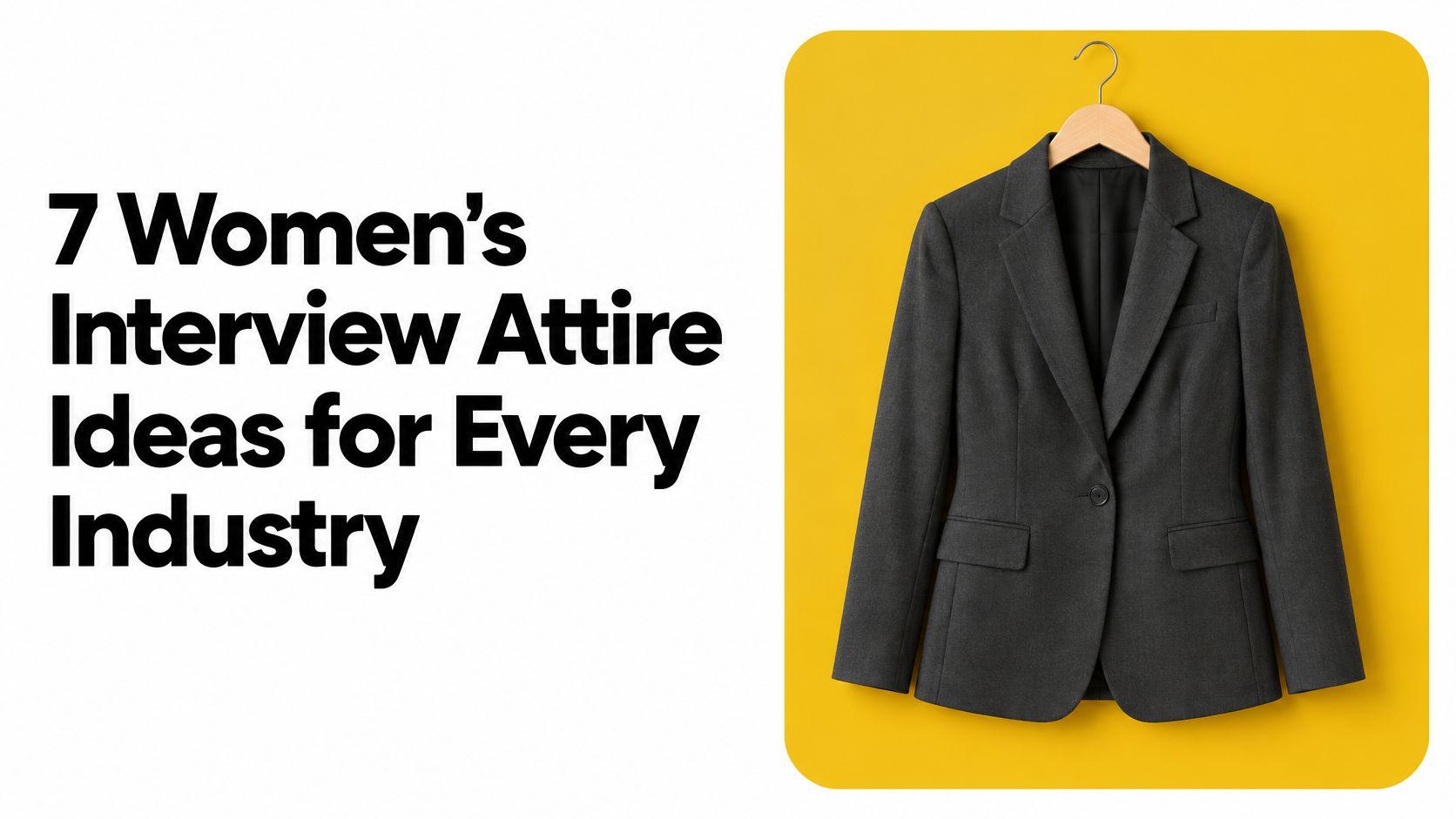
You've bought the blazer, booked the final-round interview, and finally tried on the matching trousers. They're two sizes off. With two days left, you're comparing delivery dates, wondering whether alterations are possible, and considering an outfit you already own.
The outfit that fails is usually the one nobody checked. Problems with women's interview attire rarely come down to style alone. A jacket can look right on a hanger but pull across your shoulders, a blouse can turn sheer under webcam lighting, and a formal suit can feel misplaced at a casual startup.
Start with the interview setting, then check fit, fabric, and availability before buying anything. Learning to dress confidently for your workplace doesn't require replacing your wardrobe or choosing the most expensive suit.
The retailers below serve different needs: conventional finance suiting, creative separates, startup-friendly layers, petite proportions, and budget-conscious outfits. Treat each as a practical starting point, not a promise that every item in its collection belongs in an interview. Buy for the conversation you're attending, and test the outfit before you need it.
1. Ann Taylor
Best for conservative finance, consulting, and business-professional interviews. Ann Taylor's suiting collection is a sensible starting point when you need matching trousers and a blazer, a sheath dress with a jacket, or coordinated petite separates.
Choose navy, charcoal, or another subdued solid if you haven't confirmed the employer's preferences. A non-sheer blouse and clean loafers, flats, or familiar pumps complete the outfit without introducing unnecessary decisions. You don't need heels to make a suit professional.
Appearance expectations are real, but they aren't evidence that a particular outfit improves hiring outcomes: in a JDP Hiring survey reported by CBS News, 88% of respondents said an applicant's appearance could influence an interviewer's perception of competence.
Build the suit around fit
Ann Taylor's coordinated separates let you choose different jacket and trouser sizes. That's useful when your shoulders and hips don't fit the same size, though buying each piece separately can make the complete outfit cost more than expected.
- Do: Match the fabric name and color, then check the jacket while reaching forward and sitting.
- Don't: Assume similarly named black separates will match in texture or finish.
- Warm days: Choose a lighter-feeling structured fabric and a breathable blouse rather than adding unnecessary layers.
- Cold days: Wear an outer coat that accommodates the blazer without compressing its shoulders.
Ponte can offer comfortable structure, but check whether the particular garment reads as suiting rather than casual knitwear. Confirm measurements, delivery, and return terms before ordering, especially around changing sale selections.
Use our guide to what to wear to a job interview to check the employer's formality before committing to a complete suit.
2. Macy's
A tight budget calls for comparison, not a rushed purchase of the cheapest blazer. Macy's is best for candidates who want to compare complete suits, dresses, and separates across several labels, including Le Suit, Anne Klein, Tommy Hilfiger, and Kasper.
The Macy's women's interview-attire collection brings those options together, but don't treat the retailer as a single fit or quality standard. One label's jacket may fit your shoulders well while another's trousers work better at the waist.
Compare the total wearable cost: clothing, necessary alterations, suitable shoes, and garment care. A discounted suit isn't economical if you can't sit comfortably in it or need extensive adjustments before the interview.
Budget rule: Keep the blouse and shoes you already trust. Spend first on the piece that prevents your existing outfit from working.
Compare garments, not discount labels
For a graduate entering a corporate recruitment process, a straightforward pantsuit or sheath dress with a jacket can be easier to assemble than unrelated separates. Customer ratings can flag recurring fit concerns, but check whether reviewers describe the exact item you're considering.
- Do: Read fabric composition, lining details, measurements, and return conditions for each garment.
- Don't: Compare sale percentages instead of the final cost and usable fit.
- Warm days: Look for a non-sheer top that works if you remove your jacket before or after the interview.
- Cold days: Test the outfit with tights or a thin base layer if you'll wear them.
Some styles offer petite sizing, but availability varies by brand and season. If the matching bottom isn't available, choose deliberate contrasting separates rather than trying to disguise a near-match.
3. Express
Express suits creative agencies, marketing teams, and candidates who prefer contemporary cuts. Its women's suit separates include blazers, trousers, skirts, and vests, with stretch options such as Signature Stretch and Studio Stretch Twill.
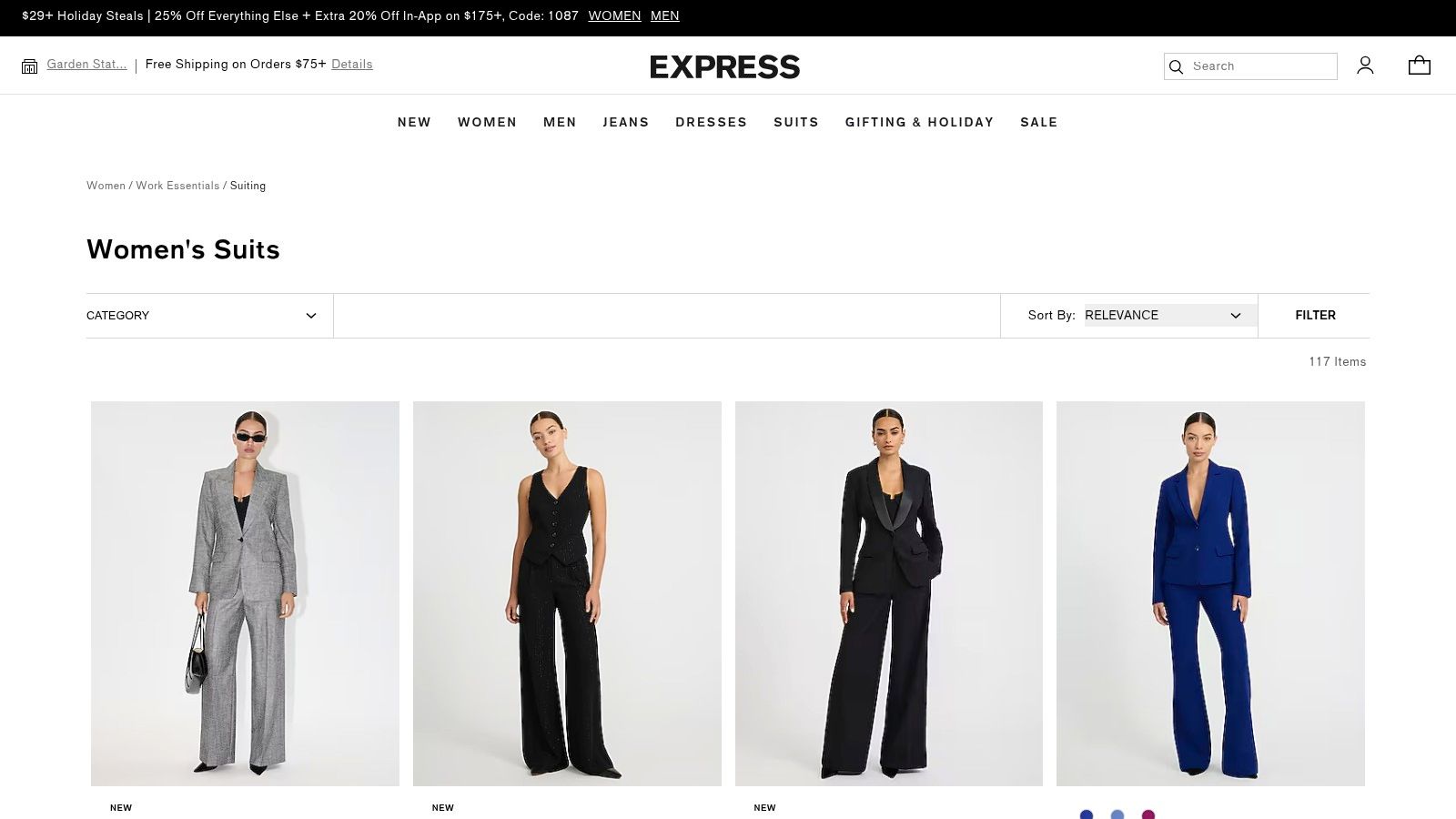
A straight-leg trouser, simple blouse, and coordinated blazer can work for an agency interview without looking like formal banking attire. For a more expressive employer, choose an interesting cut or color, but keep the rest of the outfit straightforward.
Stretch helps movement; it doesn't correct poor fit. If pockets flare, lapels lift, or fabric pulls across your thighs while seated, try another size or silhouette. Don't buy a tight garment because it technically stretches enough to close.
Leave room to communicate
Separate jacket and trouser sizing is useful, especially when you need freedom to type during a technical exercise or gesture while presenting a portfolio. Check that sleeves don't catch at your elbows and that the waistband stays comfortable when you lean toward your laptop.
Our interview body-language guide is a useful companion to that movement test. You shouldn't have to hold yourself unnaturally still to keep your clothing in place.
- Do: Choose a modern silhouette you can sit and move in.
- Don't: Combine an exaggerated oversized blazer, cropped top, and statement accessories unless you've deliberately confirmed that level of informality.
- Warm days: Use a lightweight blouse beneath the jacket, checking opacity in daylight.
- Cold days: Try a fine-gauge knit that doesn't bunch beneath fitted sleeves.
Express can be useful for sale shopping, but check individual fabrics and cuts carefully. The most trend-forward option isn't automatically the strongest interview choice.
4. J.Crew
For a startup interview, a matching suit may be unnecessary, while a casual T-shirt may leave you underprepared for a customer-facing discussion. J.Crew works well for business-casual technology, product, and operations interviews, particularly when you want coordinated pieces you can wear separately.
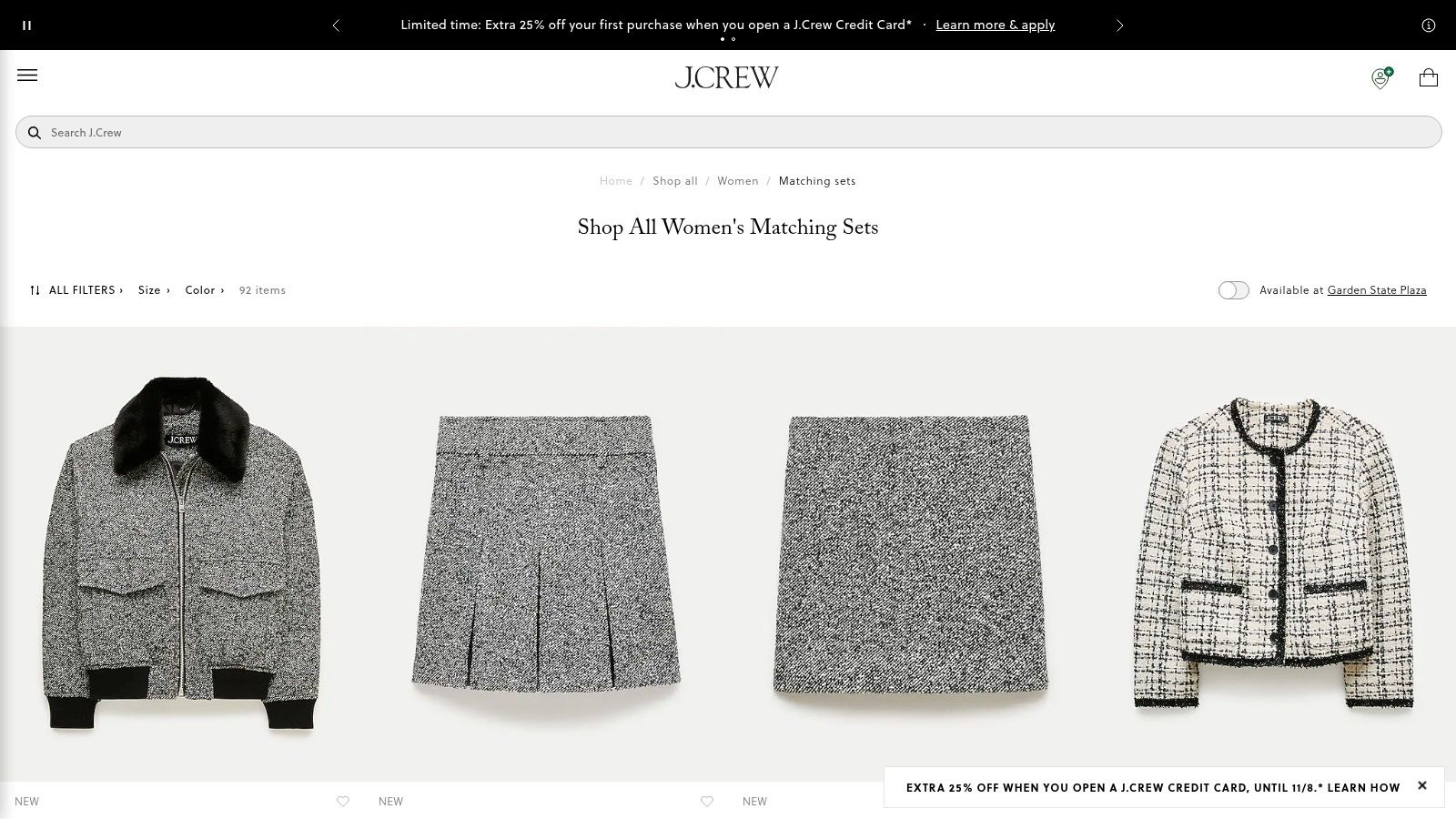
Start with well-cut trousers and a solid blouse or fine knit from J.Crew's matching-set selection. Add the coordinating blazer when the role involves clients, leadership, or a more formal interview panel; don't assume every startup expects casual clothing.
Selected pieces offer petite and tall sizing, alongside four-season stretch and wool-blend fabrics. Those options can help with proportions, although the desired fabric, size, and matching piece may not all be available together.
Make the webcam part of the fitting
Remote preparation includes more than choosing a top. A Tilburg University study of asynchronous video interviews examined 523 real applicants, coding attire alongside room tidiness, technical issues, and backgrounds.
Test your outfit on the actual platform. Check that your neckline remains visible within the frame, your jacket separates from the background, and small patterns don't create distracting visual effects.
- Do: Record yourself answering a practice question while wearing the complete upper-body outfit.
- Don't: Buy an expensive matching set solely because you assume remote interviews require one.
- Warm days: Choose a breathable top and keep the blazer nearby if appropriate.
- Cold days: Wear a smooth knit layer, checking that its collar doesn't compete with the jacket.
Our online interview dress-code guide can help you make the final camera-specific adjustments before you stop shopping.
5. Banana Republic
Banana Republic is a useful middle ground for corporate technology, professional services, and client-facing roles. Its women's suiting collection includes stretch separates, wool blends, and Italian-wool options, with both classic and more relaxed silhouettes.
The main decision isn't whether premium fabric sounds better. It's whether the garment hangs properly, feels comfortable through a seated conversation, and fits your likely use after the interview. Paying more makes less sense if the suit will stay in a garment bag once recruitment ends.
Formality also needs calibration. In a U.S. employee survey published by NVISION, 47.4% of female hiring managers thought a formally dressed applicant would be a better organizational fit than a casually dressed candidate, even when the casually dressed candidate had stronger references.
Choose enough structure to suit the employer, not the maximum amount of formality you can buy.
Compare stretch against wool
Stretch separates are worth considering when comfort during travel or prolonged sitting is your priority. Wool options may appeal if you want a more traditional suiting finish, but assess the actual weight, lining, feel, and care instructions rather than buying by fiber name alone.
- Do: Try the jacket over the exact blouse or knit you'll wear.
- Don't: Assume a relaxed linen-like silhouette and a structured wool suit serve the same interview setting.
- Warm days: Favor a lighter construction and test how the fabric looks after sitting.
- Cold days: Use a smooth base layer and an outer coat that won't crush the jacket.
Some styles offer tall options. Check garment measurements individually, and confirm that both halves of a coordinated outfit are available before purchasing either.
6. M.M.LaFleur
Prefer a dress to trousers? M.M.LaFleur is worth considering for senior, client-facing, and dress-based interview outfits, especially when you expect to reuse well-made workwear regularly.
Its interview-outfits collection groups blazers, trousers, dresses, and blouses in a more focused selection than a broad department-store search. That convenience comes with generally higher prices than mass-market alternatives, and sale stock may be limited.
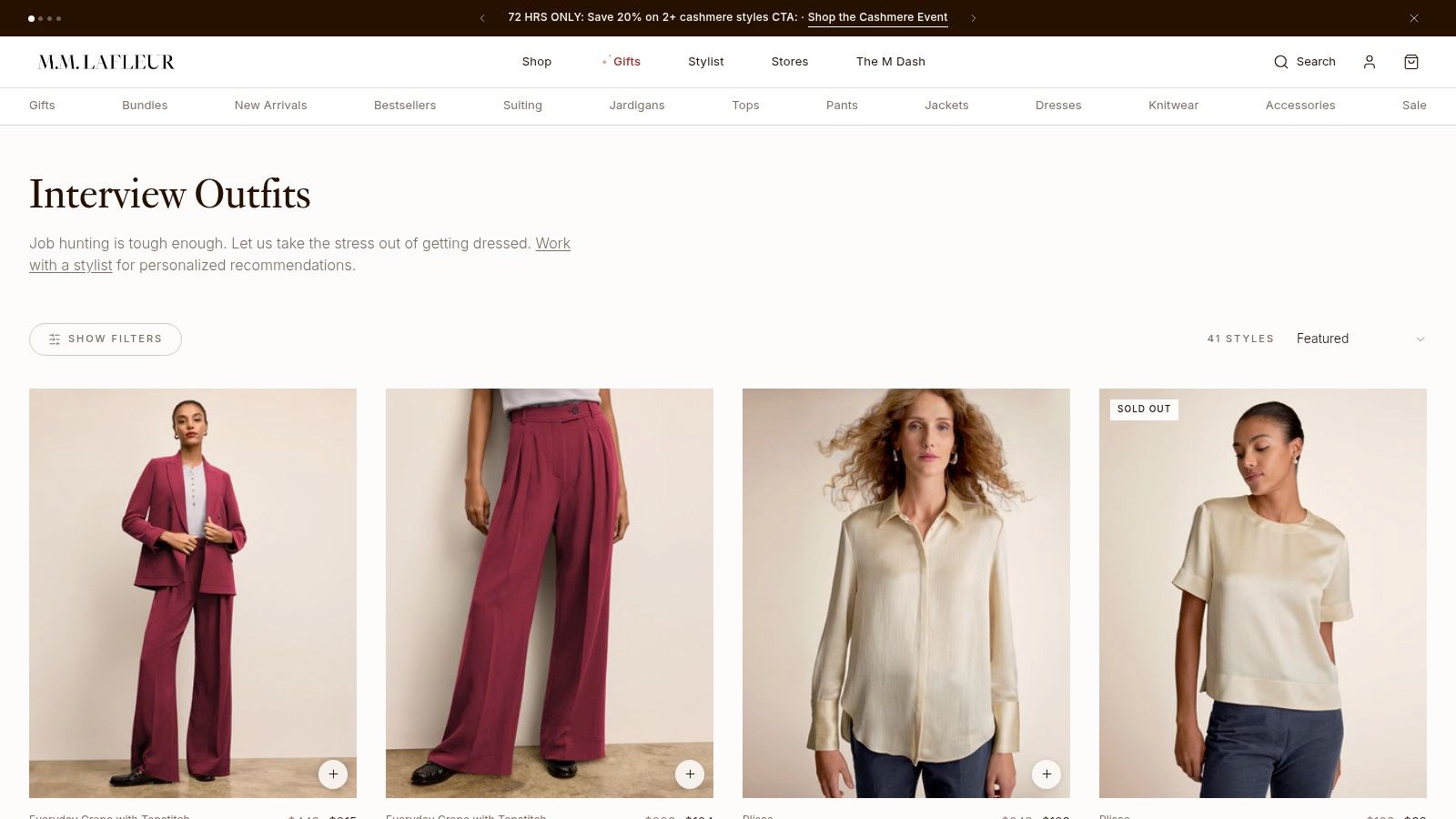
A simple dress and structured jacket can reduce the difficulty of coordinating trouser rise, waistband, and jacket length. The trade-off is that the dress must fit your shoulders, torso, and hips comfortably at the same time.
Test the dress while seated
Check the neckline when leaning forward, the hem when seated, and the armholes when reaching for a notebook. A dress that needs repeated adjustment isn't a practical interview garment, regardless of price.
- Do: Choose a silhouette that allows easy breathing, walking, and sitting.
- Don't: Force a dress-based outfit if trousers accommodate your body, mobility, or sensory needs better.
- Warm days: Check lining and fabric comfort rather than assuming a sleeveless dress will feel cool.
- Cold days: Try tights and any base layer with the dress before deciding the fit works.
Keep the objective clear: You're selecting comfortable, role-appropriate clothing, not trying to meet a beauty standard.
That distinction matters: a study of GPT-based employment screening found a significant beauty premium for women across the examined employment fields. This finding concerns that screening context, not proof that buying particular clothing improves hiring outcomes.
Makeup, heels, and expensive tailoring aren't prerequisites for credibility. Neatness, comfortable movement, and appropriate formality are the useful decisions you can control.
7. Talbots
Petite candidates need proportion adjustments, not merely shorter trouser hems. Talbots is a strong starting point for traditional office interviews when petite or plus-petite sizing could save you from buying regular garments that need extensive alterations.
The Talbots work-suiting collection includes coordinated jackets, trousers, skirts, and dresses, with Ponte, wool-blend, and travel-oriented options. Choose based on your interview's formality and your comfort needs, not the assumption that every item labeled workwear is equally suitable.
A correctly placed shoulder seam matters, but so do jacket length, lapel position, trouser rise, and where shaping falls on your torso. Shortening sleeves won't resolve a jacket whose entire proportions feel wrong.
Check proportions before accessories
Try the simplest combination first: matching trousers and jacket over a plain blouse, or a dress with its coordinating layer. Leave accessories until you know whether you can sit, reach, and fasten the outfit without pulling.
- Do: Compare petite and plus-petite options when those proportions match your needs.
- Don't: Buy an unsuitable regular-size jacket expecting a quick hem adjustment to solve everything.
- Warm days: Consider lighter-feeling separates, checking pale fabrics for opacity and visible creasing.
- Cold days: Assess a wool blend or substantial Ponte with the layers you'll wear.
A full-price outfit can be a considerable purchase, so weigh alterations and repeat wear alongside the ticket price. Seasonal patterns may work for education or an approachable office setting but be less useful for a conservative finance interview.
For video calls, test the blouse and jacket together against your background. If a seasonal print flickers on screen or competes with your face, use a solid top you already own rather than purchasing another complete outfit.
How the seven retailers compare for building a womens interview outfit
| Item | Sold as Separates | Petite or Tall Sizing | Stretch or Ponte Fabric | Price Level |
|---|---|---|---|---|
| Ann Taylor | Yes | Petite | Ponte and structured options | Mid-range |
| Macy's | Yes | Petite on some styles | Not specified | Varies by brand |
| Express | Yes | Not specified | Stretch options | Mid-range; sales available |
| J.Crew | Yes | Petite and tall on select styles | Four-season stretch | Higher investment |
| Banana Republic | Yes | Tall on some styles | Stretch options | Mid-range to premium |
| M.M.LaFleur | Coordinated pieces available | Not specified | Not specified | Higher-priced |
| Talbots | Yes | Petite and plus-petite | Ponte options | Mid-range to higher-priced |
Pick One Outfit, Test It, and Stop Shopping
Choose the option that matches the employer's formality and your hardest fit problem. Ann Taylor is a straightforward starting point for conservative suiting; Macy's helps you compare budget-conscious alternatives; Express suits contemporary cuts; and J.Crew offers flexible business-casual combinations.
Banana Republic is useful for comparing fabric and structure, M.M.LaFleur for focused fitted or dress-based options, and Talbots for traditional workwear with petite and plus-petite proportions. You don't need to browse every retailer before making a sensible decision.
Use Cedar & Lily Clothier's workwear guide for additional outfit-building context, but keep your final decision tied to the actual interview. An attractive outfit that doesn't accommodate your chair, commute, room temperature, or camera setup isn't finished.
Run the final outfit check
- Fit at the shoulders and waist: Reach forward, sit down, and lean toward your screen. Check for pulling, waistband pressure, and a jacket collar that lifts away from your neck.
- Fabric after sitting: Stay seated while rehearsing an answer, then stand and inspect creasing, clinging, and whether the garment needs constant readjustment.
- A seasonal layer: Prepare for the room as well as the weather. A removable jacket or smooth knit is more adaptable than an outfit that only feels comfortable outdoors.
Try the full outfit on at least two days before the interview as a practical preparation deadline. Include shoes, any head covering or accessories you normally wear, and the layers you'll use; for an online interview, record a short practice answer in the actual lighting.
Listen for jewelry or fabric brushing the microphone, and check whether your clothing remains comfortable while typing. Make one necessary correction, prepare a backup top, and put the outfit aside.
Once your clothing is set, complete our help center's 5-minute pre-interview checklist so logistics, device checks, and materials are ready alongside what you wear. The best women's interview attire is clothing you can forget about while you listen carefully and explain why you're right for the role.
Our AI mock interviews, question bank, and role-specific guides help you prepare the answers that matter once your outfit is settled. Visit Interview Pilot to rehearse in your interview setup, review your responses, and prepare for the conversation with the same care you've given your clothing.
Topics
women's interview attire
interview outfits for women
professional interview clothes
business interview attire
interview dress code
Continue reading
Interviews
Interview Business Casual: What to Wear and When
Interview business casual explained: industry-by-industry outfits, piece-by-piece checklists and video-call tips so you dress one step smarter.
November 8, 2026
14 min read
Interviews
Insurance Questions for Interview: 10 Answers That Land
The 10 most common insurance questions for interview panels across underwriting, claims, sales and actuarial roles — with answer guidance for each.
November 8, 2026
19 min read
Interviews
10 DBMS Interview Questions You Should Master in 2026
Ace your next interview with the 10 most common DBMS interview questions, covering ACID, normalization, indexing, joins, and recovery with sample answers.
November 8, 2026
18 min read