













10 Management Interview Questions and Answers
Updated September 18, 2026
25 min read
Interview Pilot Editorial Team
You can walk into a management interview with a solid résumé and still come out sounding vague. That usually happens when you can name the principle, but not the decision, trade-off, or team result behind it. Strong management interview questions and answers do more than describe leadership, they show how you set direction, handled people, and changed outcomes in a real situation, which is why structured prep matters for roles across tech, finance, consulting, product, and data.
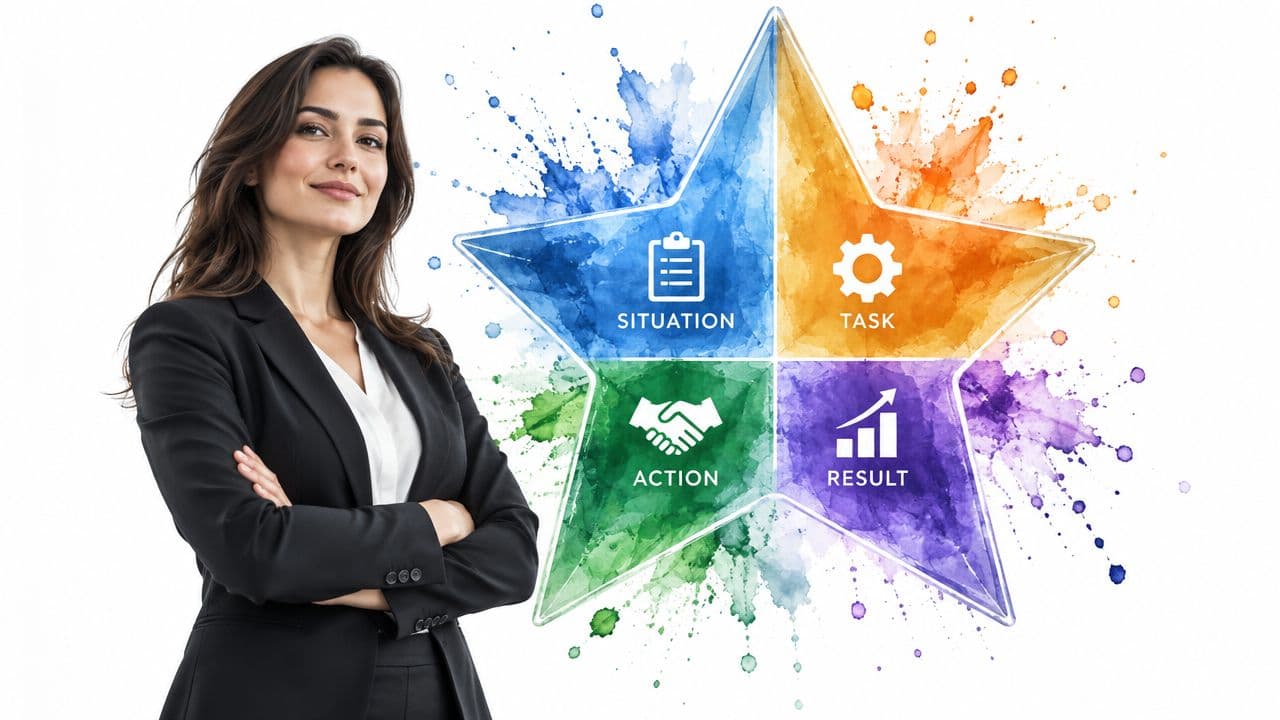
A good answer usually follows a clear framework, then gets specific fast. Think Situation, Task, Action, Result, with enough detail for the interviewer to judge your decision quality and not just your confidence. If you want a place to rehearse that rhythm, interview tips for management roles are useful for context, and tools like Interview Pilot can help you practice through AI Mock Interview sessions, a searchable Question Bank, profile-based tailoring, and Copilot customization controls that let you tune depth and tone by role.
The 10 questions below work like a management-readiness diagnostic. They move from leadership style and people issues into prioritization, hard calls, development, budgets, feedback, failure, culture, and retention, so you can build answers that fit both the function and the level of responsibility.
1. Tell Me About Your Leadership Style
This question sounds broad, but interviewers use it to test self-awareness, decision-making, and whether your style fits the team's operating model. A candidate who says “I'm collaborative” without proving it sounds polished but untested. A stronger answer shows how you flex between coaching, direction, and delegation depending on the person and the situation.
For example, a manager in a technical environment might emphasize clear goals, visible priorities, and room for engineers or analysts to solve the problem their way. A consulting manager may talk about adapting to client context and keeping a team aligned when the work changes weekly. In more hierarchical settings, directness and crisp escalation matter more than open-ended collaboration.
What a strong answer sounds like
Practical rule: name your default style, then show how you adapt it.
A useful answer sounds like this: “My default style is clear and coaching-oriented. I like to define the outcome, explain the why, and give people enough ownership to solve the work well, but I get more directive when the team needs speed, compliance, or a high-stakes decision.”
That answer works because it shows range, not a slogan. It also invites a follow-up like, “Tell me about a time you changed your style,” which is where your best evidence should live.
Prepare by bringing one example from a project where you had to lead a senior teammate, a junior direct report, or a cross-functional group with different levels of context. If you're interviewing for product, data, or finance, tie your leadership style to clarity, prioritization, and accountability. If you're interviewing for software engineering, show how you balance autonomy with code quality, deadlines, and team standards.
2. Describe a Situation Where You Had to Manage a Difficult Team Member
This is one of the clearest tests of whether you can handle conflict resolution without turning it into blame. Hiring teams want to know if you can deal with tension, performance issues, or personality friction while still protecting team output. In management interviews, this usually matters more than a general claim that you “work well with people.”
The best answers acknowledge the root cause. Maybe the person lacked context, maybe expectations were unclear, maybe the role and skill set didn't match, or maybe the conflict was about how work got delegated. That nuance matters because a manager who treats every issue as an attitude problem usually misses the actual fix.
An answer for consulting might focus on disagreement under pressure and preserving the client relationship. In tech, you might discuss a developer who resisted process or missed handoffs. In finance, compliance, precision, and escalation discipline may matter more than harmony. The interviewer wants to hear how you balanced empathy with accountability.
How to answer without sounding defensive
Use a structure that makes your role in the situation visible. The STAR framework is still the cleanest way to do that, and the internal guidance in STAR method examples is useful for tightening the shape of your response.
A strong sample answer sounds like this: “I had a team member who repeatedly missed deadlines, and the issue affected the rest of the group. I met with them privately, clarified what was slipping, and found that they were overloaded and reluctant to surface it early. We reset expectations, narrowed the work in progress, and checked in more frequently until delivery stabilized.”
The interviewer is listening for accountability language, not for a speech about how difficult someone else was.
Prepare one example with a measurable result you can defend, even if the outcome wasn't perfect. Then be ready for follow-ups about what you changed in your own management approach, what escalation path you used, and whether you'd handle the same situation differently today.

3. How Do You Prioritize When Everything Feels Urgent?
This question separates managers who react from managers who run a system. Every interview panel has seen candidates who confuse motion with judgment, so they're looking for a clean way to decide what gets done first, what gets delegated, and what gets pushed back. In roles with lots of stakeholder pressure, that judgment is the job.
A credible answer shows how you sort by business impact, deadline risk, dependency, and visibility. For a product manager, that may mean balancing customer requests against roadmap integrity. For a data lead, it may mean deciding whether a dashboard fix matters more than a delayed analysis. In investment banking or consulting, you might explain how you handle client urgency without letting low-value work swallow the week.
Show the trade-offs, not just the list
The best answers name the method and the communication plan. If you only say “I make a list,” the interviewer learns very little. If you explain why something moved up or down, they learn how you think.
A practical response might sound like this: “I rank tasks by business impact, deadline risk, and who is blocked if I don't act. If two requests are both urgent, I clarify which one has the bigger cost of delay, then I tell the stakeholders what I can do now and what will wait.”
That answer is strong because it includes the decision rule and the stakeholder conversation. It also works across functions. An engineer can talk about incident severity and downstream dependencies. A finance manager can talk about close deadlines, controls, and reporting risk. A consultant can talk about client impact and what is contractually or politically visible.
A useful preparation step is to bring one story where competing priorities collided and you had to choose. Explain what you protected, what you delayed, and what you communicated. The interviewer should leave with the sense that you don't just survive urgency, you create order inside it.
4. Tell Me About a Time You Made a Difficult Decision That Wasn't Popular
This is the question that reveals whether you can lead without waiting for universal approval. Good managers don't seek conflict, but they also don't let consensus become a substitute for judgment. That's why interviewers pay attention to how you balance data, values, risk, and dissent.
A strong example has real disagreement attached to it. If no one pushed back, the decision probably wasn't hard enough. You might have cut scope on a project, changed a process people liked, paused a launch, restructured a team, or said no to a request that looked attractive on the surface but created downstream pain. The key is to show that you understood the downside while still choosing the better path.
In technical roles, that could mean enforcing a quality gate that slowed delivery but reduced rework. In finance, it might mean tightening approval rules or challenging a revenue assumption. In consulting, it could mean pushing back on a client direction that looked politically easier but operationally weak. In product, it may mean deprioritizing a feature that the loudest stakeholder wanted.
What the interviewer wants to hear
Your answer should make your reasoning visible. Say what information you had, what risks you weighed, and how you handled people who disagreed.
A credible answer sounds like this: “I made a call that shifted resources away from a visible project and toward the work that protected the team's longer-term delivery. Some people wanted the faster win, so I explained the trade-off, listened to the concerns, and stood by the decision because the risk to execution was higher if we didn't make the change.”
That answer works because it respects dissent without sounding indecisive. It also leaves room to discuss what you learned from the people who disagreed with you. Sometimes they were right about the communication gap, even if the decision itself was right.
Prepare by choosing a decision where the stakes were real and the reasoning was more important than the drama. Interviewers are not trying to see whether you enjoy being controversial. They're trying to see whether you can make a call when the room is split.
5. How Do You Develop and Mentor Your Team Members?
This question measures whether you think like a manager or just a task owner. Teams are built on execution, but strong managers also grow capability, create succession depth, and help people take on larger work over time. If your answer only describes giving feedback once a quarter, it sounds transactional.
A better response shows a system. That can include regular coaching, stretch assignments, clear expectations, skill-building plans, shadowing, or structured feedback loops. In software, that may mean helping a developer move from implementation work to design ownership. In data, it might mean guiding someone from reporting to analysis or experimentation. In consulting, it could mean building client-facing confidence and sharper problem framing. In finance, development often includes precision, judgment, and communication under pressure.
Make development concrete
The interviewer wants to hear how you match the person to the growth path. Two strong managers can use completely different methods with different people and still be effective. One person needs confidence. Another needs sharper writing. Another needs more independent ownership.
A solid answer might be: “I start by understanding where the person wants to grow and what the business needs from them. Then I give them a specific stretch assignment, coach them through the first version, and check progress often enough to keep the work on track without taking it back.”
That answer shows intentionality. It also creates space for follow-ups about promotions, retention, readiness for next-level work, and how you decide when coaching should become direct intervention.
Strong mentoring doesn't mean making work easier. It means making someone more capable.
If you've helped someone get promoted, take on a bigger scope, or improve in a skill area that matters to the team, bring that story. If you haven't managed direct reports yet, talk about mentoring peers, onboarding new hires, or helping junior colleagues ramp up. The principle is the same, growth should be tied to business delivery, not separated from it.

6. Describe Your Experience Managing Budget and Resources
Budget questions are really tests of resource judgment. The interviewer wants to know whether you understand constraints, can make trade-offs, and can explain how money, time, and headcount affect execution. You don't need to be a finance director to answer well, but you do need to show that you think beyond your own task list.
If you've had direct budget ownership, be prepared to explain how you planned spend, forecasted needs, and tracked variance. If you haven't owned a formal budget, talk about the resources you influenced, like hiring priorities, contractor spend, software tools, travel, or vendor choices. Managers in product, operations, and engineering often make budget-shaped decisions even when they don't hold the P&L.
The best answers are practical. They show that you can protect quality while staying disciplined. A finance interviewer may care about forecasting and controls. A product interviewer may care about allocation across roadmap options. A data leader may care about tools, cloud usage, and analyst time. A consulting manager may care about staffing mix and utilization pressure.
Speak in terms of trade-offs
A strong answer sounds like this: “I've managed resource decisions by tying spend to business impact. When budget was tight, I looked for lower-cost options first, then I checked whether the change would affect quality, delivery speed, or risk.”
That response works because it shows a decision process rather than a vague comfort with numbers. If you can add one example of a cost-saving decision that did not hurt the team's output, that helps even more. Avoid pretending every cut was painless. Interviewers know real resource decisions involve compromise.
Be ready for follow-ups about how you forecast, how you handle overruns, and how you communicate when a request can't be funded. A good manager can talk about money without becoming evasive or overly technical. The answer should make it clear that you understand how resource allocation shapes results.
7. How Do You Handle Feedback, Criticism, and Disagreement?
This question is a direct test of coachability. Hiring teams want managers who can take feedback without getting defensive, because the higher the role, the more often you'll hear hard things about your decisions, your style, and your impact. If you claim to love feedback but only describe easy compliments, the gap shows.
The best answers include a specific piece of criticism, your reaction, and a visible behavior change. That could be adjusting how you run meetings, changing the way you delegate, improving the clarity of your written updates, or learning to pause before responding. In management roles, feedback often hits how you influence others, not just how hard you work.
For cross-functional roles, this matters a lot. Product leaders get feedback from engineering, sales, and leadership. Finance managers hear it from operators who want faster answers. Data managers hear it when stakeholders want simpler insights or quicker turnaround. The interviewer wants to know whether you can stay curious when the input stings.
Keep the answer calm and specific
A good response sounds like this: “I've learned to treat feedback as data, not as a verdict. When someone told me my updates were too detailed for busy stakeholders, I shortened the structure, led with the decision, and kept the background in reserve for follow-up questions.”
That answer works because it shows adjustment, not self-criticism for its own sake. It also signals that you can receive criticism from someone senior without turning the exchange into a personal defense.
Use the guidance in how do you handle conflict interview to sharpen the behavioral shape of your response. The goal is to sound grounded, not rehearsed.
Bring one example where feedback changed your behavior in a visible way. If the result was stronger stakeholder trust, smoother meetings, or better team alignment, say so. If you're still working on the skill, that's fine. Just show that you know what the gap is and that you're actively closing it.
8. Tell Me About a Project or Initiative That Failed. What Did You Learn?
This is one of the most revealing management interview questions because it tests accountability, resilience, and whether you can learn without performing fake optimism. Strong managers don't hide failure. They show they can analyze it without collapsing into excuses.
The right failure is real enough to matter. A missed launch, a project that lost traction, a hiring mistake, a process change that didn't stick, or a stakeholder plan that broke down can all work. What matters is that you can explain what happened, what part you owned, and what changed afterward. If the example is tiny, the interviewer may wonder why you chose it. If it's catastrophic without any learning, the story can become too heavy.
Different roles will frame failure differently. In engineering, it may be a release that created rework or support issues. In finance, it could be a forecast or control process that missed something important. In consulting, it might be a client recommendation that didn't land. In data, it may be an analysis that failed to influence the decision because it wasn't packaged well enough.
Turn the failure into a managerial signal
A useful answer sounds like this: “A project I led didn't achieve the result we expected because I underestimated the coordination needed across teams. I owned that mistake, identified where the handoffs broke down, and changed how I planned cross-functional work after that.”
That response works because it shows insight without melodrama. You don't need to over-apologize. You do need to prove that the lesson affected your future behavior.
Interviewers are not looking for perfection. They're looking for managers who can absorb pain, learn quickly, and keep the team moving.
If the failure affected other people, explain how you communicated with them and what you shared afterward. If you learned something that now shapes your planning, delegation, or escalation habits, make that explicit. A strong answer ends with a better operating habit, not with regret.
9. How Do You Foster Innovation and Psychological Safety on Your Team?
This question is a test of culture-building, but not the soft, vague version. Interviewers want to know whether people on your team feel safe speaking up, disagreeing, and proposing new ideas before the room is already moving on. The point is not to sound warm. The point is to create a team where good ideas surface.
This matters across functions. Engineers need room to flag risks early. Data teams need people to challenge assumptions. Product managers need honest feedback from design and engineering. Finance teams need to surface issues before they become reporting or control problems. If your team only speaks when they're certain, you'll miss problems and ideas at the same time.
A strong answer shows the operating system, not just the values. That can include how you run meetings, how you respond when someone disagrees with you, how you react to mistakes, and how you reward good questions. If you've created a habit of idea reviews, postmortems, or open discussion in planning sessions, bring that up.
Show how safety supports performance
A credible answer might sound like this: “I try to make disagreement normal. If someone raises a concern, I want them to hear a calm response and a clear explanation, not a shut-down. That usually leads to better decisions because people stop hiding the hard parts.”
That answer works because it links safety to output. It doesn't treat the culture question as a slogan. It treats it as a working method.
If you have an example where someone challenged your view and the team ended up with a better answer, use it. If you've seen people stay silent because a manager punished bad news, explain how you prevent that dynamic. You don't need to overstate it. You do need to show that you know the difference between a friendly team and a safe one.
10. What Is Your Approach to Building and Retaining a Strong Team?
This is the broadest question in the set, and it often becomes the final filter between “good manager” and “ready for this role.” The interviewer wants to see whether you think about hiring, development, culture, and retention as one system. If your answer stays only on recruitment, it misses half the job.
A strong answer starts with who you hire. Then it moves to how you onboard, coach, and support people once they arrive. Finally, it explains what makes people stay, like good management, meaningful work, fair compensation, and visible growth. In technical, product, finance, consulting, and data roles, the specific mix changes, but the logic stays the same.
The strongest managers hire for capability and character, then build conditions where people can do their best work. That means paying attention to role clarity, workload, development opportunities, team norms, and whether the person can thrive in the environment you've built.
Make retention part of the management system
A strong answer sounds like this: “I look for people who can do the job and learn as the work changes. After hiring, I focus on clear expectations, regular feedback, and opportunities to grow, because people usually stay when they see progress, support, and impact.”
That answer is effective because it connects selection and retention. It also gives the interviewer a chance to ask about red flags, interview methods, and how you keep strong performers from disengaging.
Use the guidance in interview questions and answers for management to pressure-test how your answer changes by role. A data leader may need to talk about analytical depth and stakeholder trust. A consulting manager may need to emphasize adaptability and client polish. A product manager may need to show how hiring and retention support roadmap execution. A finance manager may need to show steadiness, rigor, and judgment.
Bring one example of a person you kept engaged, developed, or helped grow into a better role. That story shows that your team strategy isn't theoretical. It shows that you know how to build a group that can stay productive.
Management Interview: 10 Key Questions Compared
| Question | Implementation complexity 🔄 | Resource requirements ⚡ | Expected outcomes 📊 | Ideal use cases 💡 | Key advantages ⭐ |
|---|---|---|---|---|---|
| Tell Me About Your Leadership Style | Low–Medium: direct question; needs follow-ups to verify behaviors | Low: interview time and a few probes | Cultural fit and leadership philosophy insight | Early screening for manager roles; culture-fit assessment | Reveals self-awareness, adaptability, development focus |
| Describe a Situation Where You Had to Manage a Difficult Team Member | Medium: behavioral probe; requires STAR detail and validation | Medium: time for examples and follow-ups; possible reference checks | Evidence of conflict resolution, empathy, retention ability | Hiring for people managers, engineering leads, PMs | Demonstrates emotional intelligence and handling of interpersonal issues |
| How Do You Prioritize When Everything Feels Urgent? | Medium: expects framework and example; tests trade-off thinking | Low–Medium: interviewer must probe for metrics and stakeholder handling | Shows prioritization rigor, trade-off communication, capacity planning | High-velocity roles: product, engineering, finance operations | Reveals strategic thinking and boundary-setting skills |
| Tell Me About a Time You Made a Difficult Decision That Wasn't Popular | Medium–High: needs clear stakes, dissent handling, and rationale | Medium: time to explore decision framework and outcomes | Assesses conviction, risk analysis, leadership under disagreement | Senior leadership, transformation projects, product strategy | Shows courage, principled decision-making, resistance to groupthink |
| How Do You Develop and Mentor Your Team Members? | Medium: requires concrete examples and measurable outcomes | Medium: interview time plus requests for metrics or follow-ups | Demonstrates development pipeline, promotion and retention impact | Roles responsible for hiring and succession planning | Highlights long-term people investment and measurable growth |
| Describe Your Experience Managing Budget and Resources | Medium–High: needs numbers, forecasting, and trade-offs | Medium–High: may require financial specifics and cross-team evidence | Evaluates fiscal discipline, resource allocation, P&L thinking | Senior managers, directors, leaders with budget ownership | Shows business acumen and accountability for resources |
| How Do You Handle Feedback, Criticism, and Disagreement? | Low–Medium: behavioral examples test humility and learning | Low: asks for specific changes and feedback loops | Reveals growth mindset, resilience, and openness to change | Any leadership role; coaching-focused positions | Demonstrates emotional intelligence and continuous improvement |
| Tell Me About a Project or Initiative That Failed. What Did You Learn? | Medium: needs honest accountability and concrete lessons | Low–Medium: interviewer probes for applied changes and metrics | Shows resilience, root-cause analysis, and applied learning | Risk-prone roles: engineering, operations, large projects | Indicates accountability and systems-level learning from failure |
| How Do You Foster Innovation and Psychological Safety on Your Team? | Medium–High: requires cultural examples and measurable signals | Medium: time to explore practices, metrics, and outcomes | Assesses team climate, innovation enablement, engagement impact | Building high-performing or R&D teams; change initiatives | Demonstrates culture-building, experimentation, and measured gains |
| What Is Your Approach to Building and Retaining a Strong Team? | High: broad question covering hiring, comp, development, retention | Medium–High: requires metrics (retention, promos) and strategy detail | Evaluates integrated talent strategy and retention effectiveness | Senior people leaders, heads of function, scaling teams | Shows holistic talent strategy and measurable retention outcomes |
Turn Practice Into Management-Ready Answers
The fastest way to improve your management interview performance is to stop collecting generic answers and start building evidence. Choose one authentic story for each question, then map it to Situation, Task, Action, Result so the logic is easy to follow and the interviewer can evaluate the outcome. Add the decision criteria, the trade-offs, and the part you owned, then strip out anything that sounds like a slogan.
Keep the numbers you use defensible. If you can't prove a percentage, a cost reduction, or a performance lift, leave it out and describe the outcome qualitatively. That matters because management interviewers care less about polished language than they do about whether your decisions held up under pressure and affected people, delivery, or retention.
A practical prep sequence works better than random rehearsal. Start with one story per question, then write a 60 to 90 second version and a longer version for follow-ups. Record yourself, listen for vague phrases like "I'm collaborative" or "I'm strategic," and replace them with actions you took. Then rehearse role-specific follow-ups for technical, product, finance, consulting, and data interviews, since the same answer can sound right in one context and flat in another.
Mock practice helps because management questions often branch quickly. A question about leadership style can turn into coaching, conflict, delegation, or decision-making under uncertainty. A question about failure can turn into escalation, communication, or what you changed later. If you use Interview Pilot's AI Mock Interview sessions and Question Bank, you can repeat those variations until your answers sound natural instead of memorized.
Use the best leads for job hunting mindset here too, because the same discipline that helps you find the right role also helps you prepare for it. The goal isn't to sound impressive. The goal is to sound credible, specific, and ready to manage real people and real trade-offs.
Before your interview, sanity-check every story against three questions. What did I decide, why did I decide it, and what changed because of it? If the answer doesn't show a management choice, it isn't ready yet. If it does, you'll walk into the interview with answers that show how you lead, not just how you describe leadership.
If you want structured practice for management interviews, Interview Pilot gives you AI mock sessions, a searchable question bank, and answer tailoring based on your profile and target role. It's a practical way to rehearse real management scenarios and tighten your examples before the interview. Visit Interview Pilot to start building answers that sound specific, credible, and ready for follow-up questions.
Related Articles

Interviews
10 IT Help Desk Interview Questions to Practice
Practice 10 IT help desk interview question examples with troubleshooting scripts, customer-service responses, and practical task strategies.
September 18, 2026 · 26 min read
Interviews
8 Star Method Examples for Behavioral Interviews
Explore 8 star method examples for behavioral interviews, with annotated Situation, Task, Action, Result answers and tips to adapt each story.
September 17, 2026 · 25 min read
Interviews
10 System Design Templates for Interview Prep
Compare 10 system design templates for interview prep, including diagram tools, C4 frameworks, cloud blueprints, scoring checklists, and download examples.
September 17, 2026 · 18 min read