
















Interviews
How to Prepare for a Recruiter Screen
Prepare for a recruiter screen by aligning your experience to the role, clarifying logistics, and asking questions the recruiter can answer.
Interview Pilot Editorial Team
2 min read
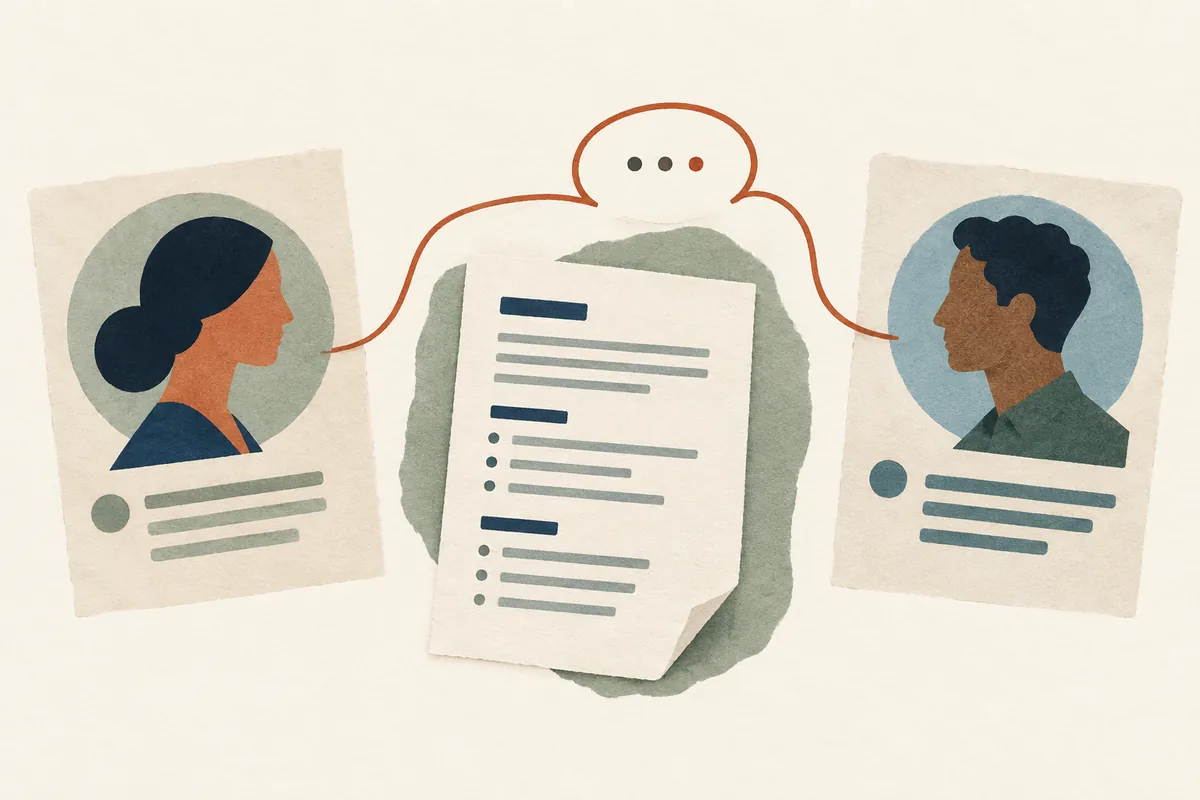
A recruiter screen establishes whether the role and candidate are plausible matches before a deeper evaluation. Prepare a concise case for relevance, accurate logistical information, and questions about the process rather than trying to prove every technical skill at once.
CareerOneStop describes screening as a short early-stage assessment of basic qualifications. Recruiters may also discuss compensation, location, timing, and the hiring sequence, but practices vary by employer.
Prepare your role match
Read the posting and identify its three most important requirements. For each, write one line of evidence from your work, education, volunteering, or projects. If you do not meet a preference, do not hide it; explain the closest relevant experience and how quickly you have learned comparable work.
Prepare a 45-second introduction that answers three questions: what you do now, which experience matters here, and why you are considering this opportunity. The recruiter screen question guide provides additional practice prompts.
Be ready for practical questions
Know your availability, preferred work arrangement, location constraints, and any stated salary range. If asked for compensation before you understand the role, you can ask for the budgeted range and say you want to evaluate the complete package.
Keep dates and titles consistent with your application. If a recruiter asks about a gap or change, give an accurate, brief explanation rather than improvising a more favorable history.
Ask recruiter-sized questions
Recruiters are often well placed to answer:
- how the role fits within the organization;
- which interview stages remain;
- who the next interviewer will be;
- whether an assessment is expected; and
- the target hiring timeline.
Save detailed team-priority and day-to-day management questions for the hiring manager unless the recruiter invites them.
Record what you learn
Immediately after the call, note names, dates, process details, and any new description of the role. Use those facts to prepare for the next stage. If a follow-up is appropriate, keep it specific and brief; see the recruiter screen follow-up guide.
Preparation should make the conversation clearer, not scripted. Leave room to listen and update your view of whether the role fits you.
Topics
interviews
recruiter screens
preparation
Continue reading

Interviews
How to Prepare for a Phone Screen
Prepare a concise role story, evidence, logistics, and questions for an early phone screen without treating it like a full final interview.
November 10, 2026
2 min read

Interviews
How to Prepare for an AI Interview Without Guessing the Algorithm
Prepare for an AI-assisted or recorded interview by verifying the format, testing access, practicing evidence, and following the stated rules.
October 21, 2026
2 min read
Interviews
How to Prepare for a System Design Interview
Learn to scope a system-design prompt, trace a concrete request, compare trade-offs, and practice failure scenarios without memorizing architecture diagrams.
November 10, 2026
4 min read