









resumes-applications
Resumes and Applications: Build a Clear Evidence Record
Create a resume and application that make relevant evidence easy to verify, adapt honestly to the role, and stay consistent through the interview process.
Interview Pilot Editorial Team
2 min read

A resume is a selective evidence record for a specific hiring decision. It should help a reader understand what you did, where your experience fits, and which results deserve closer discussion—without forcing them to decode decoration or inflated language.
Choose the correct document and structure
Most private-sector roles need a concise resume; academic, research, government, and some international contexts may require a CV or specialized format. Follow explicit application instructions before general advice.
Use recognizable sections, reverse chronology where appropriate, consistent dates, and enough context to understand each organization or project. CareerOneStop provides a practical resume overview.
Write bullets as evidence
A strong bullet connects an action or decision to context and outcome. The resume bullet guide shows how to replace duty lists with specific contributions without forcing a metric into every line.
Use numbers only when accurate and meaningful. Preserve confidentiality, distinguish your work from team outcomes, and be prepared to explain every claim.
Tailor for relevance, not keyword density
Identify the posting’s central responsibilities and terminology, then foreground matching evidence. Use the employer’s language when it truthfully describes your work, but do not paste phrases that overstate your experience.
Remove low-value detail before shrinking readability. A clear, focused document usually performs better for both human review and parsing than a design-heavy file with text embedded in graphics.
Handle limited experience honestly
Early-career candidates can use projects, coursework, volunteering, internships, and independent work when those examples demonstrate the required capability. The no-experience resume guide helps prioritize evidence.
A cover letter can explain motivation or context that the resume cannot. The no-experience cover-letter guide focuses on specific fit rather than apology.
Keep the application consistent and private
Save the submitted resume, cover letter, screening answers, and job description. Interview answers should add context rather than contradict dates, titles, or claims.
Provide sensitive identifiers only through verified employer systems and only when appropriate for the hiring stage. Avoid including a full street address, government ID, banking data, or unrelated personal information on a resume.
Topics
resumes
job applications
cover letters
Continue reading

job-search
Job Search Strategy: Build a Focused, Measurable Process
Create a job search strategy that defines target roles, finds opportunities, builds relationships, produces tailored applications, and learns from results.
October 27, 2026
2 min read
Career
Action Verbs for Resumes
Choose resume action verbs that accurately describe your contribution, with grouped options and before-and-after examples that do not inflate your role.
October 19, 2026
3 min read
Career
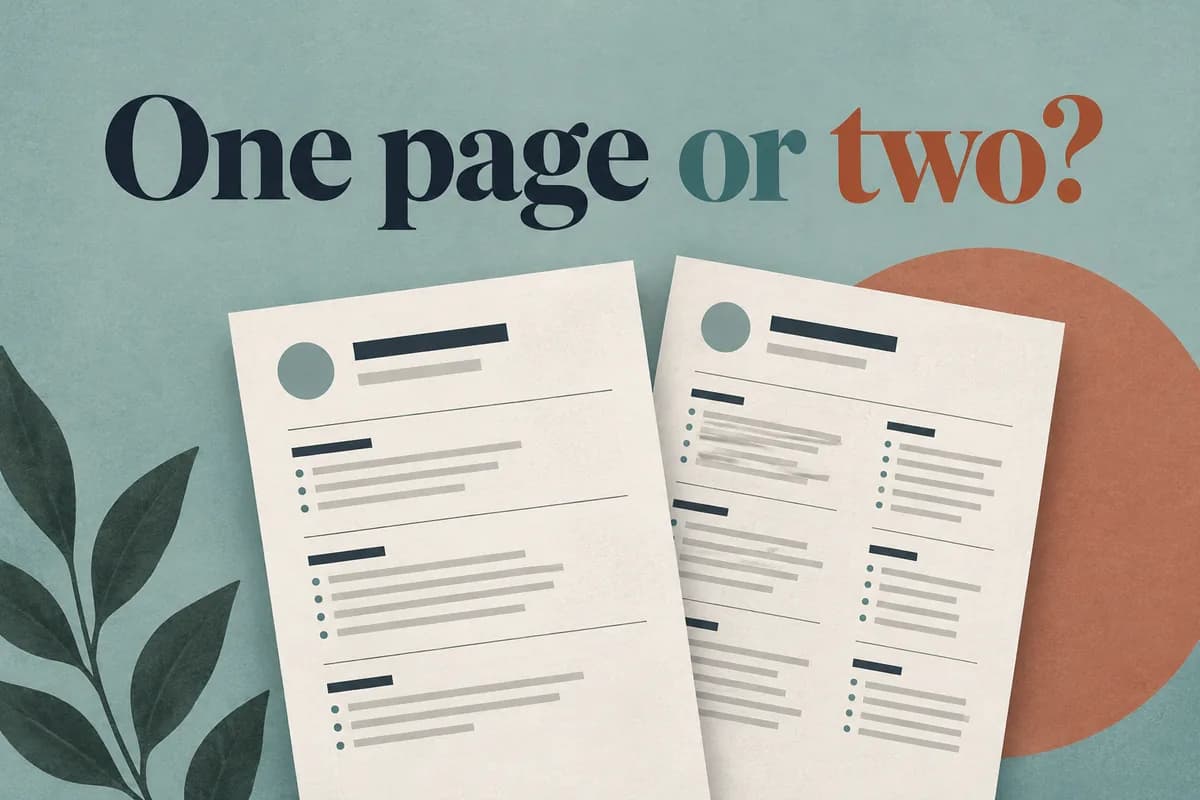
How Many Pages Should a Resume Be?
Decide between a one-page and two-page resume based on relevant evidence, readability, and application instructions, not an automatic rule based on years worked.
October 18, 2026
3 min read