









Career
How Many Pages Should a Resume Be?
Decide between a one-page and two-page resume based on relevant evidence, readability, and application instructions, not an automatic rule based on years worked.
Interview Pilot Editorial Team
3 min read
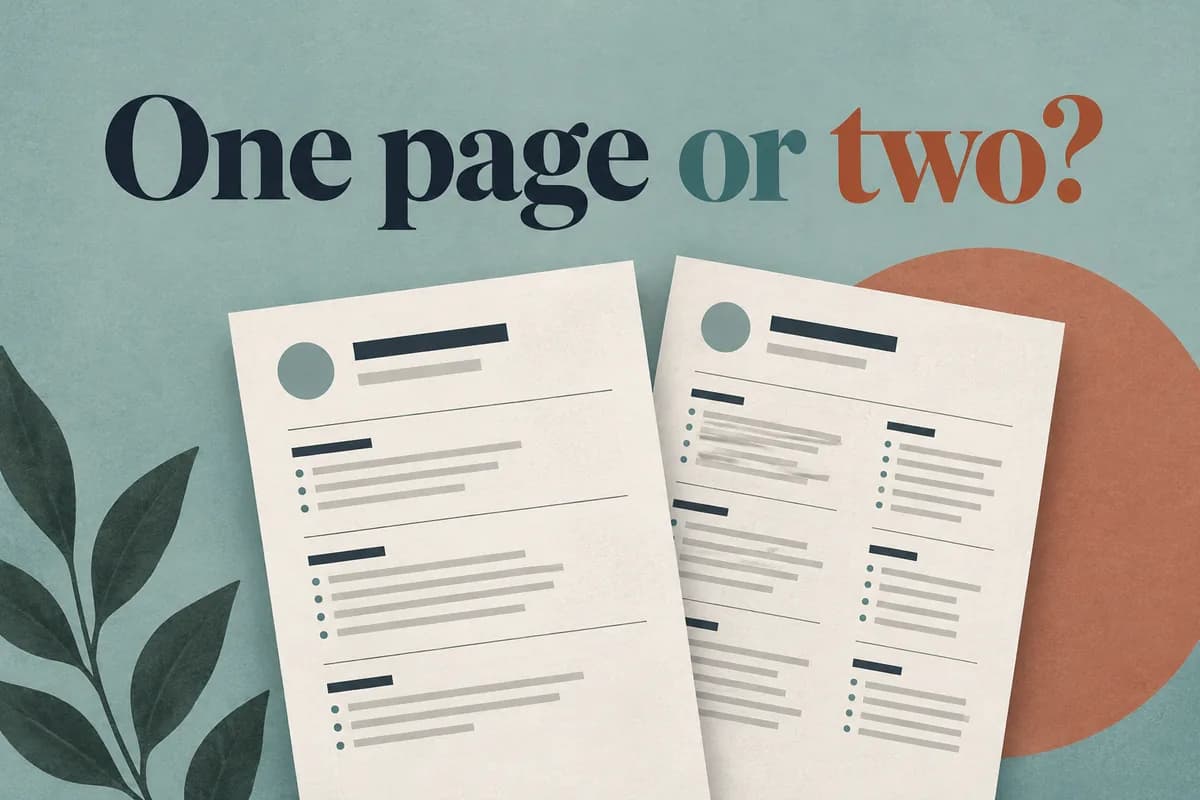
For a conventional US nonacademic job application, one or two pages is a useful starting range. Use one page when it presents your relevant evidence clearly. Use two when the additional material meaningfully supports the application. Follow the employer's explicit requirements over general advice.
Purdue OWL's guidance on resume length makes relevance and the reader's needs central to the decision. Its examples include entry-level candidates with different amounts of experience; career stage alone does not settle the question.
Start with one page when the evidence fits
Students, recent graduates, and people with a short relevant work history can often make a clear case on one page. That is not a reason to remove a substantial project while keeping generic claims such as "excellent communicator."
If you have little paid experience, relevant projects and volunteering still count as evidence. See our resume with no experience guide for how to present them honestly.
Make the second page earn its place
Ask what a reader would lose if page two disappeared. Useful additions might include a relevant earlier role, a technical project, or distinct leadership responsibilities. Repeated duties and an exhaustive list of unrelated activities are weaker reasons to add a page.
For example, a fictional engineer might need two pages to explain both recent product work and a directly relevant specialist project. Another person with more years of employment might fit comfortably on one page because older roles add little to the current application.
Do not put all the evidence for your target role on page two. Make the fit visible early, and keep each section easy to follow across the document.
Fix content before squeezing the layout
If the resume spills slightly over a page, first remove repeated bullets, unnecessary phrases, and information unrelated to the role. Our resume bullet examples can help you make a point more directly.
Then inspect the exported file. Avoid leaving a section heading alone at the bottom of a page or shrinking everything until it is uncomfortable to read. A readable two-page resume is more useful than a one-page document that hides its evidence in tiny text.
Know when this guidance does not apply
Academic CVs, portfolios, and applications with prescribed formats are different documents. Government or other structured recruitment may impose specific page limits or required information; read the current vacancy instructions rather than assuming a longer resume is allowed. Resume conventions also vary by country.
The final test is straightforward: does every section help the reader evaluate your fit, and can they find that evidence easily? Page count is a constraint to manage, not the achievement the resume is meant to demonstrate.
Topics
resumes
resume length
Continue reading
Career
Action Verbs for Resumes
Choose resume action verbs that accurately describe your contribution, with grouped options and before-and-after examples that do not inflate your role.
October 19, 2026
3 min read
Career
How to List Skills on a Resume With Clear Evidence
Build a focused resume skills section using relevant tools and capabilities you can support, with examples of grouping, proficiency wording, and evidence in bullets.
October 18, 2026
3 min read

Career
How Far Back Should a Resume Go?
Decide which older jobs to keep, summarize, or omit from a resume without distorting your history or confusing a resume with a complete employment-history form.
October 17, 2026
3 min read