
















resumes
Resume Objective Examples for Clear Career Direction
Write a concise resume objective for early-career, career-change, or return-to-work situations using only verified skills and goals.
Interview Pilot Editorial Team
2 min read
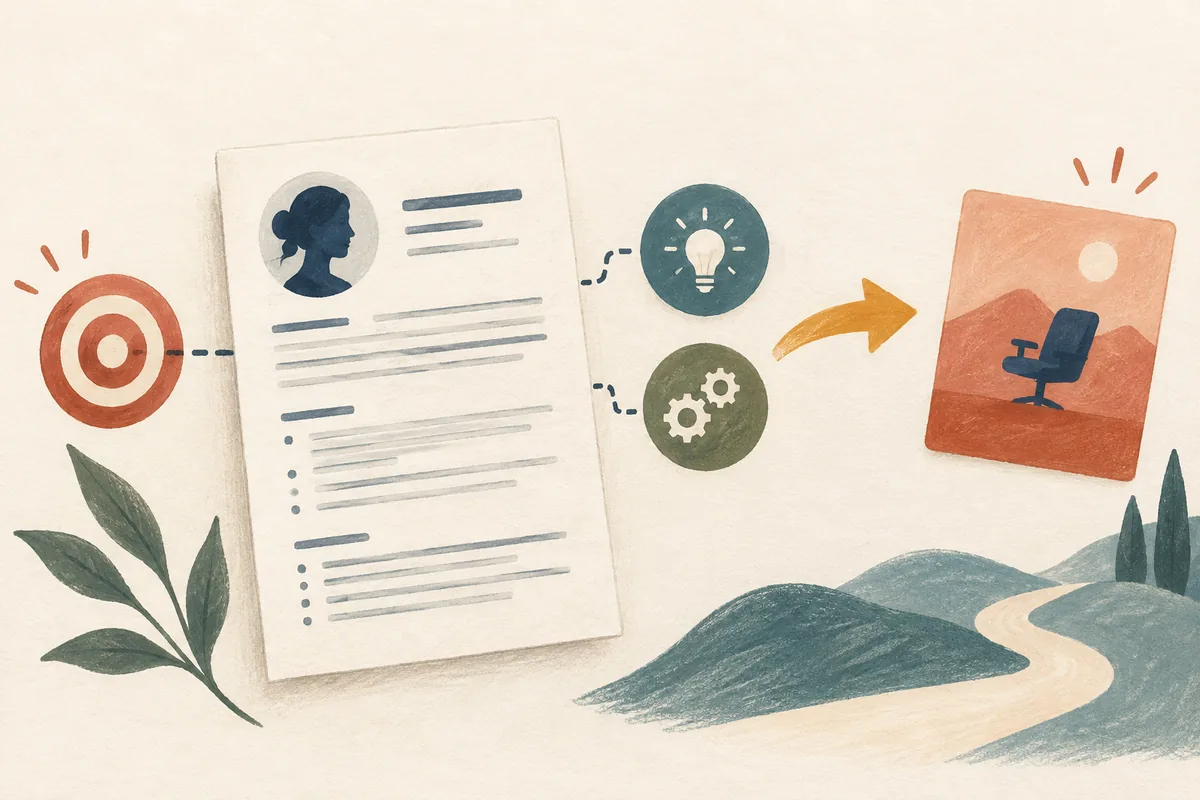
A resume objective is most useful when your target is not obvious from your recent job history. It can orient the reader when you are entering the workforce, changing fields, or returning after a break. If your experience already tells a clear story, a headline or summary may use the space better.
CareerOneStop's resume guidance distinguishes an objective, which explains what work you seek, from a summary of professional experience. It recommends tailoring the statement to the role.
Decide whether you need an objective
Use an objective to resolve a real question: Which role are you targeting, and how does your available evidence connect? Do not use it to say only that you want growth, a challenging position, or a chance to use your skills.
For an established professional staying in the same field, a targeted summary may be stronger. See the entry-level summary guide for that alternative.
Use a three-part structure
Write one or two sentences containing:
- the target role or function;
- one or two verified qualifications; and
- the relevant contribution you want to make.
The contribution should come from the job description, not a generic promise to “help the company succeed.”
Objective examples by situation
Recent graduate: “Economics graduate targeting an entry-level operations analyst role, bringing spreadsheet modeling from a capstone project and two semesters of peer-tutoring experience to support clear, evidence-based process decisions.”
Career changer: “Customer support lead transitioning to implementation coordination, with experience documenting workflows, training new users, and resolving cross-team launch issues.”
Returning candidate: “Administrative professional returning to office operations after a caregiving break, with current spreadsheet training and prior experience coordinating calendars, vendors, and confidential records.”
These are patterns, not facts to copy. Replace qualifications and outcomes with your own evidence. The career-change resume guide shows how the rest of the document must support the transition.
Remove claims you cannot support
Delete adjectives such as “exceptional” or “expert” unless the resume demonstrates them. Avoid promising results you have never produced. Check that every named tool, credential, and responsibility appears elsewhere in the document or can be explained in an interview.
Finally, compare the objective with the job title and first three requirements. If it could still describe an unrelated role, make the target and evidence more specific.
Topics
resumes
objectives
examples
Continue reading
resumes
Cover Letter Examples You Can Adapt Without Sounding Generic
Use three evidence-based cover letter patterns for a direct match, career change, or experience gap without copying invented claims.
November 8, 2026
2 min read

resumes-applications
Resumes and Applications: Build a Clear Evidence Record
Create a resume and application that make relevant evidence easy to verify, adapt honestly to the role, and stay consistent through the interview process.
October 28, 2026
2 min read
Career
Action Verbs for Resumes
Choose resume action verbs that accurately describe your contribution, with grouped options and before-and-after examples that do not inflate your role.
October 19, 2026
3 min read