












Research
10 Questions for Paralegal Interview Success
Prepare for questions for paralegal interview sessions with model answers covering research, documents, ethics, case management, and client service.
Interview Pilot Editorial Team
Updated September 23, 2026
23 min read

You're sitting across from a hiring partner who asks how you handled a sensitive case file, then follows up with a harder question: what did you do when the facts were incomplete, the deadline was fixed, and an attorney needed reliable work product immediately? A strong answer can't rely on software names or legal vocabulary alone. It should give a specific example, explain your process, show an observable result where you can support one, and make clear where your responsibility ended and attorney supervision began.
That combination matters because the paralegal role brings together legal research, document preparation, ethics, and case management. The profession has become a substantial legal support occupation, with about 404,900 paralegals and legal assistants employed in 2025, compared with 336,250 in 2021 and 329,870 in 2019, according to the Bureau of Labor Statistics overview of paralegals and legal assistants. Prepare examples that demonstrate dependable execution without disclosing client names, identifying facts, privileged communications, or confidential strategy.
Interview Pilot can support that preparation through its AI Mock Interview, searchable Question Bank, profile and document inputs, and Copilot customization. Use those tools to rehearse your own truthful experience. Live assistance never replaces independent preparation, accurate answers, or ethical conduct.
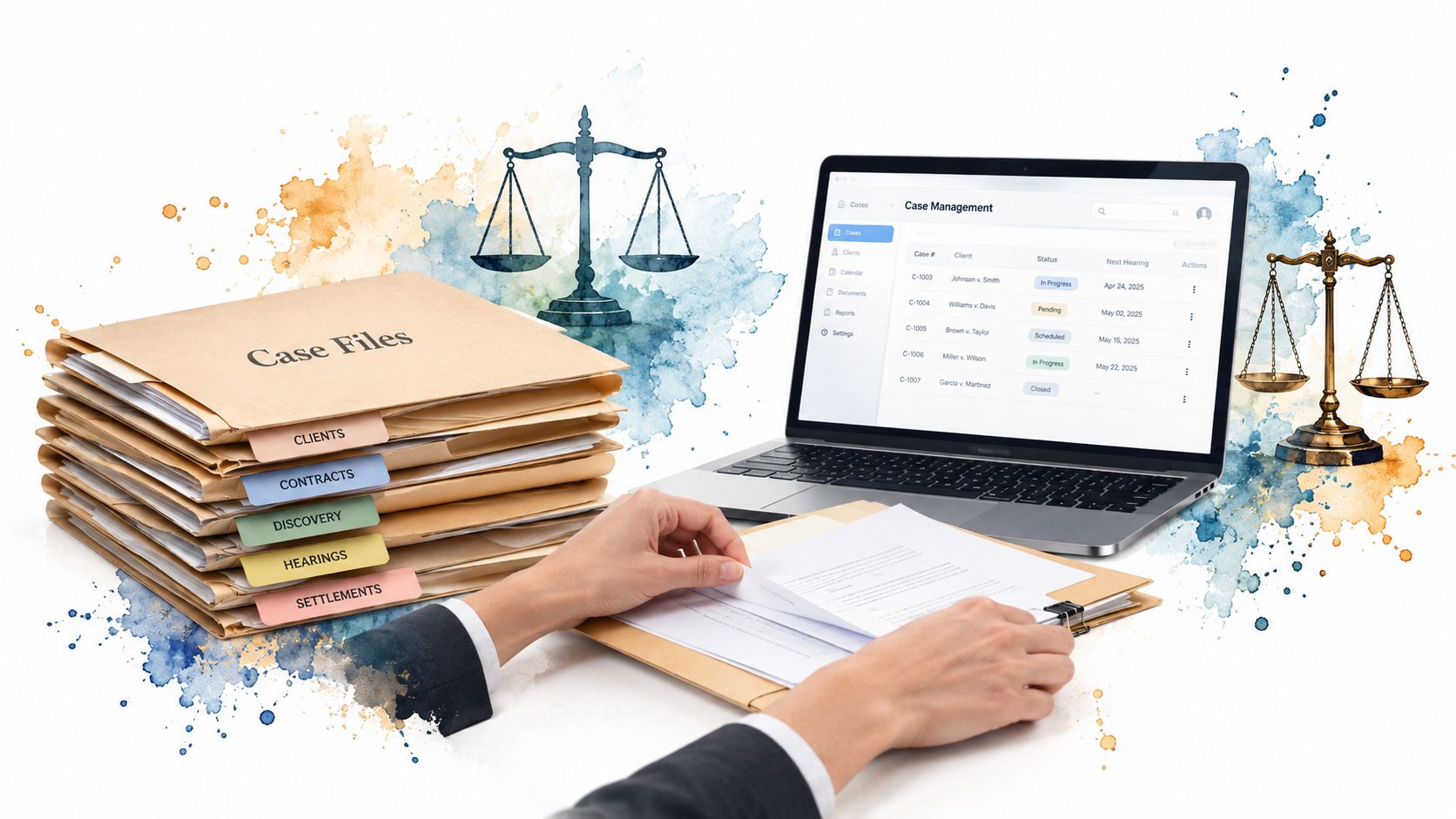
1. Tell Me About a Time You Managed a Complex Legal Document or Case File
Hiring teams want evidence that you can impose order on legal material without losing accuracy. Your example might involve discovery, a transaction file, estate documents, medical records, or a high-volume intake process. Name the practice area and describe the working environment, but remove client identifiers and confidential facts.
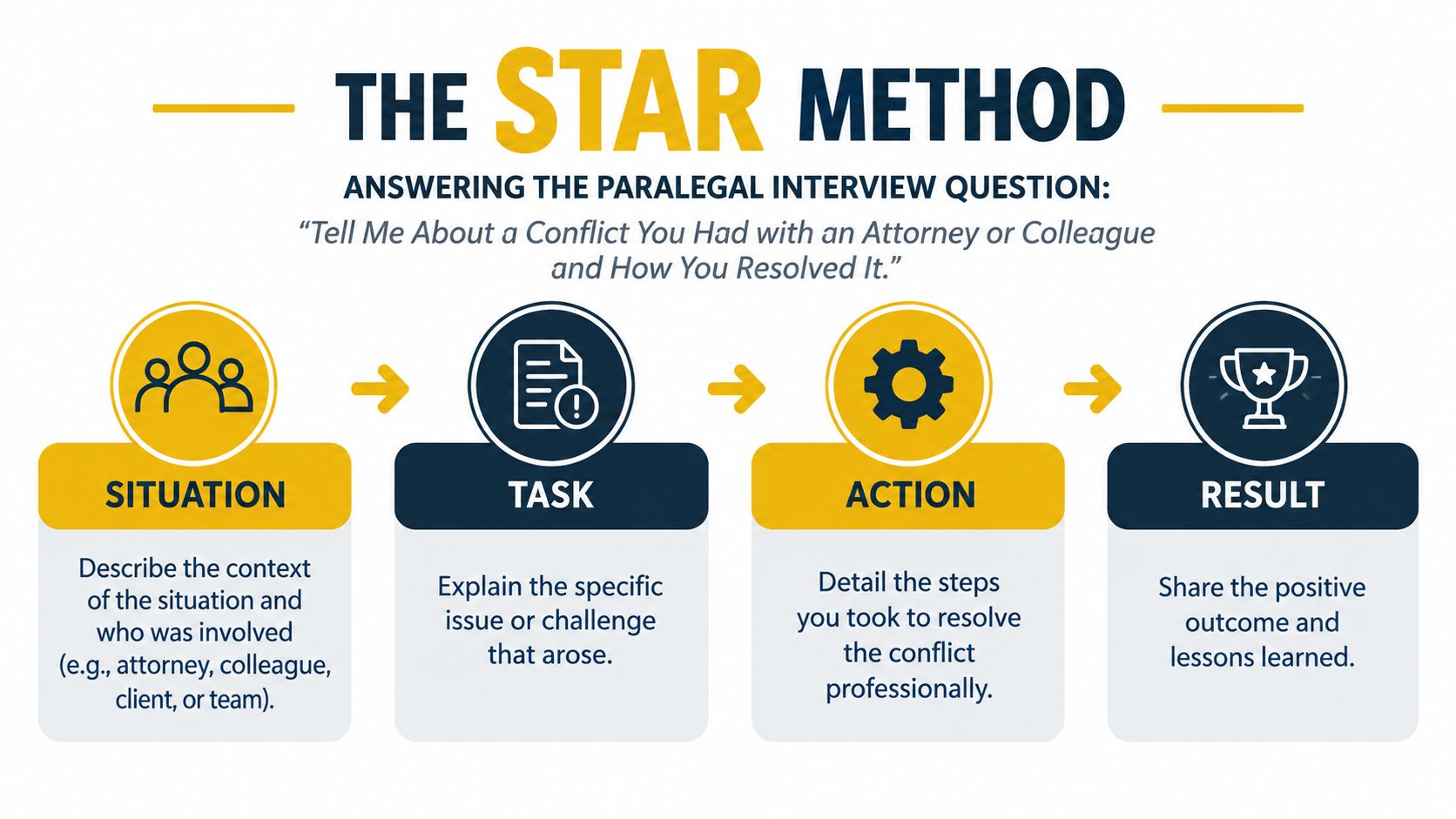
A useful answer follows Situation, Task, Action, Result, but don't recite the framework mechanically. Explain what made the file difficult, what you personally owned, how you prioritized, and how you checked the final work. If you used Relativity, NetDocuments, Clio, SharePoint, or another system, explain the task it supported rather than listing software for its own sake.
Practical rule: Hiring teams trust candidates who explain their quality-control steps more than candidates who simply call themselves detail-oriented.
What a strong answer should prove
Your response should show that you can:
- Create a consistent structure: Explain naming conventions, folders, metadata, indexes, or issue tags.
- Protect version control: Describe how you distinguished drafts, final documents, executed copies, and attorney revisions.
- Prioritize risk: Identify deadlines, missing materials, duplicate files, inconsistent dates, or documents requiring attorney review.
- Verify before delivery: Mention a second review, document comparison, privilege check, filing checklist, or source confirmation.
Don't invent a retrieval-time reduction or accuracy rate if you didn't track one. An observable result can be simpler, such as a complete production set, a clean closing binder, an attorney who could locate exhibits quickly, or a filing submitted without a preventable defect.
Preparation exercise
Choose one file from your background and draw its workflow from intake to completion. Write down the volume only if you know it, then identify three points where an error could have occurred and the control you used at each point. Practice a concise answer that ends with what the process taught you.
2. Describe Your Experience with Legal Research and How You've Applied Findings to Case Strategy
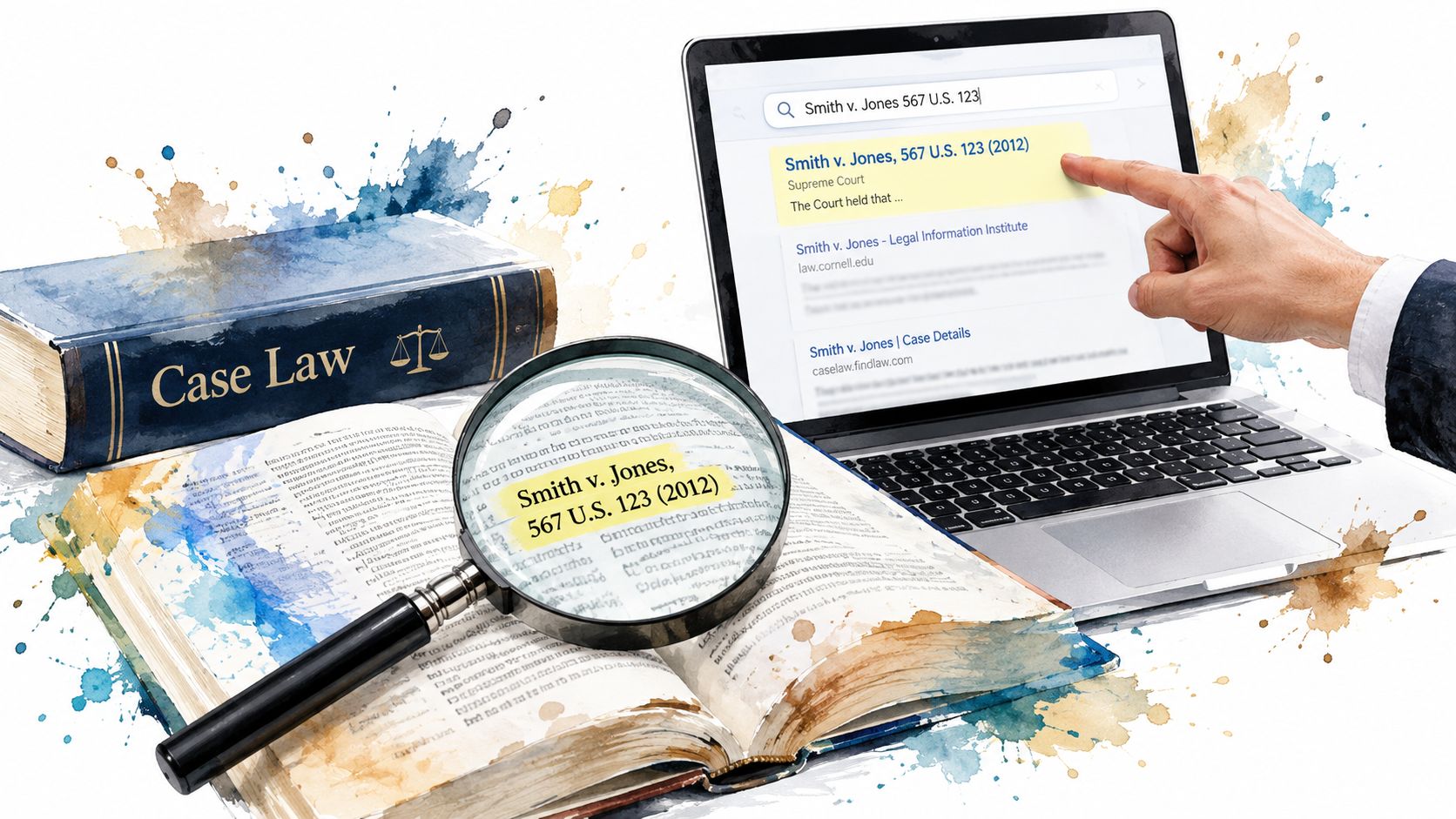
A paralegal's research answer should demonstrate judgment, not just database familiarity. Start with the question you were asked, identify the jurisdiction and authority involved, then explain how you tested whether the result was current, relevant, and usable by the supervising attorney.
You might describe statutory research, case-law research, regulatory review, docket research, or a procedural question. If you used Westlaw, LexisNexis, KeyCite, Shepard's, court websites, or a specialist database, say exactly what you did with the tool. A strong answer distinguishes finding an authority from evaluating its status and fit.
A practical research framework
Organize the response around four steps:
- Define the issue: Confirm the jurisdiction, date range, legal question, and deliverable before searching.
- Search deliberately: Use statutory terms, citation searches, headnotes, filters, and related authorities where appropriate.
- Validate the result: Check subsequent history, treatment, amendments, court level, and whether the authority answers the actual question.
- Communicate clearly: Give the attorney a short synthesis, citations, relevant excerpts, and unresolved questions.
Never claim that your research changed settlement terms or determined case strategy unless you know that happened. You can accurately say that your memo gave the attorney a clearer basis for evaluating an argument, preparing a filing, or deciding what required further review.
Preparation exercise
Take a nonconfidential legal question from coursework or prior work. Write a research plan before opening a database. Then prepare a one-page memo with the issue, governing authorities, unfavorable authority, status checks, and a final section titled Questions for attorney review. This demonstrates the difference between legal research support and unauthorized legal analysis.
3. Tell Me About a Conflict You Had with an Attorney or Colleague and How You Resolved It
Conflict answers reveal whether you can raise a concern without becoming defensive or disrespectful. Choose a limited workplace disagreement, such as unclear task ownership, an inconsistent instruction, a research interpretation, or a deadline that conflicted with another priority. Don't use the interview to criticize an attorney, former manager, or colleague.
Explain your part in the problem. Perhaps you assumed a deadline, failed to confirm an instruction in writing, or raised an issue too late. Then show how you separated facts from emotion, communicated directly, and preserved the reporting relationship. A useful example may include presenting research that caused an attorney to reconsider a document point, but frame the outcome as professional collaboration rather than winning an argument.
How to make the answer credible
Describe the conversation itself. Say whether you requested a private discussion, summarized the issue in writing, asked which task had priority, or presented the relevant authority. Explain what changed afterward, such as a clearer assignment process, a confirmed deadline, or a shared review method.
The guide to answering a conflict with a coworker question can help you rehearse the structure, but your example must come from your own experience.
Preparation exercise
Write two versions of the same story. The first should explain the situation in about one minute. The second should answer a follow-up such as, “What would you do differently?” Remove blame from both versions and include one professional boundary you maintained.
4. Walk Me Through Your Experience with Litigation Support and Deposition Preparation
Litigation interviewers need to know whether you understand the rhythm of a matter, from intake and pleadings through discovery, depositions, motion practice, and trial support. You don't need to claim experience you haven't had. A candidate with academic, administrative, or adjacent experience can still show how they would organize evidence, track deadlines, and escalate uncertainty.
Describe the specific litigation tasks you performed. These might include maintaining a docket, preparing discovery responses for attorney review, organizing exhibits, creating deposition indexes, coordinating witnesses, managing subpoenas, updating a chronology, or maintaining an exhibit log. If you used Relativity, Concordance, TrialDirector, or another platform, connect the tool to a concrete workflow.
What interviewers listen for
A credible answer usually covers:
- Evidence control: How you named, indexed, tagged, and cross-referenced documents.
- Deposition logistics: How you confirmed dates, participants, notices, exhibits, rooms, technology, and service requirements.
- Attorney readiness: How you surfaced gaps, prepared binders or electronic folders, and summarized important materials.
- Role boundaries: How you supported witness preparation administratively and factually without coaching testimony or giving legal advice.
The explanation of how litigation paralegals support attorneys offers useful context for mapping your experience to litigation workflows.
Before practicing, watch the following material as a reminder that a structured answer should still sound conversational.
Preparation exercise
Build a sample deposition-support timeline using a fictional matter. Include the tasks that must happen before, during, and after the deposition. Mark which tasks you could complete independently, which require attorney direction, and which depend on local rules or firm procedures.
5. Describe a Situation Where You Had to Meet a Critical Deadline with Limited Information or Resources
A deadline story is persuasive when the constraint is real and your response is controlled. Explain what was missing, why the gap mattered, and how you informed the supervising attorney. The strongest candidates don't present last-minute improvisation as a virtue. They show how they protected accuracy while making sensible trade-offs.
Your actions might include separating confirmed facts from assumptions, locating an alternative source, creating a short issue list, asking for a priority decision, or building a review queue. If an attorney was unavailable or a colleague left unexpectedly, describe how you redistributed work and documented open items. Don't imply that you independently solved a legal question that belonged to counsel.
The trade-off to explain
Under pressure, you may need to deliver a narrower, verified work product instead of a broad but unreliable one. Say what you delivered, what remained unresolved, and how you flagged the limitation. This shows judgment because legal teams need visibility into risk, not false certainty.
Use the tight-deadline interview guidance to rehearse follow-up questions about prioritization and stress.
Preparation exercise
Write a timeline for one genuine deadline example. Label each event as known, assumed, verified, or escalated. Then practice explaining the moment when you told your supervisor about a constraint. Your answer should make clear that communication happened early enough to support a decision.
6. What Experience Do You Have with Contract Drafting, Review, and Negotiation Support?
Transactional teams look for careful reviewers who understand that a contract is both a legal document and a record of commercial decisions. Start by naming the agreement types you've handled, such as nondisclosure agreements, vendor agreements, service agreements, purchase agreements, employment documents, or corporate resolutions.
Explain your review sequence. You might compare a draft against an approved template, confirm defined terms, check party names and dates, identify missing schedules, track redlines, and prepare a summary for attorney review. Mention provisions you recognize, such as indemnification, limitation of liability, confidentiality, termination, governing law, or force majeure, but don't pretend that recognizing a clause means you can decide whether the business should accept it.
Show support, not overclaiming
A good answer separates mechanical drafting from legal judgment. You may be able to prepare a first draft from a firm template, maintain a comparison document, organize a data room, or track open negotiation points. The attorney decides how legal risk should be addressed and what advice the client should receive.
Describe an instance where you flagged a deviation, missing provision, inconsistent term, or unresolved business point. If you don't know the final negotiation outcome, say that your escalation helped the attorney review the issue rather than claiming it protected the client.
Preparation exercise
Select a public sample agreement or a sanitized template. Create a clause inventory with the parties, term, payment, termination, confidentiality, liability, indemnification, dispute resolution, and governing law. Practice explaining which observations you could make independently and which questions you would send to counsel.
7. How Do You Stay Current with Changes in Laws, Court Procedures, and Legal Technology?
Legal employers aren't looking for a list of subscriptions. They want to know whether you can learn something relevant, verify it, and apply it without disrupting active work. Discuss the sources you use, such as court notices, official rule updates, bar or paralegal association materials, CLE programs, firm training, database alerts, or product documentation.
Give a recent example of learning that affected your workflow. It could be a filing procedure, a change in a court's electronic system, a new document-management feature, or a research tool update. If you shared the information with colleagues, explain how you did so and how you avoided presenting an unverified interpretation as settled law.
Include technology judgment
Technology proficiency is part of operational readiness. An independent analysis of job postings identified litigation, legal documentation, scheduling, legal document composition, legal research, case management, administrative support, and customer service among the frequently requested skills in more than 80,000 postings, as summarized in Indeed's paralegal interview guidance. Treat that evidence as a reason to discuss workflow judgment, not as a cue to recite every program you've seen.
If asked about AI, explain that generated research or drafted text requires verification against authoritative sources, current procedural requirements, and attorney instructions. Never send unverified output into a client or court workflow.
Preparation exercise
Create a learning log with three columns: source, practical change, and verification step. Add one example involving legal knowledge and one involving technology. Rehearse how you would tell an attorney that a tool produced a useful starting point but still requires human review.
8. Describe Your Experience with Legal Billing, Time Tracking, and Client Matter Management
Billing questions test whether you understand that administrative accuracy affects client trust and firm operations. Discuss the systems you've used, such as Clio, MyCase, LexisNexis, Elite, or another practice-management platform, but only name tools you can explain.
Walk through your time-entry routine. Describe how you record work promptly, select the correct matter and task code, separate billable and nonbillable work, review descriptions for clarity, and resolve uncertainty before submission. If you handled invoices, prebills, expense records, trust-related information, or matter opening and closing, describe the control you followed and the person responsible for final approval.
Avoid careless financial claims
Don't claim that you improved realization, reduced write-downs, or eliminated billing errors unless you have reliable records. Stronger evidence may be an invoice corrected before sending, a duplicate charge identified during review, a missing time entry escalated promptly, or a matter opened with complete conflict and billing information.
Ethics matters here too. A paralegal should never manipulate time, charge work to the wrong matter, disclose confidential billing information, or treat an attorney's approval as permission to ignore firm policy. If you encountered an unclear entry, explain how you paused and sought direction.
Preparation exercise
Take a fictional workday and create sample time entries for several tasks. Check whether each entry identifies the matter, action, purpose, and appropriate category without revealing unnecessary confidential detail. Then practice answering, “What do you do when you discover a billing mistake after submission?”
9. Tell Me About a Client or Situation Where You Had to Provide Excellent Customer Service Under Challenging Circumstances
Legal clients may be anxious, confused, frustrated, or under financial pressure. Your answer should show empathy without suggesting that you promised an outcome, interpreted the law for the client, or acted outside the attorney's direction.
Choose a situation where the concern was legitimate. Explain what the person needed, what information you could confirm, and how you communicated next steps. You might describe setting a regular update routine, clarifying a document request, organizing questions for the attorney, or explaining an administrative process in plain English.
Balance reassurance with boundaries
A strong response includes both warmth and restraint. You can acknowledge a client's concern, listen carefully, document the request, and provide an approved status update. You can't guarantee a result, give independent legal advice, disclose another person's information, or hide uncertainty to make the conversation easier.
Use the customer service interview question guidance to practice keeping the answer focused on behavior and outcome rather than on whether the client was difficult.
Preparation exercise
Write a short script for a client asking, “What do you think will happen?” Include an empathetic opening, the boundary you need to maintain, the information you can provide, and the next step you will take with the attorney. Then create a version for email, where tone and documentation matter even more.
10. Walk Me Through Your Understanding of Attorney-Client Privilege, Confidentiality, and Ethics Rules Relevant to Your Role
A strong answer shows that you handle sensitive information with care before, during, and after a matter. It also shows that you understand where a paralegal's role ends, because privilege depends on disciplined workflow, not casual judgment. The history of the paralegal profession helps explain why employers expect that standard. The profession grew through the American Bar Association's endorsement in 1967, its first legal-assistant committee in 1968, early education-program approvals in the 1970s, a distinct federal job classification by 1975, and NALA's Certified Legal Assistant program in 1976. Those milestones point to a role built on defined competence and professional responsibility.
Start with the practical controls you use. Talk about confidential email practices, careful note handling, secure storage, limited folder access, clean-desk habits, and checking recipients before sending anything. Mention conflicts checks, secure transmission, and the habit of escalating when material may be privileged, restricted, or accidentally shared. That is what hiring teams listen for, because it shows judgment in daily file work, not just familiarity with the terms.
State the boundary clearly
Say directly that you do not give legal advice, promise outcomes, set strategy on your own, sign for an attorney, or make representations that require counsel's authority. If a client asks a substantive legal question, you document it and route it to the attorney. If you notice a possible conflict, an accidental disclosure, or an instruction that seems questionable, you stop and escalate.
The American Bar Association guidance on paralegal supervision reinforces that paralegals work under attorney oversight and within defined limits. That is the point to emphasize in your answer: you protect the matter by staying inside the role, not by trying to act like counsel.
Preparation exercise
Draft responses for three situations. A client emails privileged material to the wrong internal group. A prospective client mentions a matter involving an existing client. A client asks for a legal opinion while the attorney is unavailable.
For each one, write what you would protect, what you would document, and who you would notify. Then practice saying your answer out loud in plain language. Strong candidates sound calm, specific, and careful, without overclaiming experience or authority.
10-Point Comparison: Paralegal Interview Questions
| Question / Topic | Complexity 🔄 | Resource Requirements ⚡ | Expected Outcomes ⭐ 📊 | Ideal Use Cases | Key Advantages 💡 |
|---|---|---|---|---|---|
| Tell Me About a Time You Managed a Complex Legal Document or Case File | High, multi-file coordination, confidentiality controls | Case management software (Relativity/NetDocuments), time, quality checks | ⭐⭐⭐⭐, improved accuracy, faster retrieval, fewer errors 📊 (e.g., reduced retrieval time) | High-volume litigation, multi-jurisdiction matters, discovery-heavy cases | Demonstrates organization, confidentiality handling, measurable process improvements |
| Describe Your Experience with Legal Research and How You've Applied Findings to Case Strategy | Medium, technical research + analytic synthesis | Legal databases (Westlaw/Lexis), legal knowledge, analytic time | ⭐⭐⭐⭐, actionable precedents, stronger briefs 📊 (influences settlements/strategy) | Litigation research, statutory/regulatory matters, attorney support for briefs | Shows technical mastery, strategic contribution, time savings for attorneys |
| Tell Me About a Conflict You Had with an Attorney or Colleague and How You Resolved It | Medium, interpersonal nuance, professional judgment | Communication skills, emotional intelligence, time for discussion | ⭐⭐⭐, improved team dynamics, clearer processes 📊 (reduced miscommunication) | Team-based firms, close attorney-paralegal relationships, high-stress environments | Reveals maturity, conflict-resolution ability, respect for hierarchy |
| Walk Me Through Your Experience with Litigation Support and Deposition Preparation | High, procedural detail, tight timelines | E-discovery tools (Relativity/Logikcull), trial presentation software, coordination | ⭐⭐⭐⭐, trial-ready exhibits, smoother depositions 📊 (supports case outcomes) | Litigation teams, trial preparation, large-scale discovery matters | Demonstrates readiness for high-pressure litigation tasks and technical competence |
| Describe a Situation Where You Had to Meet a Critical Deadline with Limited Information or Resources | Medium, rapid prioritization and judgment calls | Flexibility, alternative research methods, cross-team coordination | ⭐⭐⭐, delivered critical work under constraints 📊 (shows resilience, on-time delivery) | Emergency filings, last-minute discovery, understaffed matters | Highlights resourcefulness, escalation judgment, stress management |
| What Experience Do You Have with Contract Drafting, Review, and Negotiation Support? | Medium, requires legal literacy and transactional detail | Contract management tools, templates, commercial awareness | ⭐⭐⭐⭐, mitigates contractual risk, speeds negotiations 📊 (clear redlines, protects clients) | Corporate, transactional, procurement and M&A support roles | Demonstrates business acumen, risk identification, template/process efficiency |
| How Do You Stay Current with Changes in Laws, Court Procedures, and Legal Technology? | Low–Medium, ongoing habit-building | CLEs, associations, podcasts, firm training, time investment | ⭐⭐⭐, sustained competence, quicker tech adoption 📊 (reduces compliance risk) | All practice areas, firms valuing continuous learning | Shows commitment to professional growth and proactive knowledge-sharing |
| Describe Your Experience with Legal Billing, Time Tracking, and Client Matter Management | Medium, process-driven, accuracy-critical | Practice management software (Clio/Time Matters), attention to detail | ⭐⭐⭐, improved billing accuracy, better financial reporting 📊 (fewer write-offs) | Firms tracking billable hours, finance-sensitive practices | Demonstrates financial responsibility, compliance, and operational efficiency |
| Tell Me About a Client or Situation Where You Had to Provide Excellent Customer Service Under Challenging Circumstances | Medium, emotional intelligence + boundaries | Communication skills, empathy, coordination with attorneys | ⭐⭐⭐, higher client satisfaction and retention 📊 (resolved disputes, calmer clients) | Client-facing roles, family law, immigration, sensitive matters | Highlights client management, de-escalation, professionalism under pressure |
| Walk Me Through Your Understanding of Attorney-Client Privilege, Confidentiality, and Ethics Rules Relevant to Your Role | Medium, technical + ethical judgment | Knowledge of Model Rules, firm policies, escalation protocols | ⭐⭐⭐⭐, reduced ethical risk, maintained privilege protections 📊 (avoids malpractice exposure) | All legal settings, matters involving sensitive data | Confirms professional responsibility, proper handling of privileged materials |
Turn Each Prompt into Proof of Readiness
Start by selecting one truthful example for each competency: research judgment, document control, ethical boundaries, deadline management, client communication, and practice-area readiness. Ten polished stories aren't necessary if six strong examples can answer multiple questions from different angles. A document-management example may also demonstrate prioritization, while a client-service example may show confidentiality and escalation.
Remove identifying information before you rehearse. Replace names with neutral descriptions such as “a commercial client,” “a litigation matter,” or “a government filing.” Exclude unusual facts that could identify the party, confidential strategy, settlement position, medical information, or privileged communication. You can preserve the professional lesson without exposing the matter.
For each story, write four short lines:
- Situation: What kind of matter or workflow was involved?
- Task: What were you responsible for?
- Action: What did you personally do, verify, document, or escalate?
- Result: What observable outcome followed, and what did you learn?
Don't manufacture metrics. If you didn't measure time saved, error rates, document volume, or financial impact, use a concrete qualitative result. “The attorney received a verified index before the review meeting” is stronger than an invented percentage. It also gives the interviewer a natural opening for a follow-up question.
Match your preparation to the role
A litigation position calls for examples involving discovery, dockets, exhibits, depositions, and deadlines. A corporate position may require contract comparison, data-room organization, entity records, and closing checklists. A public-sector role may place more emphasis on procedures, records, service requirements, and formal communication.
Review the job description and mark every tool you can use. If you've only observed a platform, say so. Explain what you can do independently, what requires training, and how you learn unfamiliar systems. Overclaiming software experience creates a credibility problem as soon as the interviewer asks you to describe a routine task.
Rehearse the boundaries
Prepare a shorter version of every answer for a follow-up such as “What did you do personally?” or “What would you do differently?” Practice naming your verification method and the point at which you involved an attorney. Hiring teams are listening for disciplined judgment, especially when the answer concerns legal research, client contact, privilege, AI-generated material, or a deadline under pressure.
Finish with a mock interview using Interview Pilot's Question Bank or AI Mock Interview. Review whether each answer is clear, specific, appropriately timed, and free of confidential details. The goal isn't to sound memorized. It's to make your real experience easy to evaluate.
Interview Pilot offers an AI Mock Interview, a searchable Question Bank, profile and document inputs, and Copilot customization for structured rehearsal of paralegal interview questions. Practice your examples, review your clarity and boundaries, and visit Interview Pilot to start preparing.
Topics
questions for paralegal interview
paralegal interview questions
paralegal career
legal research interview
legal ethics
Continue reading

Interviews
8 Embedded Systems Interview Questions
Prepare for embedded systems interview questions with sample answers on MCUs, RTOS, interrupts, memory, bootloaders, debugging, and design.
September 23, 2026
20 min read

Interviews
10 Excel Interview Questions by Skill Level
Prepare with 10 Excel interview questions by skill level, including formulas, tasks, pivot table exercises, and practical answer strategies.
September 22, 2026
23 min read
Interviews
10 Self Descriptive Words for Interviews and Resumes
Explore 10 self descriptive words for interviews and resumes, with examples, trade-offs, and tips for choosing language that sounds credible.
September 22, 2026
19 min read