
















Resumes
Nurse Practitioner Resume: Separate Credentials, Clinical Training and Practice
Create a nurse practitioner resume with accurate credential status, population focus and practice evidence, including a clear structure for new graduates.
Interview Pilot Editorial Team
3 min read
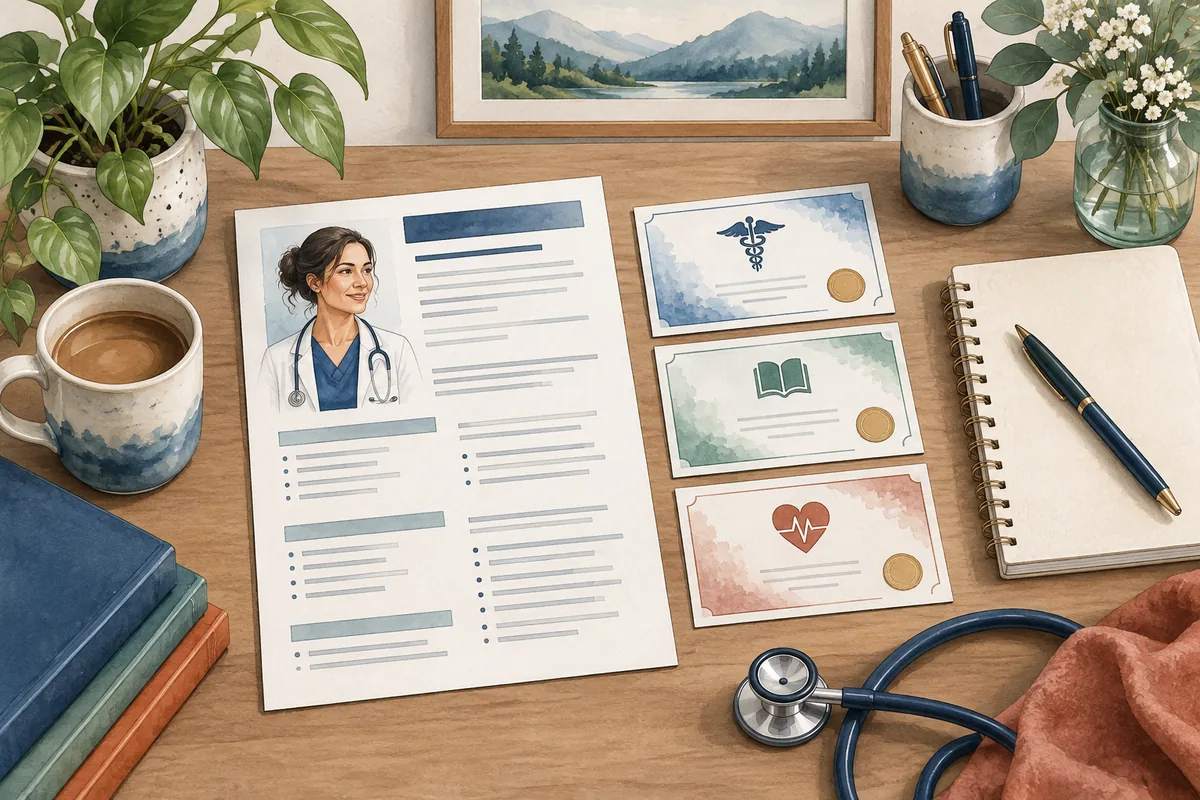
A nurse practitioner resume should make your qualification status, population focus and relevant experience clear before the reader reaches a long skills list. For a new graduate especially, years of RN experience and NP clinical placements must remain distinct from employed NP practice.
The BLS advanced practice nursing overview covers several professions, not just nurse practitioners, and notes variation in scope by state. Use the exact credentials and requirements applicable to your role and location. This is application-writing guidance, not clinical or licensing advice.
Make the top third answer the employer's questions
Identify your actual credential status, relevant population focus, setting and experience level. A summary is useful when it clarifies those points; it is not a place for unsupported claims about exceptional patient outcomes.
For example, a fictional new graduate might describe "recent NP graduate with prior outpatient RN experience and supervised primary-care placements." They should not describe all prior nursing years as NP experience. An experienced NP can instead foreground the relevant practice setting and responsibilities.
Choose the right section order
| Candidate situation | Evidence to prioritize |
|---|---|
| New NP graduate | Education, accurate credential status, supervised placements and relevant RN experience |
| Experienced NP changing settings | Relevant NP practice, transferable responsibilities and current qualifications |
| Returning applicant | Current status, recent preparation and accurately dated prior experience |
Use clear headings and reverse chronology within sections. If an employer asks for a CV rather than a resume, follow its instructions instead of assuming the same length and content requirements.
Label credentials without shortcuts
Use the full credential or qualification name, issuing body, jurisdiction where relevant and status. Distinguish an earned degree, examination eligibility, certification and licensure. Do not list pending authorization as active or imply prescribing authority you do not hold.
Avoid putting sensitive identification numbers on a broadly circulated resume unless a verified application process specifically requires them. An accurate status statement is not the same as a credential-verification document.
Describe responsibility and collaboration
Write about the setting, your contribution and the work you can substantiate. Fictional wording examples include:
- Coordinated follow-up documentation and communication with the care team in an outpatient practice, following the organization's established responsibilities.
- Contributed to a quality-improvement review by checking completeness of a defined documentation field and presenting findings to the supervising team.
- Completed a supervised placement focused on the stated patient population, documenting learning activities and feedback without claiming independent practice.
Replace these with your actual scope. Avoid clinical procedure details, identifiable patient stories or outcome claims that imply you caused a change without supporting evidence.
Use placement evidence well
For each selected placement, show the setting, population focus, dates, documented hours if useful and supervision context. Choose the placements most relevant to the vacancy rather than giving every rotation equal space.
Explain what you learned or contributed, not just the name of the site. When sharing a case in an interview, use an appropriately anonymized account and respect confidentiality; the resume itself rarely needs a patient-level narrative.
Check for credibility before submission
Make sure dates and role titles distinguish RN work from NP work. Verify credential status against your own current records and the employer's requirements. Remove generic claims such as "expert in all aspects of care" and replace them with specific, appropriate evidence.
Our resume bullet guide can help tighten the wording. Then prepare a resume walk-through that explains your progression without inflating either autonomy or experience. A clear boundary between stages of training is a strength, not a weakness to hide.



Topics
Resumes
nurse practitioner resume
Continue reading

Resumes
Medical Assistant Resume: Make Your Training and Clinic Experience Clear
Write a medical assistant resume that accurately separates clinical support, administrative work, externship experience and current credentials.
November 28, 2026
3 min read

Resumes
Medical Receptionist Resume: Show Accurate, Calm Front-Desk Work
Create a medical receptionist resume with strong scheduling, records and communication examples, including transferable experience from outside healthcare.
November 28, 2026
3 min read

Resumes
Maintenance Technician Resume: Show Equipment, Evidence and Reliability
Write a maintenance technician resume with clear equipment experience, troubleshooting contributions, work-order quality and accurately defined results.
November 27, 2026
3 min read