









Interviews
How to Answer “Walk Me Through Your Resume”
Learn a simple 60-second framework to answer “walk me through your resume” with sample responses for entry-level, mid-career, and career-change interviews.
Interview Pilot Editorial Team
9 min read

If an interviewer says, “Walk me through your resume,” they are not asking for a line-by-line reading. They want a short, structured story that connects your background to the role. The best answer is usually 60 to 90 seconds, focused on three things: your current situation, the most relevant experience from your past, and why you are interested in this job now.
The simplest formula is: past → present → future. Use it to guide the interviewer through your background without rambling. In this article, you’ll learn exactly how to answer the question, see sample responses for different career stages, and get a repeatable framework you can use before any interview.
Quick answer: the 60-second framework
Here’s the easiest way to answer walk me through your resume:
- Start with your present role or current situation.
- Highlight 2 to 3 relevant experiences from earlier roles, school, or projects.
- End by connecting your background to this job and why you’re interested.
A strong answer sounds like a concise career story, not a biography. It should show progression and relevance.
A simple template:
“I’m currently [your role or situation], where I’ve been focused on [1–2 key responsibilities or strengths]. Before that, I worked on [relevant experience], which helped me build skills in [skill area]. Earlier in my career / during school / in a prior industry, I developed [foundation skill or achievement]. I’m now looking for a role like this because it combines my experience in [area] with my interest in [goal or domain].”
What the interviewer really wants to hear
This question is often used as an interview opener. The interviewer is checking whether you can communicate clearly, prioritize information, and explain your path in a way that fits the role.
They are usually listening for:
- A clear timeline
- Relevant experience, not every detail
- Evidence that you understand the role
- A confident, organized speaking style
- Reasonable career logic between jobs, projects, or transitions
Think of it as your resume walkthrough interview. The interviewer already has your resume. Your job is to add context and help them understand the story behind it.
The best structure: past, present, future
This structure works for almost everyone.
| Part | What to include | What to avoid |
|---|---|---|
| Present | Your current role, degree, or job search status | Starting with childhood or unrelated background |
| Past | 1–3 relevant experiences, projects, internships, or jobs | Listing every bullet on your resume |
| Future | Why this role, why this company, why now | Generic statements like “I want growth” |
1. Present
Start by anchoring the interviewer in where you are now.
Examples:
- “I’m currently a senior analyst at a fintech company...”
- “I recently graduated with a degree in marketing...”
- “I’m a customer support specialist looking to move into operations...”
2. Past
Pick the experiences that explain how you got here.
Examples:
- A previous role that built a key skill
- An internship that led to your current path
- A project that shows proof of ability
- A career pivot that makes sense
3. Future
Close with a direct connection to the role.
Examples:
- “That’s why this role stood out to me.”
- “I’m especially interested in this position because it lets me combine X and Y.”
- “I’m looking for a team where I can use these skills in a more focused way.”
How long should your answer be?
For most interviews, aim for 60 to 90 seconds. That is long enough to give useful context but short enough to stay engaging.
Use this rough pacing:
- 15 to 20 seconds: current role or situation
- 25 to 40 seconds: most relevant background
- 10 to 20 seconds: why this job fits
If the interviewer wants more detail, they will ask follow-up questions.
Sample answer: entry-level candidate
If you’re early in your career, your answer should focus on education, internships, part-time work, leadership, and projects that match the role.
Example
“I recently graduated with a degree in business administration, where I focused on marketing and analytics. During school, I worked on several team projects that involved market research and presentation work, and I also completed a marketing internship where I helped track campaign performance and organize content for social media. After that, I joined a student consulting club, which helped me build communication and problem-solving skills. I’m now looking for an entry-level role where I can apply those skills in a more hands-on way, which is why I’m excited about this opportunity.”
Why this works
- It starts with the candidate’s current position.
- It highlights only relevant experiences.
- It shows progression from school to practical work.
- It ends with a clear reason for the role.
Stronger version if you have little experience
If your resume is light, use projects and transferable skills:
“I’m a recent computer science graduate, and most of my experience comes from coursework, a capstone project, and a software internship. In my capstone, I worked on a team that built a web app for scheduling, which helped me strengthen my JavaScript and collaboration skills. My internship gave me exposure to debugging and testing in a real development environment. I’m now looking for a junior role where I can keep learning while contributing to a team building useful products.”
Sample answer: mid-career candidate
Mid-career candidates should emphasize progression, impact, and the logic between roles.
Example
“I’m currently a product marketing manager at a SaaS company, where I lead messaging and launch strategy for new features. Before that, I spent three years in demand generation, which gave me a strong foundation in campaign performance and customer acquisition. Earlier in my career, I worked in account management, where I learned how to communicate with customers and understand their pain points. Over time, I realized I was especially strong at connecting customer insights to product positioning, so I’ve moved into more strategic marketing work. I’m now looking for a role where I can bring that mix of customer understanding and go-to-market experience to a larger product team.”
Why this works
- It shows a clear career path.
- It explains the move from one role to the next.
- It names relevant skills without repeating the resume.
- It connects the background to the target role.
Sample answer: career-change candidate
Career changers should explain the transition clearly and confidently. The key is to show that the move is intentional, not random.
Example
“I spent the first part of my career in teaching, where I built strong communication, organization, and conflict-resolution skills. Over time, I became more interested in employee development and internal operations, especially the systems that help people do their best work. I started taking HR courses, helped coordinate training programs at my school, and later completed an internship in recruiting operations. Those experiences made it clear that I want to move into people operations full time. I’m now looking for a role where I can combine my experience working with people with my interest in building better processes.”
Why this works
- It acknowledges the prior career without dwelling on it.
- It makes the transition feel logical.
- It uses concrete steps to prove commitment.
- It ends with a specific direction.
A simple fill-in-the-blank template
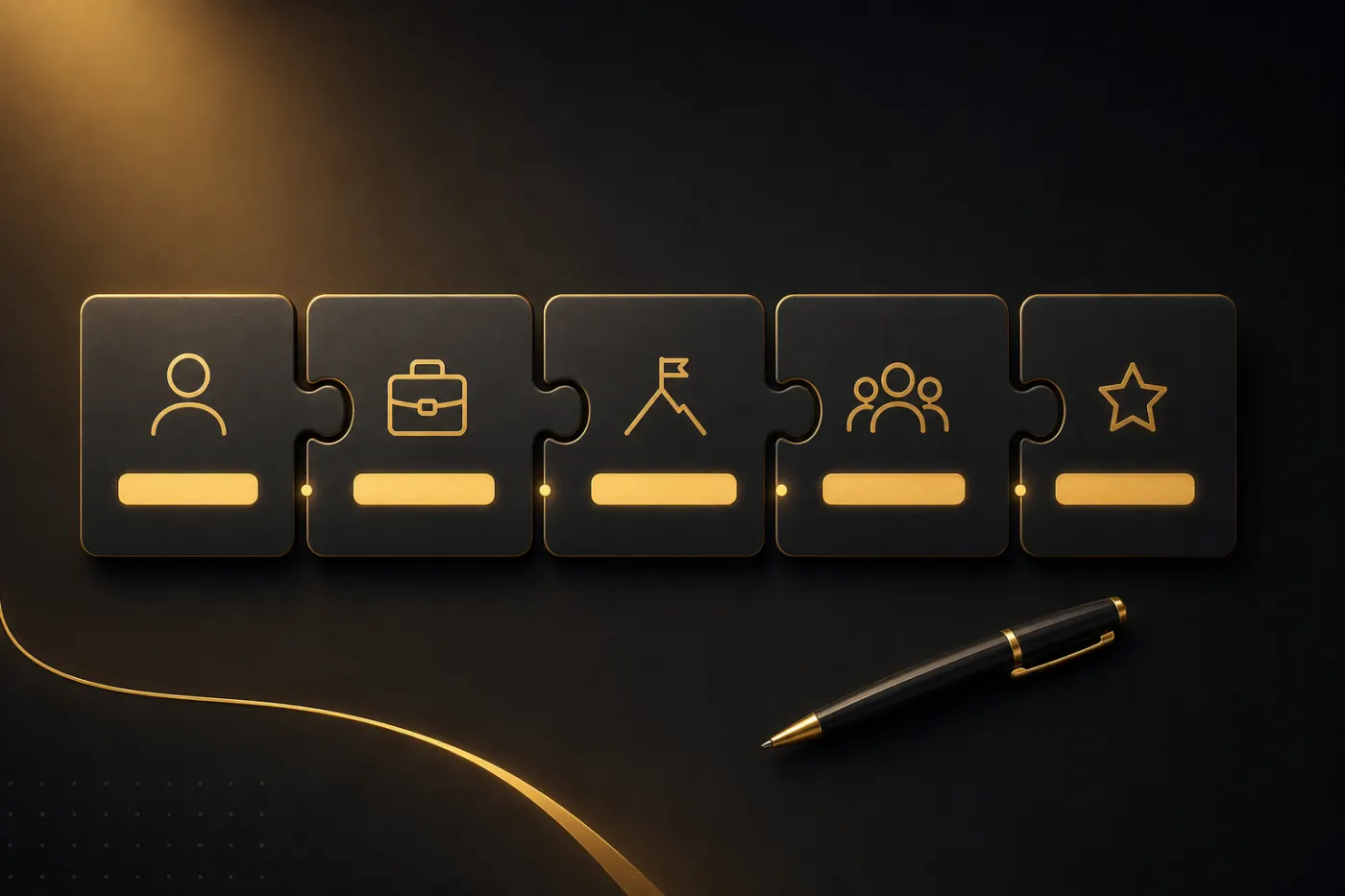 Use this formula to build your own answer:
“I’m currently [role/status], where I focus on [main responsibility]. Before that, I worked on [experience 1], which helped me build [skill]. I also had experience in [experience 2], where I learned [skill or achievement]. That background led me to become especially interested in [target area], which is why I’m excited about this role.”
If you are changing careers:
“I spent the first part of my career in [old field], where I developed [transferable skills]. I then started exploring [new field] through [course, project, internship, or volunteer work]. Those experiences helped me realize I want to focus on [new career path], and this role feels like a strong fit because [reason].”
What to include and what to skip
Use your answer to guide attention, not to recite every job.
| Include | Skip |
|---|---|
| 2 to 3 most relevant roles or experiences | Every job you’ve ever had |
| Achievements that match the job | Long explanations of unrelated responsibilities |
| A clear transition or progression | Jumps in chronology without explanation |
| A reason you want this specific role | Vague statements like “I need a job” |
| Keywords that match the job description | Buzzwords with no evidence |
Common mistakes to avoid
1. Reading your resume out loud
The interviewer already has it. If you simply repeat job titles and dates, you lose the chance to add insight.
2. Going too broad
If you try to cover everything, the answer becomes hard to follow. Choose the experiences that matter most for this role.
3. Sounding too rehearsed
You should prepare, but not memorize word-for-word. A natural delivery sounds more credible.
4. Forgetting the connection to the job
A good answer ends with a bridge to the role. Without that bridge, your story feels incomplete.
5. Talking for too long
If your answer runs over two minutes, you are probably giving too much detail.
How to practice your answer
A good answer should sound smooth without sounding scripted. Try this practice method:
- Write down your top 3 most relevant experiences.
- Identify one skill or achievement from each.
- Decide how those experiences led to this role.
- Say the answer out loud and time it.
- Trim anything that does not help the story.
If you want extra help preparing for interviews, you can also review common prompts in the question bank or practice with interview questions.
A good answer by candidate type
| Candidate type | Main focus | Best closing line |
|---|---|---|
| Entry-level | School, internships, projects, transferable skills | “I’m excited to start building that experience in this role.” |
| Mid-career | Progression, impact, and specialization | “I’m looking for a role where I can apply that background more strategically.” |
| Career changer | Transferable skills and clear transition | “This is the direction I want to commit to long term.” |
Final checklist before your interview
Before you answer walk me through your resume, make sure you can say yes to these:
- Do I know my 60-second version?
- Did I choose only the most relevant experiences?
- Did I explain how my background connects to this role?
- Did I sound confident and natural?
- Did I avoid reciting every bullet on my resume?
Next step
Draft your own 60-second answer, say it out loud twice, and refine it until it sounds natural. During the interview, an AI interview assistant can suggest follow-up points when the interviewer digs into a specific role, and the question bank has more common interview prompts to practice. If you want broader preparation, review interview questions so you can handle the rest of the conversation with confidence.
Topics
interviews
how-to-guide
resume walkthrough interview
how to introduce your resume in an interview
interview self introduction
Continue reading

Interviews
How to Answer “Tell Me About a Time You Missed a Goal”
Learn how to answer “tell me about a time you missed a goal” with ownership, STAR structure, and examples that show growth instead of excuses.
August 24, 2026
8 min read

Interviews
How to Answer 'What Is Your Biggest Weakness?'
Learn how to answer what is your biggest weakness interview questions with honest examples, scripts, and a simple formula that sounds credible.
August 21, 2026
9 min read

Interviews
How to Prepare for a Job Interview on Short Notice
A practical 24-hour plan for last minute interview prep, including research, question practice, confidence tactics, and a fast checklist.
August 14, 2026
8 min read