







Career
How to Write a Thank-You Email After an Interview
Learn how to write a strong thank you email after interview, with concise templates, timing tips, and examples for one-on-one and panel interviews.
Interview Pilot Editorial Team
8 min read

A good thank you email after interview should be short, specific, and sent within 24 hours. You do not need to write an essay. The goal is to thank the interviewer, reinforce one or two strong points, and show that you are still interested. If the interview involved multiple people, send a personalized note to each person.
If you want the simplest formula, use this: thank them, mention one specific part of the conversation, restate your interest, and close politely. That is enough for most candidates.
Quick answer: what to include
A strong thank-you email usually has four parts:
- A direct thank you for the interviewer’s time.
- One specific reference to the conversation.
- A brief reminder of your fit or enthusiasm.
- A simple closing and your name.
Keep it concise. Most good emails are between 80 and 150 words. Longer is not better.
Why a thank-you email still matters
A thank-you email is one of the few follow-up steps you fully control after the interview. It does a few important jobs at once:
- It shows professionalism and good judgment.
- It helps the interviewer remember you clearly.
- It gives you one more chance to connect your experience to the role.
- It can correct a small point or add a detail you forgot to mention.
It is not a second cover letter. It is not a place to repeat your entire resume. It is a brief, polished follow-up.
If you are also preparing for future interviews, keep your notes organized in your own system or review resources like /interview-guides and /question-bank.
The best timing for your thank-you email
The ideal time is within 24 hours of the interview. Same-day is often best if the interview happened early enough for you to send something thoughtful, but next-day is completely acceptable.
| Timing | When to use it | Best for |
|---|---|---|
| Same-day | Interview ended in the morning or early afternoon | Fast-moving hiring processes, final-round interviews, panel interviews |
| Next-day | You need time to write a better message | Most candidates, especially after longer interviews |
| After a panel interview | Send each person a separate note if possible | Interviews with multiple stakeholders |
| After a final round | Use a polished, slightly more tailored message | Senior roles, competitive searches |
Do not rush to send a weak email. A clear note sent the next morning is better than a sloppy note sent immediately.
Simple formula for a strong thank-you email
Use this structure every time:
- Opening: thank them for the conversation.
- Middle: mention a specific topic, project, challenge, or detail.
- Middle: connect that detail to your experience.
- Closing: say you are excited about the opportunity and invite next steps.
Here is a clean template you can reuse.
Interview thank-you email template
Subject: Thank you for your time
Hi [Name],
Thank you for taking the time to speak with me today about the [role title] position. I appreciated learning more about [specific topic discussed], especially [specific detail].
Our conversation reinforced my interest in the role because [brief reason that connects your experience to the team or work]. I believe my experience with [skill/project] would help me contribute quickly.
Thanks again for your time and consideration. Please let me know if I can provide anything else.
Best, [Your Name]
You can keep this structure almost unchanged for most interviews. What should change is the specific detail in the middle.
Thank-you email examples you can copy
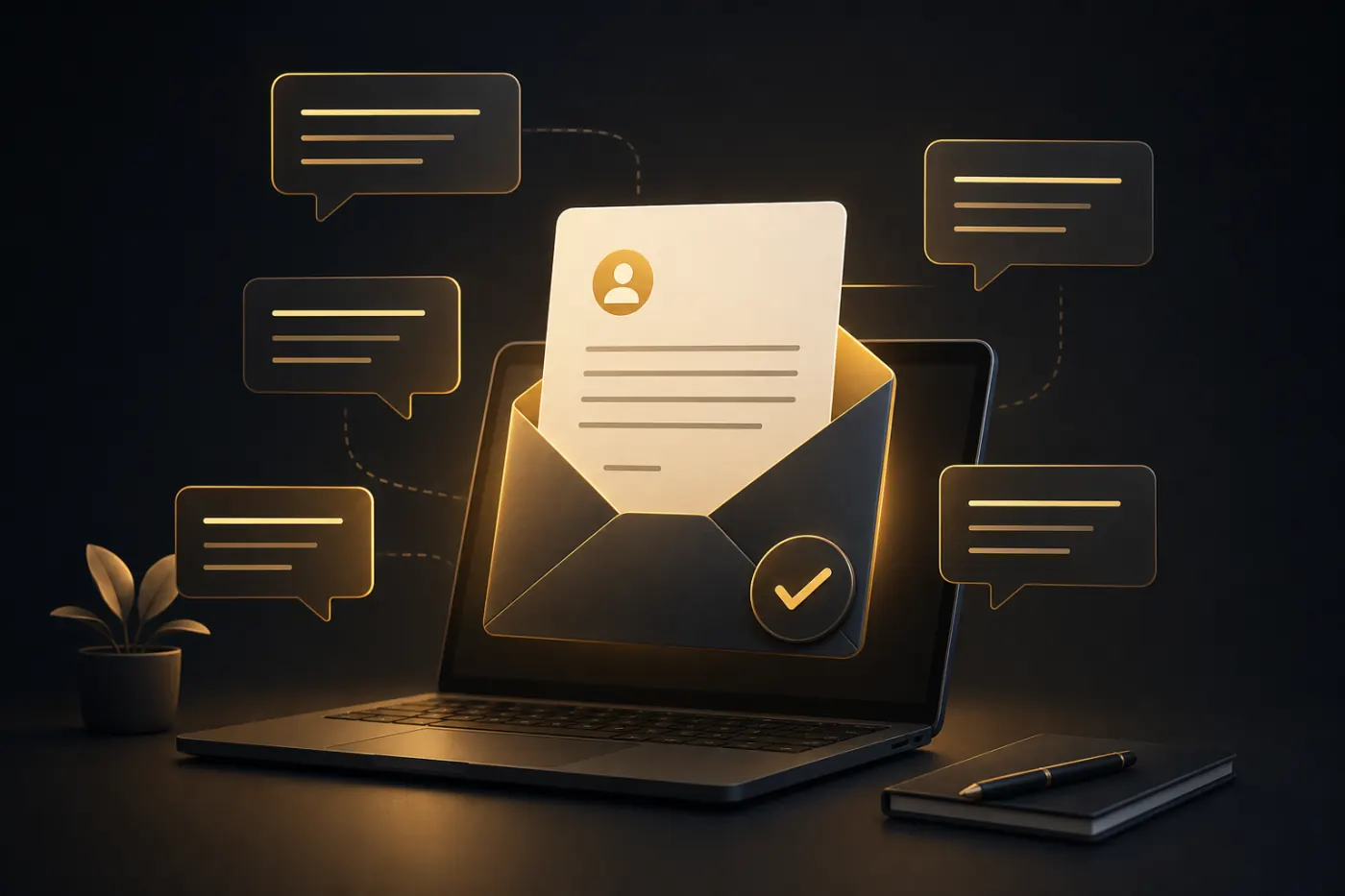 Below are practical thank-you note after interview examples for common situations.
1) Standard one-on-one interview example
Subject: Thank you for the conversation
Hi Maya,
Thank you for speaking with me today about the Product Analyst role. I especially enjoyed learning about how your team uses customer feedback to shape roadmap decisions.
Our discussion made me even more interested in the opportunity because of the mix of analysis, cross-functional work, and direct business impact. My background in reporting and stakeholder communication would fit well with that environment.
Thanks again for your time. I appreciate the chance to learn more about the team.
Best, Jordan
Why this works: it is specific without sounding scripted, and it connects the candidate’s experience to the role.
2) Same-day thank-you email example
Subject: Thank you
Hi Sam,
Thanks again for meeting with me earlier today. I appreciated your explanation of how the team is approaching the migration project and the focus on reducing friction for users.
I am very interested in the role and excited by the chance to contribute my experience in process improvement and cross-team coordination.
Please let me know if I can share anything else. I appreciate your time.
Best, Alicia
Why this works: it is short, timely, and easy to read on mobile.
3) Next-day follow-up example
Subject: Thank you for yesterday
Hi Priya,
Thank you for yesterday’s interview. I enjoyed our conversation about the customer success team’s priorities and the way you measure retention and support quality.
The role sounds like a strong fit for my background because I have spent the last two years working closely with clients to solve problems quickly and improve the overall experience.
I appreciate your time and consideration, and I hope we can stay in touch.
Best, Marcus
Why this works: it sounds natural and does not overdo the gratitude.
4) After-panel interview example
Subject: Thank you for the panel interview
Hi everyone,
Thank you for the thoughtful conversation today. I appreciated the chance to hear each of your perspectives on the team’s goals and the challenges ahead.
It was especially helpful to learn more about how the group collaborates across product, design, and operations. That kind of cross-functional work is exactly the environment where I have done my best work.
Thank you again for your time and consideration. I am very interested in the opportunity and would be glad to provide anything else that would help.
Best, Taylor
If you know each panelist’s name, send separate emails when possible. A personalized note is stronger than one mass email.
5) After a final-round interview example
Subject: Thank you for the final conversation
Hi Elena,
Thank you for meeting with me today and for the thoughtful final-round conversation. I especially appreciated your perspective on the team’s priorities for the next six months.
After speaking with everyone, I am even more excited about the possibility of joining the team. The combination of ownership, collaboration, and real product impact feels like a strong match for my experience.
Thanks again for your time. I look forward to hearing about next steps.
Best, Devon
Why this works: it reflects enthusiasm without sounding desperate.
How to write a thank-you email after an interview without sounding generic
The easiest way to sound real is to include one detail that only came from that interview. For example:
- A project they mentioned
- A team challenge they described
- A tool or workflow they use
- A customer segment or business goal
- A value or priority they emphasized
Try this pattern:
“I appreciated learning about [specific detail]. It made me think about [your related experience], and it reinforced my interest in the role.”
That one sentence makes the email feel personal and earned.
Common mistakes to avoid
A thank-you email is simple, but candidates still make avoidable mistakes.
| Mistake | Better approach |
|---|---|
| Writing a long email | Keep it short and focused |
| Repeating your resume | Mention one relevant strength only |
| Using a vague subject line | Use a clear subject like “Thank you for your time” |
| Sending a mass email to multiple interviewers | Personalize each message when possible |
| Making it overly formal or stiff | Write in a professional but natural tone |
| Asking for a decision too aggressively | Stay polite and patient |
| Sending with typos or the wrong name | Proofread before sending |
One especially common mistake is adding unnecessary content at the end. A thank-you note should not become a follow-up pitch, a negotiation email, or a compensation question.
What if you forgot to mention something important?
If you realize after the interview that you forgot a strong example or skill, you can include one sentence in the thank-you email. Keep it light and natural.
Example:
“One additional point I wanted to mention is my experience leading onboarding improvements, which I think could be relevant to the work we discussed.”
That is enough. Do not apologize excessively or overwrite the whole email with a correction.
Subject line examples that work
A subject line should be clear and easy to scan. Good options include:
- Thank you for your time
- Thank you for the conversation
- Great speaking with you today
- Thank you, [Name]
- Follow-up on the [Role Title] interview
Avoid overly casual subject lines or anything cute. You want the email to look professional at a glance.
If the interview was virtual, phone, or in person
The format of the interview does not change the core message. The difference is the detail you reference.
- Virtual interview: mention the discussion topic or team process.
- Phone interview: mention a point they explained clearly or a role detail.
- In-person interview: mention the office, team culture, or something you observed.
Example:
“I appreciated the chance to visit the office and learn more about how your team works together in person.”
That kind of detail helps your message feel grounded and attentive.
Final version: short template for busy candidates
If you need something fast, use this version.
Subject: Thank you for your time
Hi [Name],
Thank you for speaking with me about the [role title] position. I enjoyed learning more about [specific topic]. Our conversation reinforced my interest in the role, and I believe my background in [relevant skill or experience] would allow me to contribute quickly.
Thanks again for your time and consideration.
Best, [Your Name]
This is the safest all-purpose interview thank you email template when you want something professional, concise, and easy to customize.
Next step
If you want to prepare for the rest of the hiring process, review more interview guidance at /interview-guides, practice likely follow-up questions in /question-bank, or use /interview-copilot to sharpen your answers before the next round.
Topics
career
how-to-guide
interview thank you email template
thank you note after interview examples
how to write a thank you email after an interview
Continue reading
Career
How to Write a Resume Summary for an Internship With No Experience
Learn how to write a resume summary for an internship with no experience, plus templates and examples for students, high schoolers, and career switchers.
August 25, 2026
9 min read
Career
How to Write a Resume for a Remote Job
Learn how to write a resume for a remote job with examples, a template, and tips for highlighting communication, self-management, and remote tools.
July 29, 2026
8 min read

Career
How to Write a Resume Summary for Entry-Level Job Seekers
Learn how to write a resume summary for entry level job seekers with formulas, examples, and a template for students, graduates, and career changers.
July 20, 2026
8 min read