




Career
How to Write a Resume for a Remote Job
Learn how to write a resume for a remote job with examples, a template, and tips for highlighting communication, self-management, and remote tools.
Interview Pilot Editorial Team
8 min read
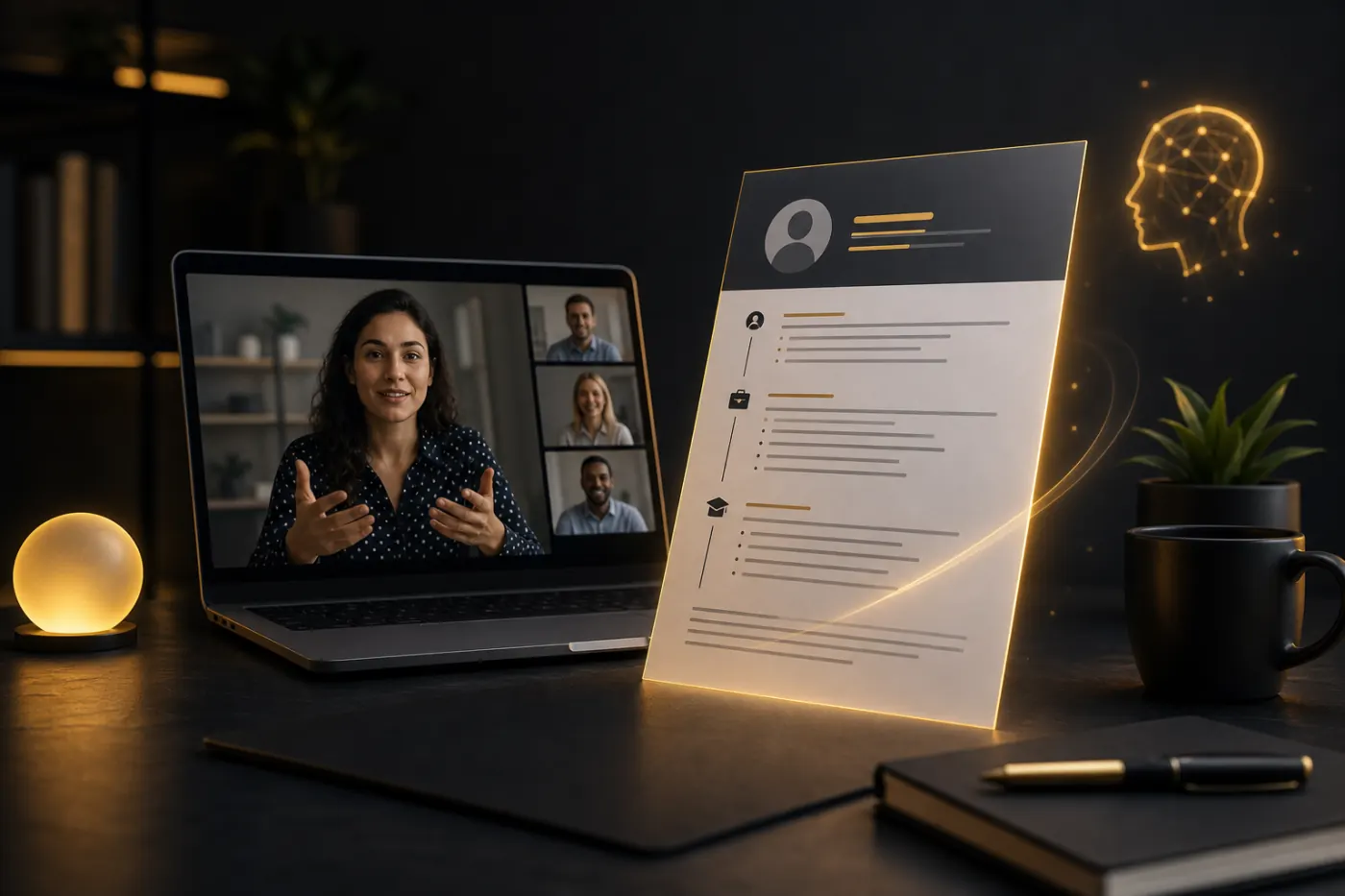
A strong resume for remote job applications should make one thing obvious fast: you can do the work independently, communicate clearly, and collaborate well without being in the same room. The best remote resumes do not just list job duties. They prove you are organized, responsive, comfortable with digital tools, and able to manage your work with little supervision.
If you are applying to a remote role, tailor your resume to show remote-ready skills like written communication, async collaboration, time management, and ownership. That matters just as much as your technical background. In this guide, you will learn exactly how to write a remote job resume, what to include, what to avoid, and how to use a simple template.
Quick answer: what a remote resume needs
A work from home resume should highlight three things:
- You can work independently.
- You communicate well in writing and across tools.
- You have experience with remote collaboration platforms and async workflows.
That means your resume should include:
- A focused summary that mentions remote work strengths
- Bullet points that show ownership and measurable results
- Remote tools and platforms where relevant
- Examples of cross-functional communication
- Proof of self-management, prioritization, and follow-through
If you want help preparing the rest of your job search, you can also use Interview Pilot’s interview copilot and downloadable job search resources.
What employers look for in a remote job resume
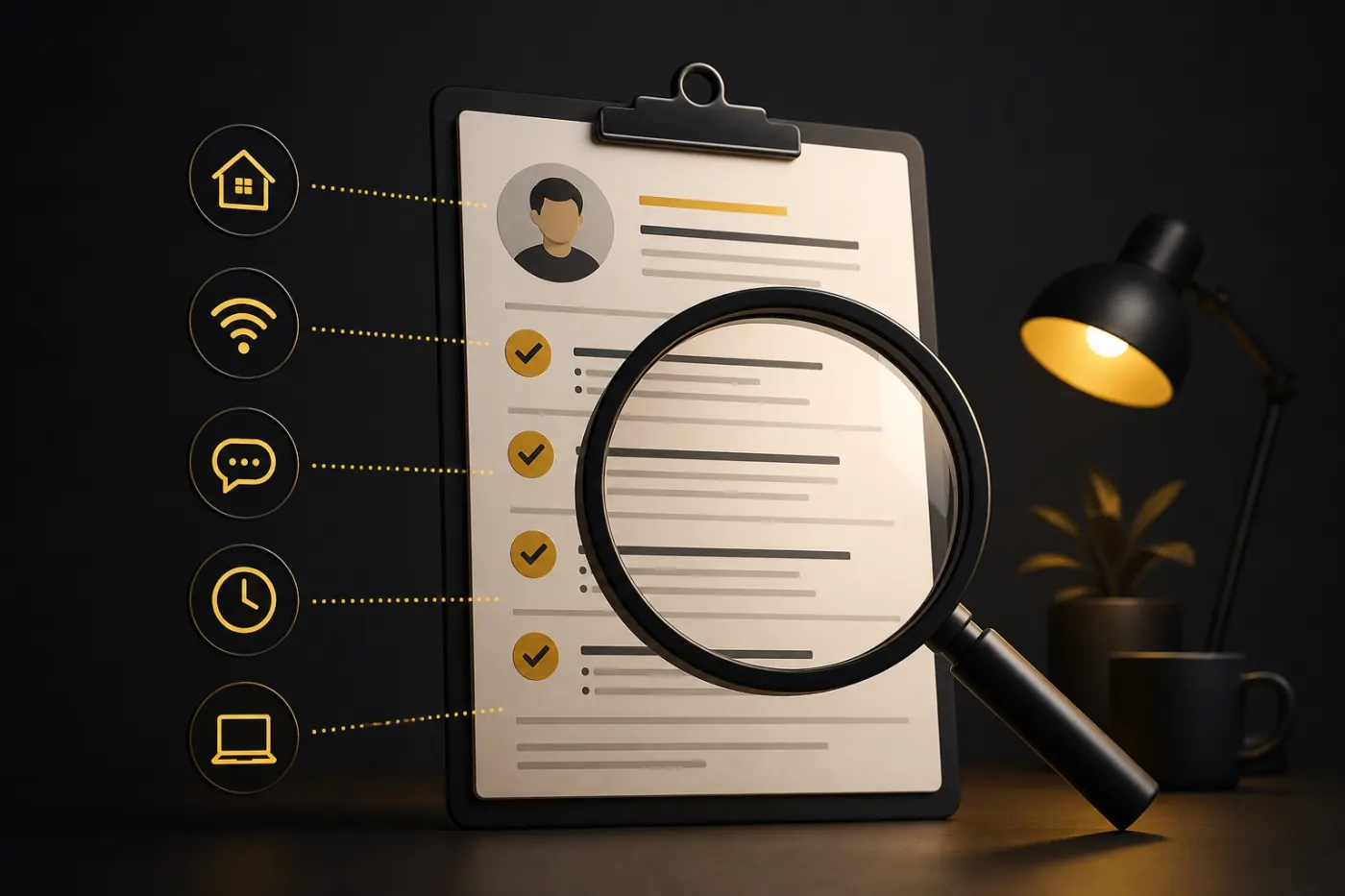 Hiring managers reading a remote job resume are often asking different questions than they would for an onsite role. They are not only checking whether you can do the tasks. They are also checking whether you can operate with less day-to-day oversight.
They want to see evidence of:
- Clear written communication
- Reliable follow-through
- Comfort with Slack, Zoom, Teams, Notion, Jira, Asana, Google Workspace, or similar tools
- Self-direction and time management
- Collaboration across time zones or departments
- Problem-solving without constant check-ins
- Documentation habits and process discipline
The key is to show these qualities through experience, not buzzwords. Saying you are a “self-starter” is weaker than showing that you led a project remotely, coordinated asynchronously with five stakeholders, and delivered on schedule.
How to structure a resume for a remote job
The best format is simple and skimmable. Keep your most relevant remote-ready strengths near the top.
Recommended resume order
- Header with contact information
- Resume summary
- Skills section
- Professional experience
- Education
- Certifications or relevant training
If you have remote experience, move it higher in the bullet points and summary. If you do not have formal remote work experience, use examples from hybrid work, freelance projects, school projects, volunteer work, or distributed team collaboration.
What to include in each section
| Section | What to include | Remote-job angle |
|---|---|---|
| Summary | 2–3 lines on experience and strengths | Mention async communication, self-management, or remote collaboration |
| Skills | Technical and workplace skills | Include remote tools and collaboration platforms |
| Experience | Bullet points with action and result | Show ownership, written communication, process, and delivery |
| Education | Degree, certifications, training | Add online training if it supports remote work skills |
| Optional extras | Portfolio, GitHub, writing samples, LinkedIn | Helpful if your work is digital and distributed |
Write a resume summary for remote jobs that sounds specific
Your resume summary for remote jobs should do more than repeat the job title. It should position you as someone who can thrive in a distributed environment.
A good summary usually includes:
- Your role or field
- Years of experience or relevant context
- 1–2 remote-ready strengths
- A proof point or specialty
Weak summary example
Detail-oriented professional seeking a remote position where I can use my skills and contribute to team success.
This is generic. It says almost nothing useful.
Strong summary example
Customer support specialist with 5+ years of experience handling high-volume inquiries in remote and hybrid teams. Skilled in written communication, ticket triage, and cross-functional collaboration using Zendesk, Slack, and Google Workspace.
Why it works:
- It names the role clearly
- It shows remote or hybrid experience
- It includes tools
- It highlights relevant remote skills without sounding forced
Another strong summary example
Marketing coordinator with experience managing distributed projects, coordinating async feedback cycles, and keeping campaigns on deadline across remote teams. Known for organized communication, process tracking, and reliable execution.
This version works because it shows the behaviors remote managers care about most: clarity, coordination, and consistency.
How to describe remote work experience in bullets
Your bullet points should not just describe tasks. They should show how you worked.
Use a simple formula:
Action + remote method + result
Example bullet points
- Coordinated weekly project updates across a 6-person remote team using Slack and Asana, improving deadline visibility and reducing follow-up emails.
- Managed client onboarding remotely by documenting workflows in Notion and responding to requests within 24 hours.
- Led async review cycles with cross-functional partners in three time zones, helping launch campaign assets on schedule.
- Created reusable templates for support responses, reducing handling time and improving consistency across the team.
- Ran weekly Zoom standups and wrote concise meeting notes so distributed stakeholders stayed aligned on priorities.
These bullets work because they show:
- Communication habits
- Tool fluency
- Process ownership
- Independence
- Coordination across locations or time zones
If you are writing a remote job resume without direct remote experience, focus on any experience that involved minimal supervision, digital collaboration, or independent project delivery.
Best remote work skills to list on a resume
Do not fill your skills section with vague traits like “team player” or “hard worker.” For a resume for remote job applications, skills should be specific and credible.
Better remote work skills to include
- Written communication
- Async collaboration
- Time management
- Project coordination
- Documentation
- Cross-functional communication
- Process improvement
- Prioritization
- Self-management
- Client communication
- Remote onboarding
- Virtual presentations
- Digital file organization
- Meeting facilitation
Remote tools you can list if you have used them
- Slack
- Zoom
- Microsoft Teams
- Google Workspace
- Notion
- Asana
- Trello
- Jira
- Monday.com
- Airtable
- Miro
- Loom
- Zendesk
- Salesforce
Only list tools you can actually use. A hiring manager may expect you to explain how you used them.
Resume template for a remote job
Use this template as a starting point and customize it for your role.
[Full Name]
[Phone Number] | [Email Address] | [LinkedIn] | [Portfolio or Website]

Professional Summary
[Job title] with [X] years of experience in [field]. Skilled in [remote-ready skill 1], [remote-ready skill 2], and [tool/platform]. Experience supporting distributed teams, managing priorities independently, and delivering work on deadline.

Skills
- Written communication
- Async collaboration
- [Role-specific skill]
- [Remote tool]
- [Role-specific skill]
- [Remote tool]

Professional Experience
[Job Title] — [Company], [Location or Remote]
[Dates]
- [Action] using [tool/process] to [result].
- [Action] across [team/time zone/stakeholder group] to [result].
- [Action] that improved [metric, speed, quality, or process].

[Job Title] — [Company], [Location or Remote]
[Dates]
- [Action] independently while coordinating with [stakeholders].
- [Action] through written updates, documentation, or meetings.

Education
[Degree], [School]
[Year]

Certifications or Training
[Certification or course]
Remote resume examples by role
Different jobs need different proof. Below are a few examples of how to tailor a remote resume.
Example: customer support
Focus on response time, empathy, documentation, and ticket tools.
Summary example:
Customer support associate with 4 years of experience in remote service environments. Strong in written communication, issue resolution, Zendesk workflows, and maintaining high response quality across distributed teams.
Example: project coordinator
Focus on scheduling, follow-up, meeting notes, and process tracking.
Summary example:
Project coordinator with experience supporting remote teams through organized communication, deadline tracking, and documentation. Comfortable using Asana, Slack, and Google Workspace to keep projects moving.
Example: software or technical role
Focus on async collaboration, code review, documentation, and version control.
Summary example:
Software engineer experienced in remote-first team environments, with strengths in async collaboration, code reviews, documentation, and delivery across time zones.
Example: marketing or content role
Focus on distributed collaboration, editorial calendars, feedback cycles, and writing.
Summary example:
Content specialist with experience managing distributed review cycles, maintaining editorial calendars, and delivering high-quality work through clear written communication and process discipline.
Common mistakes to avoid on a work from home resume
Here are the mistakes that make remote resumes weaker than they should be.
| Mistake | Why it hurts | Better approach |
|---|---|---|
| Using generic adjectives | Sounds vague and unproven | Show specific actions and outcomes |
| Listing “remote” with no evidence | Does not prove remote readiness | Mention tools, async work, or distributed collaboration |
| Oversharing home office details | Takes space without adding value | Focus on skills and performance |
| Stuffing the skills section | Looks inflated or fake | List only tools and strengths you can explain |
| Writing long paragraphs | Hard to scan | Use concise, result-focused bullets |
| Ignoring communication skills | Remote roles depend on clarity | Show written updates, docs, and stakeholder alignment |
How to tailor your resume for each remote job
Do not send the same resume to every application. Remote companies often screen for communication style, ownership, and workflow fit.
Tailor your resume by:
- Matching your summary to the job description
- Reordering bullets to highlight remote-relevant accomplishments
- Adding the tools mentioned in the posting if you have used them
- Mirroring the role’s language where it is accurate
- Emphasizing proof of self-management and collaboration
For example, if a job description mentions async teamwork and cross-functional coordination, you should surface those qualities in your summary and experience bullets. If the role is client-facing, emphasize responsiveness and written communication.
Final resume checklist for remote roles
Before you send your application, check these items:
- Your summary clearly says what you do and how you work remotely
- Your experience bullets show outcomes, not just duties
- Your skills section includes relevant tools and remote work skills
- You used concise, active language
- Your resume is easy to scan in under a minute
- You removed anything that does not support the target role
- You can explain every skill and tool listed
A simple example of a strong remote job resume section
Here is a sample experience section you can adapt.
Operations Specialist — Remote
- Coordinated daily workflows across a distributed team using Slack, Asana, and Google Sheets
- Documented processes in Notion to improve onboarding and reduce repeated questions
- Managed routine client communication through email and ticketing tools with a consistent response standard
- Created weekly status updates for leadership, improving visibility into project blockers and deadlines
This section works because it makes your remote habits visible. It shows communication, documentation, and self-management in action.
Next steps
If you want to strengthen your application beyond the resume, review your interview prep and supporting materials next. Start with Interview Pilot’s interview guides, then use downloads for helpful templates and checklists. If you want support practicing answers for remote interviews, try Interview Copilot.
Topics
career
how-to-guide
remote job resume
work from home resume
resume summary for remote jobs
Continue reading

Career
How to Write a Resume Summary for an Internship With No Experience
Learn how to write a resume summary for an internship with no experience, plus templates and examples for students, high schoolers, and career switchers.
August 25, 2026
9 min read

Career
How to Write a Resume Summary for Entry-Level Job Seekers
Learn how to write a resume summary for entry level job seekers with formulas, examples, and a template for students, graduates, and career changers.
July 20, 2026
8 min read

Career
How to Write a Follow-Up Email After a Final Interview
Learn how to follow up after a final interview with a clear, confident email that reinforces fit, asks about timelines, and avoids sounding pushy.
July 18, 2026
7 min read