












Interviews
How to Prepare for a Job Interview on Short Notice
A practical 24-hour plan for last minute interview prep, including research, question practice, confidence tactics, and a fast checklist.
Interview Pilot Editorial Team
8 min read

If you need to know how to prepare for a job interview on short notice, focus on three things: learn the company, practice your best answers, and prepare a simple plan for the day of the interview. You do not need to memorize everything. You need enough research to sound informed, enough practice to answer clearly, and enough structure to stay calm.
A strong 24-hour prep plan can turn panic into control. The goal is not perfection. The goal is to walk in ready to answer the most likely questions, explain why you fit the role, and ask smart questions at the end.
Quick answer: what to do first
If your interview is tomorrow or later today, use this order:
- Read the job description twice and highlight the top skills.
- Research the company mission, recent updates, and product or service.
- Prepare 5 to 7 stories from your experience using the STAR method.
- Practice answers to common questions out loud.
- Choose a professional outfit and test your tech, route, or interview link.
- Write 3 thoughtful questions to ask the interviewer.
That is the core of last minute interview prep. Everything else is optional.
A one-day interview preparation checklist
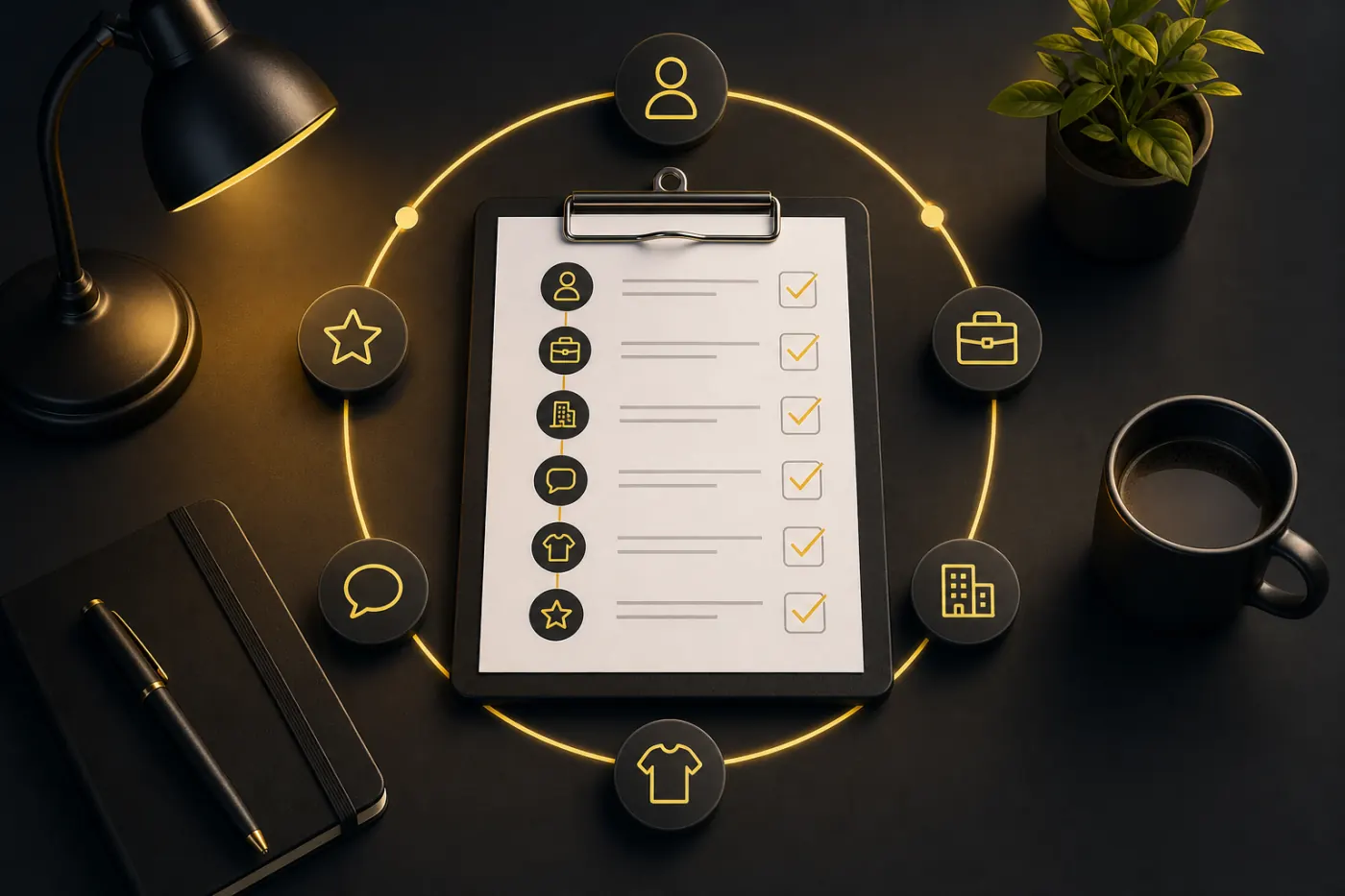 Use this as your interview preparation checklist when time is tight.
| Time | What to do | Why it matters |
|---|---|---|
| 60 minutes | Read the job description and company website | Helps you understand what they want and how to position yourself |
| 45 minutes | Review your resume and pick 5 examples | Gives you stories to support your answers |
| 30 minutes | Practice your intro and common questions | Improves clarity and reduces nerves |
| 30 minutes | Prepare questions for the interviewer | Shows interest and helps you evaluate the role |
| 20 minutes | Check outfit, notes, location, and tech | Prevents last-minute stress |
| 15 minutes | Do a final calm review | Keeps your mind focused before the interview |
If you only have a few hours, cut the research deep but keep the structure. A simple, organized prep plan beats random cramming.
Step 1: Decode the job description
The job description is your roadmap. Don’t read it passively. Pull out the skills, responsibilities, and keywords that appear more than once.
Look for:
- Core responsibilities
- Must-have technical or role-specific skills
- Soft skills like communication, ownership, or collaboration
- Tools, systems, or methods the role mentions
- The type of candidate they seem to want: builder, problem solver, organizer, leader, or specialist
Then write one sentence that connects your background to the role.
Example:
“My background in project coordination and cross-functional communication lines up well with this role because I’ve spent the last two years managing deadlines, stakeholders, and process improvements.”
This one sentence becomes the center of your answer to “Tell me about yourself” and “Why should we hire you?”
Step 2: Research the company the smart way
Short notice does not mean no research. It means targeted research.
Focus on the information that helps you speak like an informed candidate:
- Company mission and values
- Products, services, or customer base
- Recent announcements or releases
- Leadership team or department structure
- The language they use on their career page
Company career pages are especially useful because they often show what the company values in employees. Look for phrases such as “ownership,” “customer focus,” “fast-paced,” “collaboration,” or “growth mindset.” Those words help you align your examples with the employer’s expectations.
Keep a few notes in front of you, but do not overload yourself. If you can explain what the company does, who it serves, and why this role matters, you are prepared enough.
Step 3: Build your answer bank
When time is short, do not try to prepare for every possible question. Prepare for the questions that show up most often.
These are the highest-impact ones:
- Tell me about yourself.
- Why do you want this job?
- What are your strengths?
- What is your biggest weakness?
- Tell me about a challenge you solved.
- Tell me about a time you worked with others.
- Why are you leaving your current role?
- Do you have any questions for us?
For each answer, use a simple structure:
- Start with a direct answer.
- Give one short example.
- End by connecting it to the job.
Example: “Tell me about yourself”
“I’m a coordinator with experience supporting teams, improving processes, and keeping projects on track. In my last role, I worked closely with operations and customer support to reduce handoff delays and improve response time. I’m now looking for a role where I can use those organizational skills in a more customer-facing environment.”
Why this works:
- It is concise.
- It gives a relevant example.
- It explains the candidate’s direction and fit.
Example: “Why do you want this job?”
“I’m interested in this role because it combines problem-solving, teamwork, and direct impact. I also noticed that your team emphasizes collaboration and ownership, which matches how I like to work. I think my background in coordinating cross-functional work would help me contribute quickly.”
Why this works:
- It uses company-specific language.
- It ties motivation to the role, not just to wanting any job.
- It shows value, not just enthusiasm.
Step 4: Prepare 5 strong stories
If you only have one day, prepare stories that can answer multiple questions. Use the STAR method:
- Situation
- Task
- Action
- Result
Choose examples that show:
- Problem solving
- Leadership
- Conflict resolution
- Teamwork
- Prioritization under pressure
Keep each story to 60 to 90 seconds. You want enough detail to be believable, but not so much that you ramble.
A good short notice interview strategy is to write bullet points for each story rather than full scripts. That makes your answers more natural.
Example story outline:
- Situation: Team missed deadlines because handoffs were unclear.
- Task: Improve communication and reduce delays.
- Action: Created a shared tracker and weekly check-in.
- Result: Fewer missed deadlines and smoother delivery.
That one story can support several questions about teamwork, process improvement, and handling pressure.
Step 5: Practice out loud, not just in your head
Silent review feels productive, but speaking practice is what actually improves performance.
Do at least one full round of verbal practice:
- Intro
- “Why this company?”
- “Tell me about a challenge.”
- Weakness question
- Questions for the interviewer
If possible, record yourself on your phone. Listen for:
- Long pauses
- Filler words
- Answers that are too long
- Places where you drift off topic
Then tighten the answer. Most candidates do better when they shorten their responses and make the first sentence stronger.
If you want a faster way to rehearse, use a question bank like the one on /question-bank and pick only the questions most likely for your role.
Step 6: Handle nerves with a simple confidence routine
When people search for how to prepare for an interview in one day, they often worry about confidence as much as content. A short routine can help you feel more grounded.
Try this before the interview:
- Take 5 slow breaths.
- Review your opening line.
- Read your top three stories.
- Remind yourself of one result you’re proud of.
- Arrive early or log in 5 to 10 minutes ahead of time.
Avoid trying to become a different person overnight. Instead, aim to sound clear, calm, and prepared.
A useful mental script is:
“I do not need every answer to be perfect. I only need to communicate my value clearly.”
That mindset helps you recover if a question surprises you.
Step 7: Prepare for the final questions
The end of the interview matters. Many candidates underprepare for this part.
Have 3 questions ready, such as:
- What does success look like in the first 90 days?
- What challenges is the team focused on right now?
- How does this role work with the rest of the team?
Good questions show you are thinking about fit, impact, and expectations.
Avoid asking things you could learn from the company website unless you need clarification. Use the final questions to show judgment.
What to do if you truly only have 30 minutes
If your interview is almost immediate, narrow your prep to the essentials.
- Read the job description.
- Skim the company homepage and career page.
- Prepare your 30-second intro.
- Choose two stories that show impact.
- Write down three questions to ask.
- Check your appearance and setup.
That is enough to enter the interview with a basic plan.
Common short-notice mistakes to avoid
| Mistake | Better approach |
|---|---|
| Trying to memorize long scripts | Use short bullet-point answers |
| Skipping company research | Learn the mission, role, and recent updates |
| Speaking too generally | Use specific examples and results |
| Overpreparing weak questions | Focus on the most likely questions first |
| Ignoring logistics | Test your route, outfit, laptop, and link early |
| Sounding apologetic about short notice | Stay calm and focus on what you do know |
If you are underprepared, do not announce it. Most interviewers care more about how you think and communicate than about whether you had a perfect prep window.
A simple interview-day plan
Here is a practical schedule you can follow the morning of the interview:
- 60 minutes before: review notes and your top stories
- 30 minutes before: get dressed, hydrate, and stop heavy studying
- 15 minutes before: breathe, review your opening line, and log in or arrive early
- During the interview: listen carefully, answer directly, and pause before responding if needed
If a question catches you off guard, buy yourself a second with a calm bridge:
“That’s a good question. Let me think about the best example.”
That sounds thoughtful, not unprepared.
Final takeaway
The fastest way to prepare for a job interview on short notice is to focus on the highest-value work: job description, company research, answer practice, and a few strong stories. You do not need to know everything. You need to be able to explain your fit clearly and confidently.
If you want more help, review our interview guides, practice likely questions in the question bank, or use Interview Pilot Copilot to rehearse your answers more efficiently before the interview.
Topics
interviews
how-to-guide
last minute interview prep
interview preparation checklist
how to prepare for an interview in one day
Continue reading

Interviews
How to Answer “Tell Me About a Time You Missed a Goal”
Learn how to answer “tell me about a time you missed a goal” with ownership, STAR structure, and examples that show growth instead of excuses.
August 24, 2026
8 min read

Interviews
How to Answer 'What Is Your Biggest Weakness?'
Learn how to answer what is your biggest weakness interview questions with honest examples, scripts, and a simple formula that sounds credible.
August 21, 2026
9 min read

Interviews
What Makes You the Best Candidate for This Role?
Learn how to answer what makes you the best candidate for this role with concise examples, a simple formula, and mistakes to avoid.
August 7, 2026
9 min read