





Career
How Long After a Job Interview Should You Follow Up?
Learn exactly when to follow up after a job interview, including timing by stage, recruiter communication style, and what to do when you hear nothing back.
Interview Pilot Editorial Team
7 min read

The short answer: send a thank-you email within 24 hours, then wait until the timeline the interviewer gave you. If they did not give you a timeline, a good rule is to follow up about one week after the interview, then again about one week after that if you still have not heard back.
The right timing depends on the interview stage, how the recruiter communicated with you, and whether they said they were still interviewing other candidates. Good follow-up is polite, specific, and not pushy.
Quick answer
Here is the simplest timing guide:
| Situation | Best time to follow up |
|---|---|
| Thank-you note after interview | Within 24 hours |
| Recruiter said “we’ll be in touch next week” | After that week has passed |
| No timeline given after first-round interview | 5 to 7 business days later |
| No timeline given after final interview | 7 to 10 business days later |
| No reply after a follow-up | Wait another 7 business days, then send one last check-in |
If you want a deeper breakdown of what to say, see our guide on how to follow up after a job interview.
Key takeaways
- Send a thank-you email within 24 hours of the interview.
- If the interviewer gave you a timeline, follow up after that timeline passes.
- If no timeline was given, wait about 5 to 7 business days after a first-round interview.
- For a final-round interview, 7 to 10 business days is usually a safer follow-up window.
- After one or two polite follow-ups, move on unless the company gives you a reason to keep waiting.
The best follow-up timing by interview stage
A follow-up email is not just about showing interest. It is also about respecting the hiring team’s process. The stage you are in matters because different stages usually mean different decision timelines.
1. After the first interview
If the first interview was an initial screening or short recruiter call, wait about 5 to 7 business days before checking in, unless they gave you a different timeline.
Why this timing works:
- Recruiters often compare many candidates at once.
- Early-stage interviews are usually scheduled in batches.
- A follow-up too soon can make you seem impatient.
Example:
Hi Jordan, I enjoyed speaking with you last Tuesday about the coordinator role. I am still very interested in the opportunity and wanted to check whether there are any updates on next steps. Please let me know if I can provide anything else.
2. After a second-round interview
For a second interview, wait about 7 business days unless the interviewer told you a different date.
At this stage, the company may still be finishing interviews with other candidates or waiting for internal feedback. A follow-up after a week keeps you visible without sounding demanding.
3. After a final interview
A final interview usually deserves a little more patience. If no timeline was given, wait 7 to 10 business days before following up.
Why wait longer here?
- Final-round decisions often involve multiple stakeholders.
- Hiring managers may need approval from leadership or HR.
- Offers can depend on budget, references, or competing candidates.
If the team said, “We hope to decide by Friday,” then you can follow up the next business day if Friday passes without news.
4. After a recruiter says they will call or email
If the recruiter gave you a clear deadline, use that as your trigger.
For example:
- “We’ll be in touch early next week” means you can follow up by Wednesday or Thursday if you have heard nothing.
- “We should have an update in two weeks” means wait until the end of that second week.
In job interview follow up etiquette, the recruiter’s timeline should always override a generic rule of thumb.
How recruiter communication style changes your timing
Not every hiring process feels the same. The way the recruiter communicates tells you a lot about when to send interview follow up email messages.
If they are responsive and specific
If the recruiter replies quickly, answers your questions, and gives dates, follow their timeline closely. You do not need to nudge them early.
Best approach:
- Send a thank-you note within 24 hours.
- Wait until the promised date passes.
- Follow up once, briefly and professionally.
If they are vague but friendly
Some recruiters sound positive but never offer a date. In that case, wait 5 to 7 business days before following up.
Keep your email simple:
- Reference the role.
- Restate your interest.
- Ask whether there is an update on timing.
If they are slow to respond
If responses have already been delayed during the process, do not chase them every couple of days. Send a polite follow-up after the normal waiting period, then give them another week before trying again.
If they have gone silent after being very engaged
Silence after active communication can feel confusing, especially after a final round. Still, resist the urge to send multiple emails in a short span.
A good sequence is:
- Thank-you email within 24 hours.
- First check-in after 7 to 10 business days.
- Final check-in about a week later.
After that, let it go unless they respond.
What to do if you hear nothing after a final round
No response after a final interview is common enough that you should plan for it.
Here is the best way to handle it:
- Check your last message and the timeline they gave you.
- If the deadline has passed, send a short follow-up.
- Ask if there is any update on next steps.
- If they still do not reply, send one final polite check-in after another week.
- Continue your job search in parallel.
A good final-round follow-up email should be calm and professional, not emotional.
Sample:
Hi Priya, I wanted to follow up on my final interview for the analyst position last week. I remain very interested in the role and wanted to see whether there are any updates on next steps. Thank you again for your time, and I appreciate any information you can share.
When following up too soon becomes a mistake
Following up too early can work against you, especially if the company is still in interviews.
Common mistakes include:
- Emailing the same day unless you are sending a thank-you note
- Following up before the date they gave you
- Sending multiple messages within a few days
- Asking for a decision instead of an update
- Using overly emotional language like “I really need to know”
A better version of the same message is short, specific, and respectful.
| Too aggressive | Better approach |
|---|---|
| “I haven’t heard back and need an answer.” | “I wanted to check whether there are any updates on next steps.” |
| “Just following up again.” | “I’m writing to see whether you need anything else from me.” |
| “Please respond soon.” | “I appreciate any update you can share when convenient.” |
A simple follow-up timeline you can use
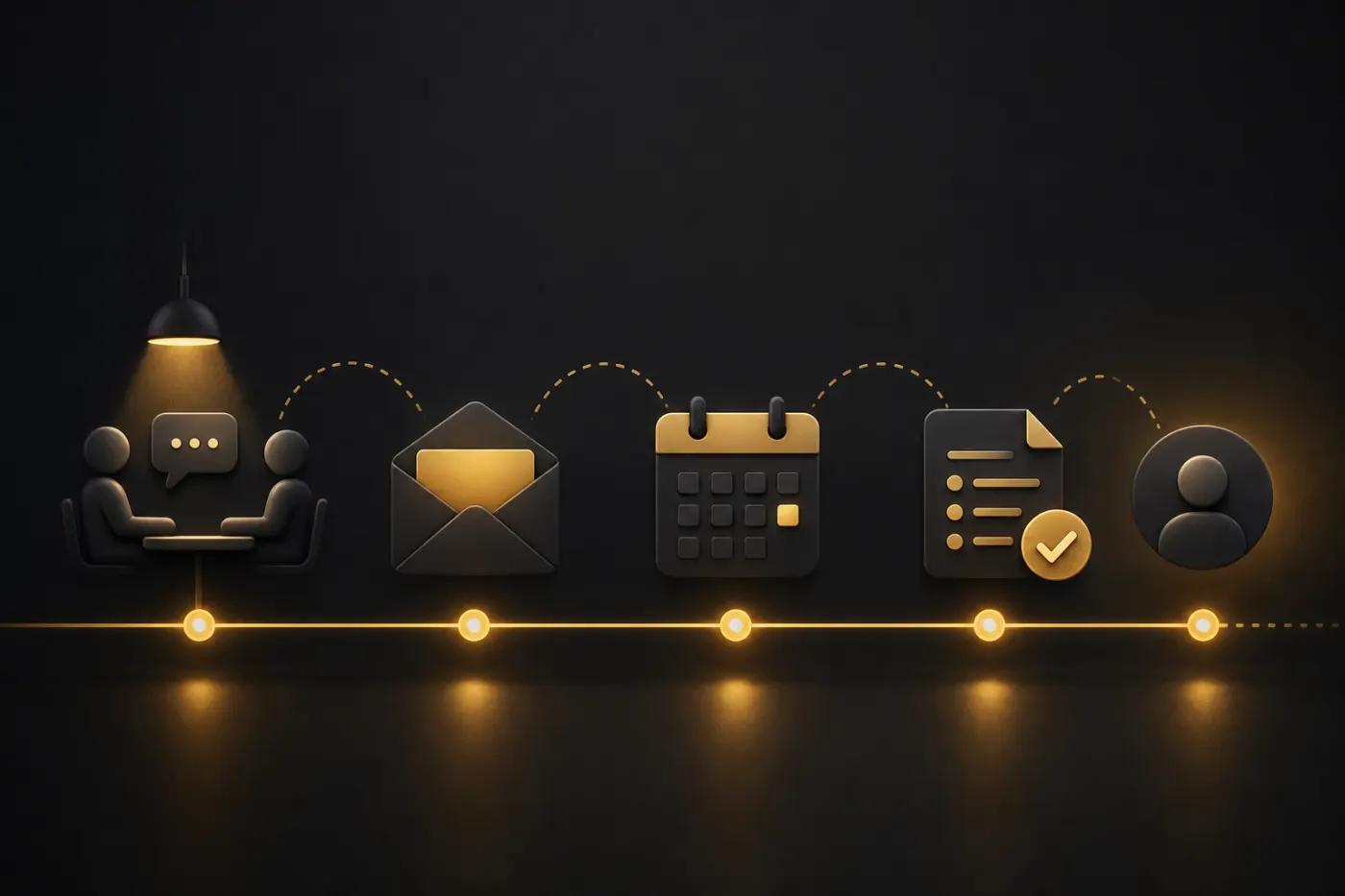 If you are unsure what to do, use this schedule.
| Day | Action |
|---|---|
| Same day or next day | Send thank-you email |
| Day 5 to 7 | Follow up if no timeline was given |
| Day 7 to 10 after final round | Follow up if no decision date was given |
| One week later | Send one last polite check-in |
| After that | Move on and keep applying |
This timeline gives you structure without sounding needy. It also keeps you from overthinking every hour that passes.
What to say in your follow-up email
A strong follow-up email does four things:
- Reminds them who you are
- Refers to the role or interview date
- Reaffirms interest
- Asks for a simple update
A basic template:
Subject: Follow-Up on [Job Title] Interview
Hi [Name],
I enjoyed speaking with you on [day] about the [job title] role. I appreciated learning more about the team and the priorities for the position.
I remain very interested in the opportunity and wanted to check whether there are any updates on next steps.
Thank you again for your time, and please let me know if I can provide anything else.
Best, [Your Name]
If you want more examples, use the full guide on how to follow up after a job interview.
When to stop following up
You should stop following up when one of these happens:
- They tell you the role is still open but give a later timeline
- They say you are no longer under consideration
- They stop responding after one or two polite check-ins
- You have already sent a thank-you note and two follow-ups with no reply
At that point, the most productive move is to keep interviewing elsewhere.
The goal is not to force an answer. The goal is to show professionalism while protecting your own time and energy.
Final answer
So, how long after a job interview should you follow up? Usually:
- Within 24 hours for a thank-you note
- After 5 to 7 business days if no timeline was given after an early interview
- After 7 to 10 business days after a final interview
- After the company’s stated deadline if they gave you one
If you want more interview help, explore our interview guides or read the step-by-step version of how to follow up after a job interview.
Topics
career
how-to-guide
follow up after interview timing
when to send interview follow up email
job interview follow up etiquette
Continue reading
Career
How to Write a Resume Summary for an Internship With No Experience
Learn how to write a resume summary for an internship with no experience, plus templates and examples for students, high schoolers, and career switchers.
August 25, 2026
9 min read
Career
How to Write a Resume for a Remote Job
Learn how to write a resume for a remote job with examples, a template, and tips for highlighting communication, self-management, and remote tools.
July 29, 2026
8 min read

Career
How to Write a Resume Summary for Entry-Level Job Seekers
Learn how to write a resume summary for entry level job seekers with formulas, examples, and a template for students, graduates, and career changers.
July 20, 2026
8 min read