






Interviews
Panel Interview Questions and Answers: How to Prepare for a Panel Interview (2026)
Learn how to prepare for a panel interview with panel interview questions and answers, smart eye contact, follow-up strategy, and practical scripts.
Interview Pilot Editorial Team
10 min read

Quick answer: Prepare for a panel interview by mapping each interviewer, practicing short structured answers, and managing eye contact across the group instead of talking to one person only. The goal is to stay calm, answer the actual question, and bring the discussion back to your fit for the role.
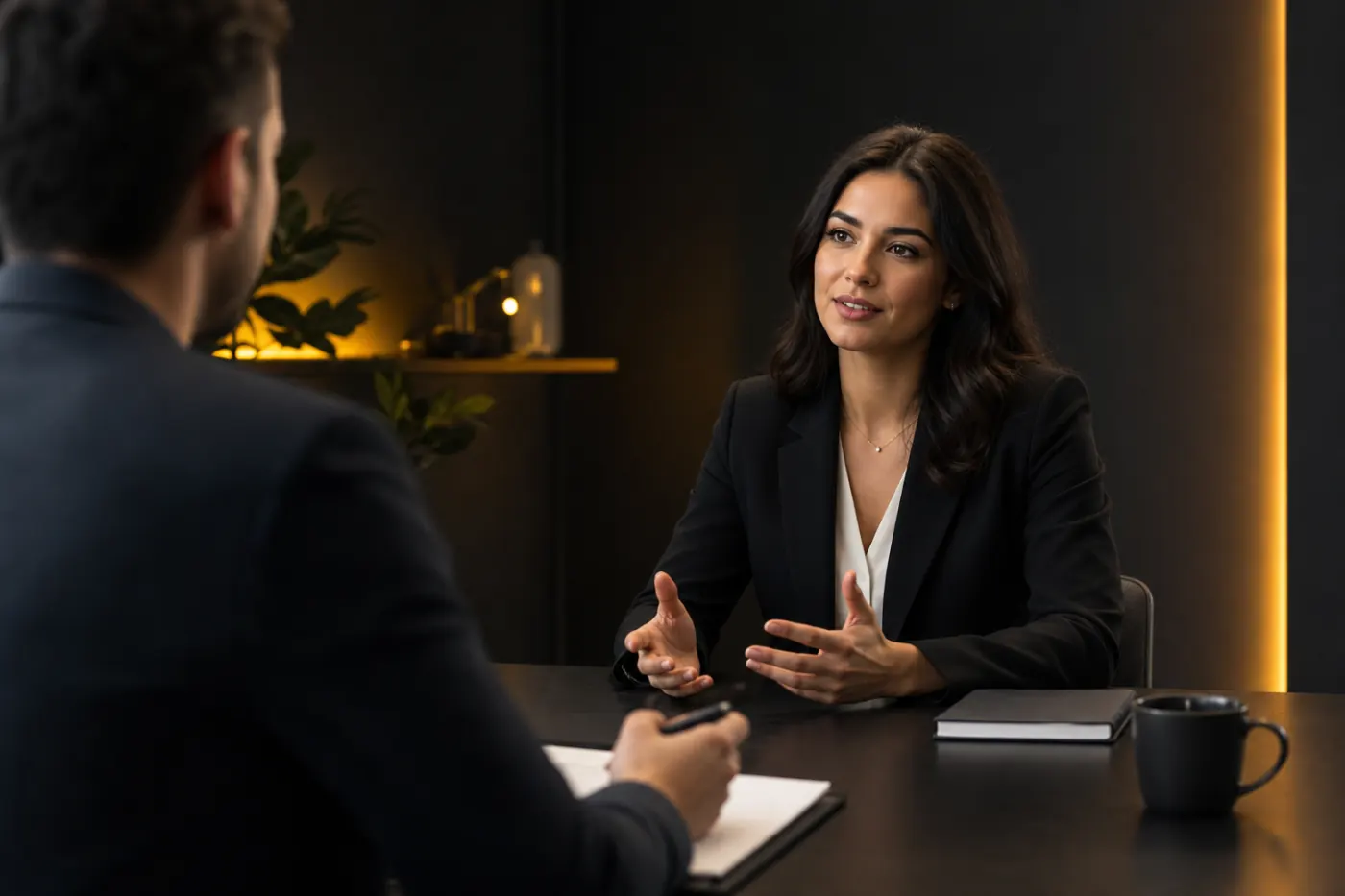
Panel interviews feel different because you are not just answering questions — you are also managing the room. One person may lead the conversation, another may interrupt with a follow-up, and someone else may stay quiet until the end. If you know how to handle that dynamic, you sound more confident and easier to hire.
This guide shows you how to prepare for a panel interview, what panel interview questions and answers usually look like, and how to handle cross-talk, eye contact, and follow-up questions from different interviewers.
What makes a panel interview different?
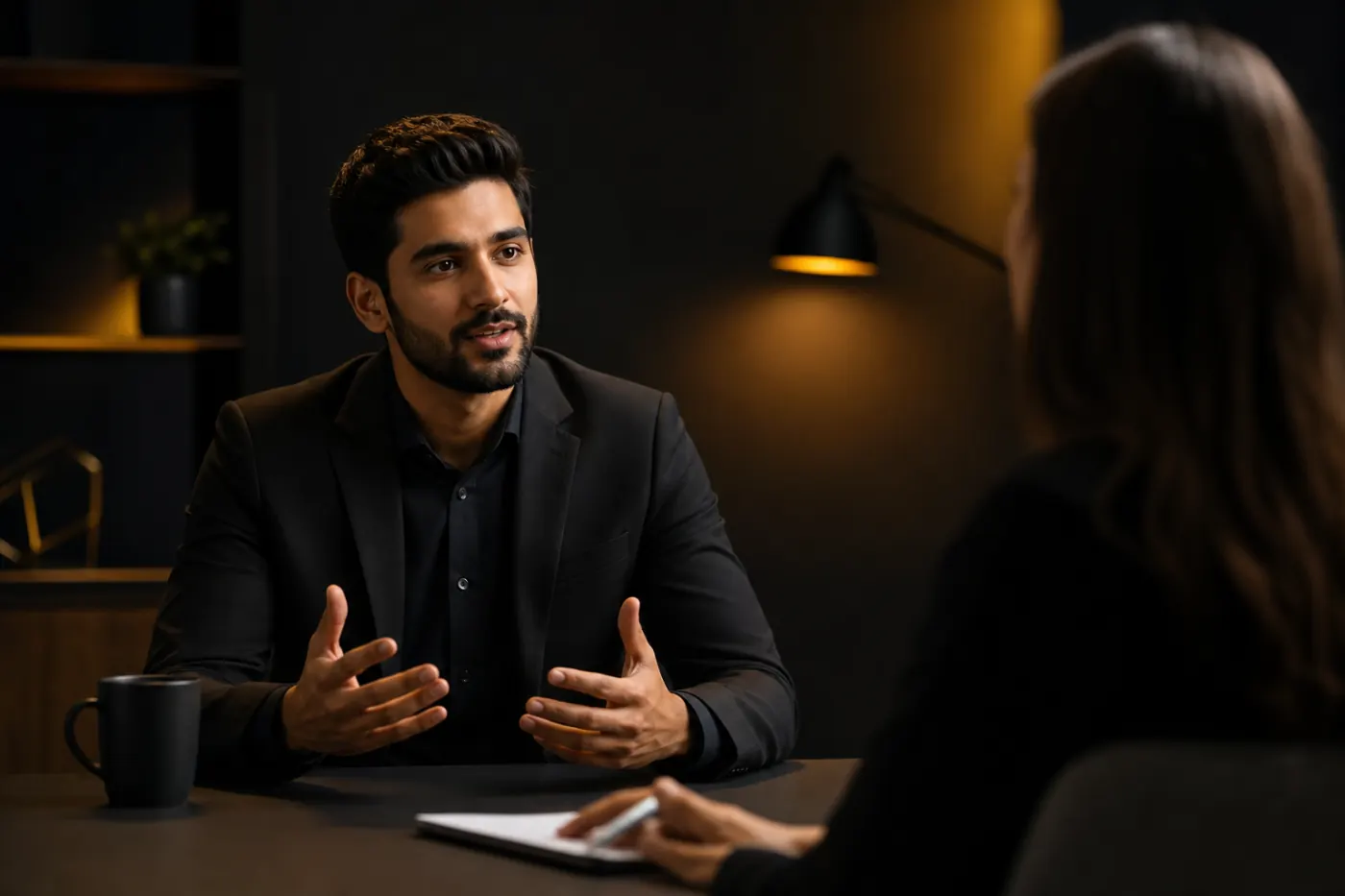
A panel interview is a single interview with multiple interviewers. The panel may include the hiring manager, a team member, someone from another department, and sometimes a recruiter or senior leader.
The key difference is not the questions themselves — it is the interaction pattern. In a panel, you need to:
- respond clearly without getting flustered
- make each interviewer feel included
- handle interruptions or follow-up questions smoothly
- keep your answers organized so the whole room can follow them
Here is the simple rule: answer to the panel, not just to the person who asked the question.
Quick strategy for panel interview questions and answers
 If you want the short version, use this approach for nearly every question:
- Pause for one second before answering.
- Start with the interviewer who asked the question, then sweep your gaze to the rest of the panel.
- Give a structured answer: context, action, result.
- Keep it concise unless they ask you to expand.
- Finish by reconnecting to the role.
That structure works because panel interviews reward clarity. Long, wandering answers are harder for multiple interviewers to track.
- Learn each interviewer’s name and role if you can.
- Review the job description and identify the top 3 required skills.
- Prepare 5 to 7 stories that fit multiple questions.
- Practice answering in 60 to 90 seconds.
- Decide how you will handle eye contact across the room.
- Prepare one or two smart questions for the full panel.
- Test your setup if the interview is virtual.
How to prepare for a panel interview
A strong panel interview prep plan is about reducing surprises. You do not need to memorize every answer. You need a repeatable method.
- Research the panel if names are shared.
- Match each interviewer to a likely concern: technical fit, collaboration, leadership, communication, or culture.
- Build story bank examples using STAR or a similar format.
- Practice answering in short blocks so you can adjust if interrupted.
- Rehearse transitions such as “The example I’d use is...” or “What mattered most there was...”.
- Plan your questions for the end of the interview.
Build a story bank, not a script
Panel interview questions often come from different angles, but they usually draw on the same evidence. One good project story can answer:
- Tell me about a time you handled conflict
- How do you prioritize work under pressure?
- How do you communicate with cross-functional teams?
- What is an example of taking ownership?
Use one story bank with different labels instead of writing a separate answer for each possible question.
| Story type | Best for answering | What to include |
|---|---|---|
| Conflict resolution | teamwork, disagreement, leadership | the disagreement, your role, how you resolved it |
| Project delivery | deadlines, prioritization, ownership | scope, constraints, action, outcome |
| Learning from failure | weakness, mistake, growth | what went wrong, what you changed, what happened next |
| Collaboration | communication, stakeholder management | who was involved, how you aligned, how you kept momentum |
| Initiative | leadership, problem-solving, self-direction | what you noticed, what you did, the measurable result |
How to handle eye contact in a panel interview
Eye contact is one of the biggest panel interview tips because it changes how confident and trustworthy you seem.
Do not stare at only one person. Do not try to make eye contact with everyone on every sentence. That will look forced.
Instead, use this pattern:
- Start with the person who asked the question.
- Hold eye contact briefly as you begin.
- Shift your gaze naturally to the other interviewers while you explain your answer.
- Return to the asker when you conclude.
If the panel is large, use a “triangle” or “sweep” pattern. In virtual panel interviews, look at the camera for your opening and closing lines, then scan the interviewers’ faces during the rest of the answer.
| Situation | Do | Avoid |
|---|---|---|
| One interviewer asks, others listen | Begin with the asker, then include the group | Talking only to the asker the whole time |
| A second person follows up | Turn to them and answer directly | Ignoring the new speaker |
| Virtual panel | Use camera for key points, faces for engagement | Reading notes while looking down constantly |
| Large panel | Rotate attention naturally | Trying to “include” everyone in every sentence |
Panel interview questions and answers: common examples
Panel interview questions are often a mix of behavioral, role-specific, and communication questions. The best answers are short, relevant, and easy for multiple people to follow.
Tell me about yourself
Sample answer: “I’m a customer support specialist with five years of experience helping users solve technical issues and improve their workflows. In my current role, I focus on resolving complex cases, documenting patterns for the team, and improving first-response quality. I’m now looking for a role where I can support a larger team and contribute more directly to process improvement, which is why this opportunity stood out.”
Why it works: It is brief, relevant, and ends by connecting to the job. In a panel, this matters because several people are listening for different parts of your background.
Make it yours: Use the same structure: present role, core strengths, recent impact, and why this role.
Why do you want this role?
Sample answer: “I’m interested in this role because it combines problem-solving, teamwork, and ownership. From the job description, it looks like this team values clear communication and steady execution, which matches how I work. I also like that the role would let me contribute across projects rather than only owning one narrow area.”
Why it works: It shows role fit and company fit without sounding generic.
Make it yours: Mention one concrete responsibility from the posting and one strength you bring to it.
Tell me about a time you disagreed with a coworker
Sample answer: “On a project deadline, a teammate and I disagreed about whether to delay delivery for extra testing or ship on time. I suggested we identify the highest-risk issues first and separate blockers from improvements. We agreed to fix the critical items immediately and document the remaining follow-up work for the next release. That kept us on schedule while still protecting quality.”
Why it works: It shows maturity, problem-solving, and collaboration rather than blame.
Make it yours: Focus on how you handled the disagreement, not who was right.
How do you handle pressure?
Sample answer: “I handle pressure by getting clear on priorities first, then breaking the work into the next few actions I can control. For example, when I had overlapping deadlines, I aligned with stakeholders on what had to be done first, flagged one risk early, and set check-in points so nothing was missed. That approach helped me stay organized and avoid last-minute surprises.”
Why it works: It is practical and shows a repeatable process.
Make it yours: Use a real example with a clear process and result.
What would your teammates say about you?
Sample answer: “They’d probably say I’m dependable and easy to work with. I tend to keep people updated, flag issues early, and follow through on details without needing reminders. I also try to stay calm when things change quickly, which helps the team keep moving.”
Why it works: It gives the panel a picture of how you function in a group.
Make it yours: Choose traits that are believable and supported by your examples.
How to answer follow-up questions from different panel members
This is where many candidates struggle. One interviewer asks a question, you answer, and then a different person jumps in with a follow-up. That is normal. It is not a trap.
The best response is to pause, acknowledge the new speaker, and answer the new angle directly.
Use this formula
- Acknowledge: “That’s a good question.”
- Re-center: “In that situation...”
- Answer: give the specific detail they asked for.
- Close: connect back to the result or role.
Example:
“That’s a good question. In that situation, the main issue was that the timeline had changed, so I needed to reset expectations with the team quickly. I sent a short update, clarified the next milestone, and made sure everyone knew what was still in progress. That kept the project moving without confusion.”
If two interviewers talk over each other, do not rush to answer both at once. Choose the most relevant question, answer it, then say, “I can also speak to the second point if helpful.”
Good vs bad panel interview behavior
| Scenario | Strong approach | Weak approach |
|---|---|---|
| Two interviewers ask related questions | Answer the first clearly, then bridge to the second | Jumping between both and losing the thread |
| One interviewer is quiet | Include them with occasional eye contact | Pretending they are not there |
| You are interrupted | Stop, listen, and adapt | Talking louder to finish your original answer |
| You do not know an answer | Be honest, reason through it, and ask a clarifying question | Guessing wildly or freezing |
| The panel seems skeptical | Stay calm and provide evidence | Becoming defensive |
Questions you should ask the panel
You usually get a chance to ask questions at the end. In a panel interview, your questions should be broad enough for the whole group, but specific enough to show preparation.
Good questions include:
- What would success look like in the first 90 days?
- How does this team collaborate across functions?
- What challenges is this role expected to solve first?
- How do you like new hires to communicate progress?
- What traits separate strong performers on this team from average ones?
Avoid asking questions that are too basic, too personal, or too focused on benefits too early.
| Strong question | Why it works | Weak version to avoid |
|---|---|---|
| What would success look like in the first 90 days? | Shows results focus | What exactly would I do here? |
| How does this team collaborate across functions? | Signals teamwork interest | Do people here talk to other teams? |
| What challenges is this role expected to solve first? | Shows business thinking | Is this job hard? |
| What traits separate strong performers on this team? | Helps you understand expectations | What do you want from me? |
Panel interview tips for virtual interviews
Virtual panel interviews add a few extra challenges: lag, camera placement, and looking distracted by your own screen.
Use these tips:
- Put the interview window near the camera so you can glance at faces without looking far away.
- Keep notes in one clean document instead of multiple tabs.
- Test audio and camera before the meeting.
- Use slightly shorter answers than you would in person.
- Pause after each answer in case someone wants to follow up.
If the platform makes it hard to track who is speaking, slow down. A measured pace looks more confident than a rushed one.
A simple prep plan for the day before and the day of
Use this as your final checklist.
- Review the job description and highlight the top requirements.
- Memorize your opening “Tell me about yourself” answer.
- Pick 5 stories that can cover multiple questions.
- Write 3 questions for the panel.
- Check your outfit, setup, and documents.
- Bring a notebook with interviewer names if available.
- Arrive early or log in 5 to 10 minutes ahead of time.
- Take one slow breath before the interview starts.
A simple closing strategy
At the end of the interview, thank the panel by name if possible and restate your interest in the role.
A good closing line sounds like this:
“Thank you all for your time today. I appreciated the chance to learn more about the team and the role. Based on what you shared, I’m even more interested in the opportunity, and I’d be excited to contribute.”
That ending is calm, direct, and professional.
Key takeaway: The best panel interview candidates are not the ones with the longest answers. They are the ones who stay organized, make eye contact across the room, handle follow-up questions smoothly, and give each interviewer a reason to trust them.
Next steps
If you want more practice, review the core resources below:
- Browse common prompts in the question bank
- Practice role-specific responses in the interview questions
- Read more preparation tactics in the interview guides
- See how an AI interview assistant can support you when questions come from several interviewers
If you prepare with a story bank, a follow-up strategy, and a clear eye-contact plan, panel interview questions and answers become much easier to manage.
Topics
interviews
how-to-guide
how to prepare for a panel interview
panel interview tips
panel interview questions
Continue reading
Interviews
How to Answer “Tell Me About a Time You Missed a Goal”
Learn how to answer “tell me about a time you missed a goal” with ownership, STAR structure, and examples that show growth instead of excuses.
August 24, 2026
8 min read
Interviews
How to Answer 'What Is Your Biggest Weakness?'
Learn how to answer what is your biggest weakness interview questions with honest examples, scripts, and a simple formula that sounds credible.
August 21, 2026
9 min read

Interviews
How to Prepare for a Job Interview on Short Notice
A practical 24-hour plan for last minute interview prep, including research, question practice, confidence tactics, and a fast checklist.
August 14, 2026
8 min read