









Career
How Long Does It Take to Hear Back After an Interview?
Learn how long to hear back after an interview, when to follow up, what delays mean, and how to stay productive while you wait.
Interview Pilot Editorial Team
7 min read

Usually, you should expect to hear back within a few days to two weeks after an interview, but the real answer depends on the stage, the company, and whether they still have other candidates to meet. If you were told a timeline, use that as your guide. If you were not, a polite follow-up after about one week is usually reasonable for most roles.
The key is not to panic when silence starts. Hiring moves at different speeds for different reasons, and a delay does not automatically mean a rejection. Below, you’ll find the usual hiring timeline by stage, when to follow up after interview, what warning signs to watch for, and how to handle the waiting period professionally.
Quick answer: what to expect
If you only need the short version:
- Phone screen: often 2 to 7 days
- First-round interview: often 3 to 10 days
- Final interview: often 1 to 2 weeks, sometimes longer
- If the employer gave you a date: wait until that date passes before following up
- If no timeline was given: send an after interview follow up after about 5 to 7 business days
A slow response usually means the company is juggling approvals, coordinating calendars, comparing candidates, or waiting on an internal decision. It does not always mean you’re out.
Why job interview response time varies
There is no single hiring timeline that fits every company. Response time depends on:
- Stage of the process: early screens move faster than final decisions
- Number of interviewers: more decision-makers means more coordination
- Role level: senior and cross-functional roles usually take longer
- Budget or headcount approval: hiring can pause even after a strong interview
- Internal priorities: urgent openings move faster than backfill roles
- Candidate volume: if they are still interviewing other candidates, you may wait longer
A useful way to think about it: the interview itself is only one step. After that, the company still has to debrief, compare notes, get approvals, and possibly extend an offer to someone else first.
Typical hiring timeline by interview stage
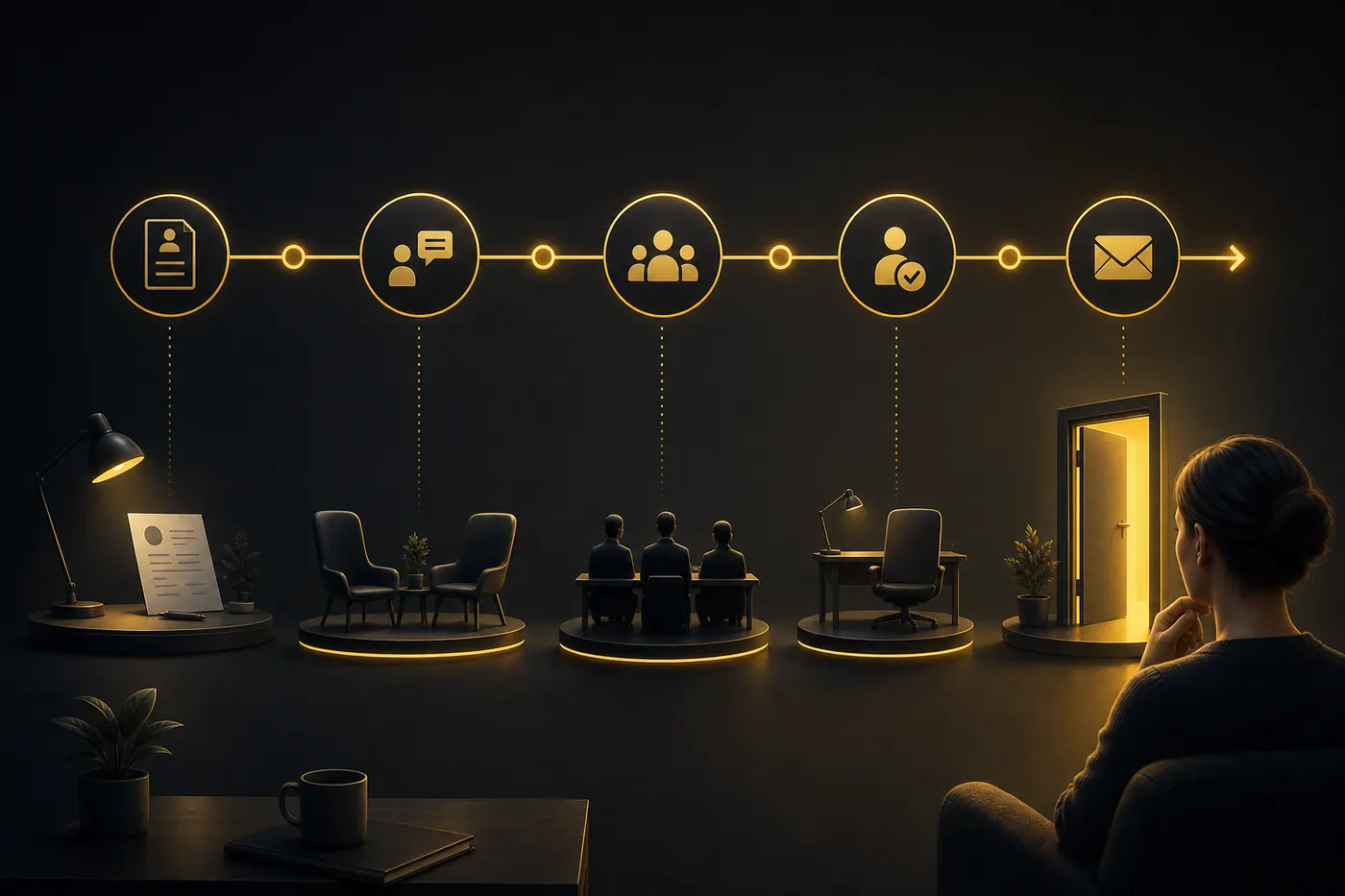
Here is a practical way to estimate how long to hear back after an interview based on where you are in the process.
| Interview stage | Typical response window | What it often means |
|---|---|---|
| Recruiter/phone screen | 2–7 days | They are deciding who moves forward |
| First-round interview | 3–10 days | Team is comparing candidates |
| Technical interview | 3–10 days | Feedback may need more review |
| Panel interview | 5–14 days | Multiple people need to align |
| Final interview | 5–14+ days | Offer approvals, references, or final ranking |
| Interview with executive / leadership | 1–3 weeks | Scheduling and approval can add time |
These are not guarantees, just common ranges. If the company said, “We’ll get back to you by Friday,” treat Friday as the checkpoint.
When same-day or next-day replies happen
Fast replies often mean one of these things:
- They know they want to move quickly
- The role is urgent
- You are an early standout
- The recruiter is actively managing the process
Fast feedback is great, but don’t assume delayed feedback is bad feedback. Some teams simply move slowly by default.
When to follow up after interview
A good rule: follow up after the timeline they gave you or, if no timeline was provided, after 5 to 7 business days.
Use this simple follow-up schedule:
- Day 0: Send a thank-you note within 24 hours of the interview.
- Day 5–7 business days: If no timeline was given, send one polite check-in.
- After the promised date passes: Follow up the next business day.
- One more follow-up after another 5–7 business days: If needed, send one final polite check-in.
If you’re asking when to follow up after interview, the answer is usually: not immediately, not daily, and not from multiple email addresses. You want to show interest without creating pressure.
Follow-up email template
Use this short, professional version:
Subject: Following up on the [Job Title] interview
Hi [Name],
I hope you’re doing well. I wanted to follow up on my interview for the [Job Title] role on [date]. I enjoyed learning more about the team and the position.
I’m still very interested in the opportunity and wanted to see if there were any updates on the hiring timeline.
Thanks again for your time, and I appreciate any update you can share.
Best, [Your Name]
If you were given a decision date
If the interviewer said, “We’ll let you know by next Thursday,” wait until Friday morning before reaching out. Your message can be even simpler:
Hi [Name], I’m following up on the timeline we discussed for the [Job Title] role. I wanted to check whether there’s an updated hiring timeline. Thank you again for your time.
Warning signs that the process may be slowing down
A slower job interview response time is not always a rejection, but some patterns suggest the process is stalling.
Watch for these signs:
- They missed the date they promised and did not update you
- The recruiter becomes hard to reach after being very responsive
- Interviews keep getting rescheduled without explanation
- The role description changes significantly mid-process
- They mention approvals, budget, or headcount delays repeatedly
- You hear “we’re still interviewing” several times with no clear end point
If you notice one of these, stay professional. Delays can still lead to an offer, but they are a signal to keep your search active.
What to do while waiting after an interview
Waiting is easier when you treat it like an active phase, not dead time. Here’s what to do while the hiring team decides.
Keep interviewing elsewhere
Do not pause your job search for one company unless you already have a strong written offer. Continue applying, networking, and interviewing. That reduces stress and gives you leverage.
Prepare for the next round
If the company does come back quickly, be ready. Review:
- The job description
- Your strongest examples
- Common follow-up questions
- The team’s priorities
- Any technical or behavioral topics you struggled with
For more practice, browse the question bank.
Write down what you learned
Right after each interview, save:
- Names and titles of interviewers
- Topics they asked about
- Concerns you noticed
- Follow-up items you promised to send
This makes your next follow-up sharper and more personal.
Use the waiting period to improve your answer strategy
If you felt shaky on certain questions, review targeted interview guidance and tighten your examples. The best time to prepare for the next interview is before the current one is fully resolved.
You can also revisit the interview guides for structured practice.
How long is too long with no update?
If more than two weeks pass with no response and no clear timeline, the process may be delayed or deprioritized. That still doesn’t mean the role is dead, but it is reasonable to:
- Send a brief follow-up
- Keep applying elsewhere
- Move the opportunity lower on your active list
If it has been three to four weeks with no meaningful update, you should assume the company is moving slowly and proceed as though you may not hear back soon.
A useful mindset: wait long enough to be professional, but not so long that one employer controls your schedule.
Should you follow up more than once?
Yes, but keep it limited.
A simple rule:
- One thank-you note
- One first follow-up
- One final check-in
After that, let it go unless the company replies.
If you keep following up too often, you may hurt your chances or create a poor impression. A concise, respectful after interview follow up is better than repeated messages.
Sample follow-up timeline you can copy
Here’s a practical schedule you can use.
Example: no timeline given
- Monday: Interview
- Tuesday: Send thank-you note
- Next Monday or Tuesday: Send first follow-up if no update
- One week later: Send final check-in if still nothing
- After that: Continue your search and move on unless they respond
Example: timeline was given
- Thursday: Interview
- Recruiter says you’ll hear back by next Wednesday
- Thursday morning: If no update, send a polite follow-up
A good follow-up email is short and specific
The best follow-up emails do three things:
- Remind them who you are
- Reinforce your interest
- Ask for a timeline update without sounding demanding
Avoid these mistakes:
- “Just checking in again” with no context
- Long paragraphs explaining how badly you need the job
- Multiple reminders in a short time
- Passive-aggressive phrasing like “I guess I haven’t heard back”
Keep it simple and easy to answer.
Bottom line
How long to hear back after an interview depends on the stage, the company, and whether they gave you a date. In many cases, a response comes within a few days to two weeks. If you do not have a timeline, follow up after about 5 to 7 business days. If you were given one, wait until it passes and then send one polite message.
Most importantly, keep your search moving. One company’s hiring timeline should not become your entire timeline.
Next step
If you want to prepare for what comes next, review our interview guides and practice common questions in the question bank.
Topics
career
how-to-guide
after interview follow up
job interview response time
when to follow up after interview
Continue reading
Career
How to Write a Resume Summary for an Internship With No Experience
Learn how to write a resume summary for an internship with no experience, plus templates and examples for students, high schoolers, and career switchers.
August 25, 2026
9 min read
Career
How to Write a Resume for a Remote Job
Learn how to write a resume for a remote job with examples, a template, and tips for highlighting communication, self-management, and remote tools.
July 29, 2026
8 min read

Career
How to Write a Resume Summary for Entry-Level Job Seekers
Learn how to write a resume summary for entry level job seekers with formulas, examples, and a template for students, graduates, and career changers.
July 20, 2026
8 min read