













How to Answer 'Describe a Challenge You Faced at Work'
Updated June 20, 2026
9 min read
Interview Pilot Editorial Team
If an interviewer asks you to describe a challenge you faced at work, they are usually testing four things: how you think, how you act under pressure, how you work with others, and whether you can explain the result clearly. The best answer is specific, concise, and focused on what you learned and changed.
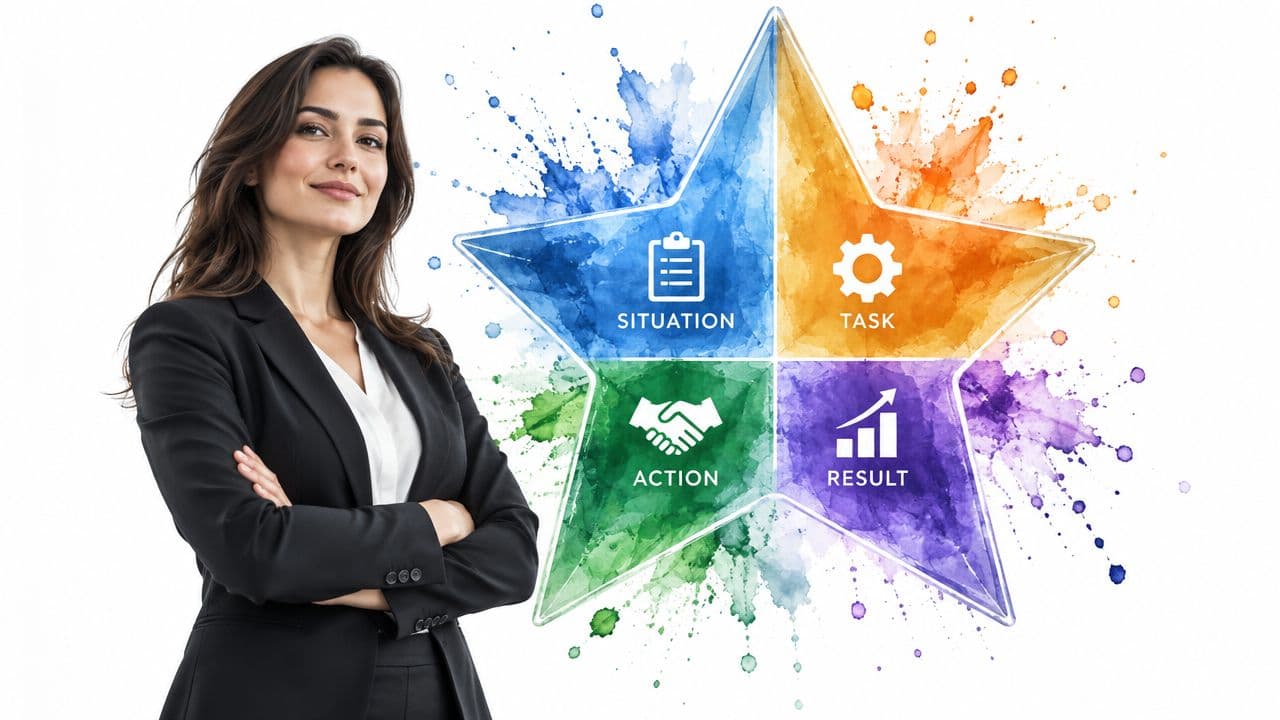
A strong response usually follows the STAR format: set up the Situation, explain the Task, describe the Action you took, and end with the Result. Choose a real challenge that shows judgment, resilience, and measurable impact — not just a story about being busy or dealing with a difficult person.
Quick answer
The safest way to answer this behavioral interview question is to pick a challenge that was real, manageable, and relevant to the job. Then show how you:
- identified the problem quickly
- took ownership
- made a thoughtful decision
- worked through the issue without blame
- got a clear result
A good answer is not about sounding heroic. It is about showing that you can solve problems, stay calm, and learn from difficult situations.
What interviewers want to hear
This is one of the most common behavioral interview questions because it reveals how you behave in actual work situations. Interviewers are not looking for a perfect project. They want evidence that you can handle pressure without freezing, blaming others, or making excuses.
They are listening for:
- clear problem solving
- ownership and accountability
- communication under pressure
- collaboration when the issue affects other people
- an outcome that shows effectiveness
If you are preparing for this type of question, it helps to review more behavioral patterns in the question bank and compare this question with other interview questions.
How to choose the right challenge
The challenge you choose matters as much as the way you tell it. A weak example can make you sound disorganized or difficult to work with. A strong example can show maturity and initiative.
Use this filter when choosing your story:
| Good challenge | Why it works |
|---|---|
| Missed deadline caused by a process gap | Shows prioritization, ownership, and process improvement |
| Conflicting stakeholder expectations | Shows communication and judgment |
| A project that went off track | Shows recovery and problem solving |
| A mistake you caught and corrected | Shows accountability and learning |
| Learning a new system quickly | Shows adaptability and self-management |
Avoid stories that make you look careless, uncoachable, or passive. For example, do not spend most of your answer blaming a coworker, saying “nothing really challenged me,” or choosing a story where you did not actually do anything.
A strong challenge usually has three traits:
- it was difficult enough to matter
- you had a real role in solving it
- the result can be explained in concrete terms
The STAR structure that keeps your answer focused
STAR is one of the best frameworks for answering problem solving interview questions because it keeps your answer organized and concise.
| STAR part | What to include | What to avoid |
|---|---|---|
| Situation | Brief context and stakes | Too much background |
| Task | Your responsibility or goal | Long setup that delays the point |
| Action | Specific steps you took | Vague teamwork language |
| Result | Outcome and what changed | Ending without a result |
A useful rule: spend the most time on the Action section, because that is where you prove your thinking.
Sample answer 1: Tight deadline and shifting priorities
This is a strong general example for many roles.
“In my last role, I was supporting a project that had two major deadlines overlap after a client changed the launch date. The team was at risk of missing both deliverables, and I was responsible for keeping my portion on schedule while coordinating with two internal partners.
I first mapped out the remaining work and identified which tasks were truly dependent on each other. Then I met with the stakeholders to clarify what had to be finished first and what could wait. I also broke my work into smaller milestones and sent short progress updates every day so no one was surprised by delays.
As a result, we delivered the most critical work on time, and the revised schedule for the second deliverable was accepted without issue. That situation taught me that when priorities shift, clear sequencing and frequent communication matter as much as speed.”
Why this works:
- the challenge is believable and common
- the answer shows structured thinking
- the candidate describes communication, not just hard work
- the result is specific without inventing numbers
Sample answer 2: Resolving a mistake before it reached the customer
This version works well when you want to show accountability and attention to detail.
“Early in a campaign launch, I noticed that one version of the copy still contained outdated product information. It had already moved through a few steps of review, so it could have gone live if I had not caught it.
I paused the launch, confirmed the correct details with the product team, and checked the rest of the materials for consistency. Then I documented the issue so the team could see where the review process had broken down. After that, I suggested a final checklist for future launches that included product verification before approval.
The campaign launched later that day with the corrected content, and we avoided a customer-facing error. My manager also adopted the checklist for future launches. I learned that catching small issues early is often the difference between a minor fix and a larger problem.”
Why this works:
- it shows initiative without exaggeration
- the action includes both fixing the issue and improving the process
- the result demonstrates impact and learning
Sample answer 3: Handling disagreement with a teammate
Use this if the role values collaboration, influence, or cross-functional work.
“On a team project, I disagreed with a teammate about the best way to present our recommendation. We both had valid points, but our approaches would have created confusion if we had each pushed ahead separately.
I suggested we step back and compare the goal of the presentation with the audience’s needs. We reviewed the feedback we had received, divided the content by decision priority, and agreed to combine the strongest parts of each version. I also volunteered to rewrite the opening so the recommendation was clearer from the start.
The final presentation was well received, and the team said the structure made the decision easier to follow. The biggest lesson for me was that disagreement is easier to solve when you focus on the shared goal instead of trying to prove who is right.”
Why this works:
- it shows emotional control
- it avoids making the other person look bad
- it proves collaboration and judgment
A simple formula for your own answer
If you want a fast way to build your response, use this template:
- Context: “In my previous role, I was responsible for…”
- Challenge: “We ran into a problem when…”
- Action: “I took these steps…”
- Result: “Because of that, we were able to…”
- Learning: “What I learned was…”
Here is a fill-in-the-blank version:
“In my last role, I was working on [project/task] when [challenge] came up. My responsibility was [task]. I responded by [action 1], [action 2], and [action 3]. As a result, [result]. That experience taught me [lesson].”
This structure works well because it keeps your answer controlled and easy to follow.
What makes an answer weak
Many candidates lose points because they focus on the wrong part of the story. Here are the most common mistakes and how to fix them.
| Weak response | Better approach |
|---|---|
| “I’m not really challenged by work.” | Pick a real obstacle and show how you handled it |
| Too much background | Cut the setup and get to the problem quickly |
| Blaming teammates or managers | Focus on your actions and your perspective |
| No result | End with what changed after your action |
| A story with no stakes | Choose a challenge that mattered to the work |
| Generic “I worked hard” answer | Show the specific decisions you made |
A simple test: if your answer could apply to anyone, it is probably too vague.
How to sound confident without sounding rehearsed
You do not need to memorize a script word for word. In fact, answers that sound overly polished can feel fake. Instead, prepare the structure and key details, then speak naturally.
A good delivery sounds like this:
- clear but conversational
- specific but not overly long
- calm, even when the challenge was stressful
- focused on actions and outcomes
If you are worried about sounding stiff, practice with a few common interview-guides and then vary the wording. The goal is to tell the same story comfortably in different ways.
Adapt your answer to the role
The best challenge story is one that matches the job you want.
- For operations roles, emphasize process, accuracy, and prioritization.
- For customer-facing roles, emphasize communication and conflict resolution.
- For leadership roles, emphasize coordination, decision-making, and accountability.
- For technical roles, emphasize debugging, troubleshooting, and learning under pressure.
- For career changers, emphasize adaptability and how you learned a new environment quickly.
That approach aligns well with broader behavioral interview questions: the interviewer is not just checking whether you solved a problem, but whether you solved the right kind of problem for the role.
A quick pre-interview checklist
 Before your interview, make sure your example passes this checklist:
- The challenge is real and easy to understand.
- You can explain it in under two minutes.
- You clearly show your own role.
- You describe at least two specific actions.
- You include an outcome, even if it is qualitative.
- You end with a lesson or improvement.
If you can answer all six, your response is likely strong enough for most interviews.
Final example you can adapt today
Here is a concise version you can customize quickly:
“One challenge I faced at work was when a project timeline changed unexpectedly and my team had to reprioritize fast. I reviewed the remaining tasks, clarified what depended on what, and communicated the revised plan to the people involved. I also checked in regularly so issues were caught early. We were able to deliver the most important work on time, and the experience taught me how much clarity and communication matter when priorities shift.”
This is not flashy, but it works because it shows judgment, responsibility, and results.
Next step
Pick one challenge story now and write it in STAR format before your next interview. If you want more practice, review similar prompts in the question bank, browse related interview questions, and use the interview guides to sharpen your delivery.
Related Articles

Interviews
10 IT Help Desk Interview Questions to Practice
Practice 10 IT help desk interview question examples with troubleshooting scripts, customer-service responses, and practical task strategies.
September 18, 2026 · 26 min read

Interviews
10 Management Interview Questions and Answers
Prepare with 10 management interview questions and answers covering leadership, conflict, prioritization, budgets, failure, feedback, and team building.
September 18, 2026 · 25 min read
Interviews
8 Star Method Examples for Behavioral Interviews
Explore 8 star method examples for behavioral interviews, with annotated Situation, Task, Action, Result answers and tips to adapt each story.
September 17, 2026 · 25 min read